

Ford Ranger pickup review (2022)
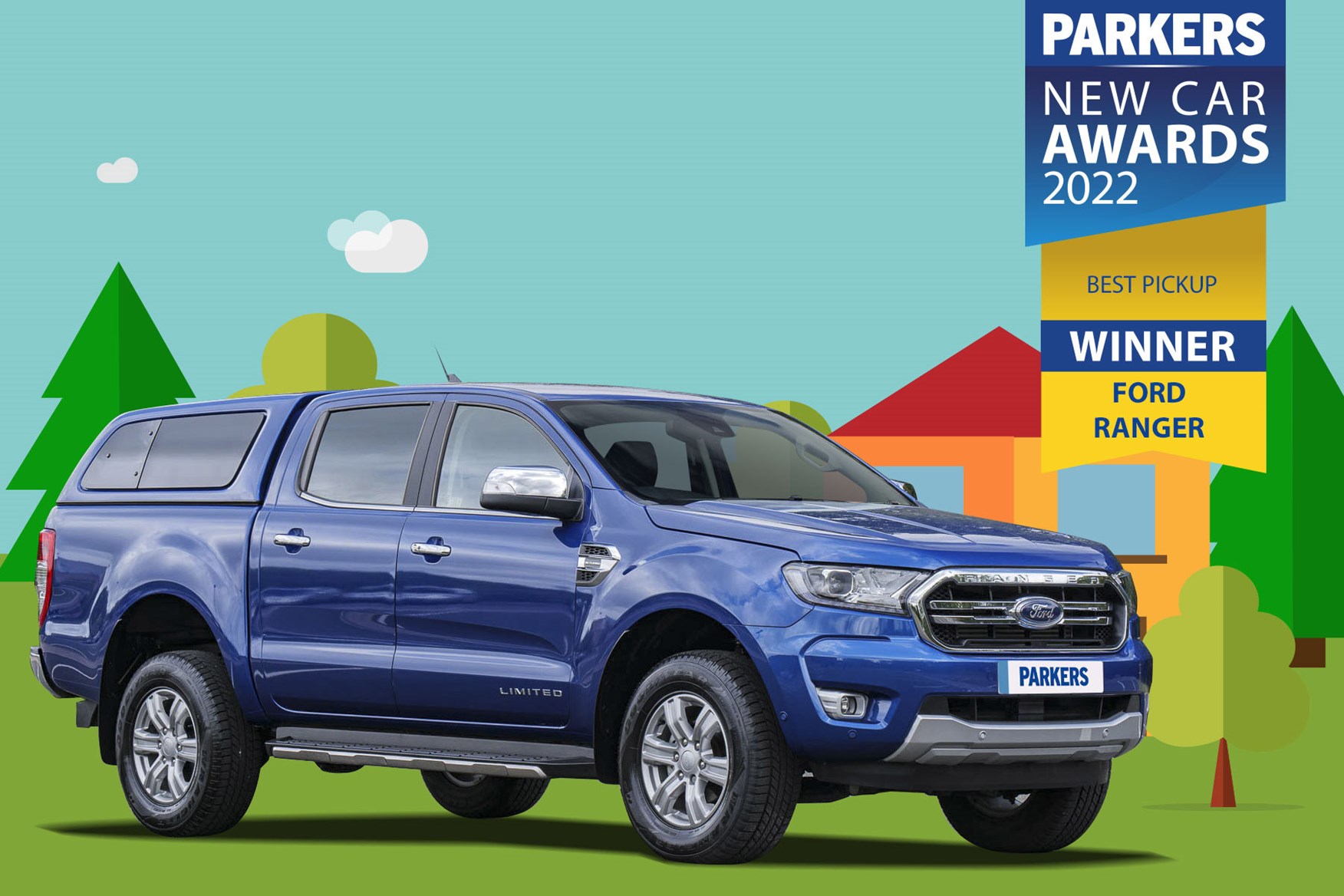
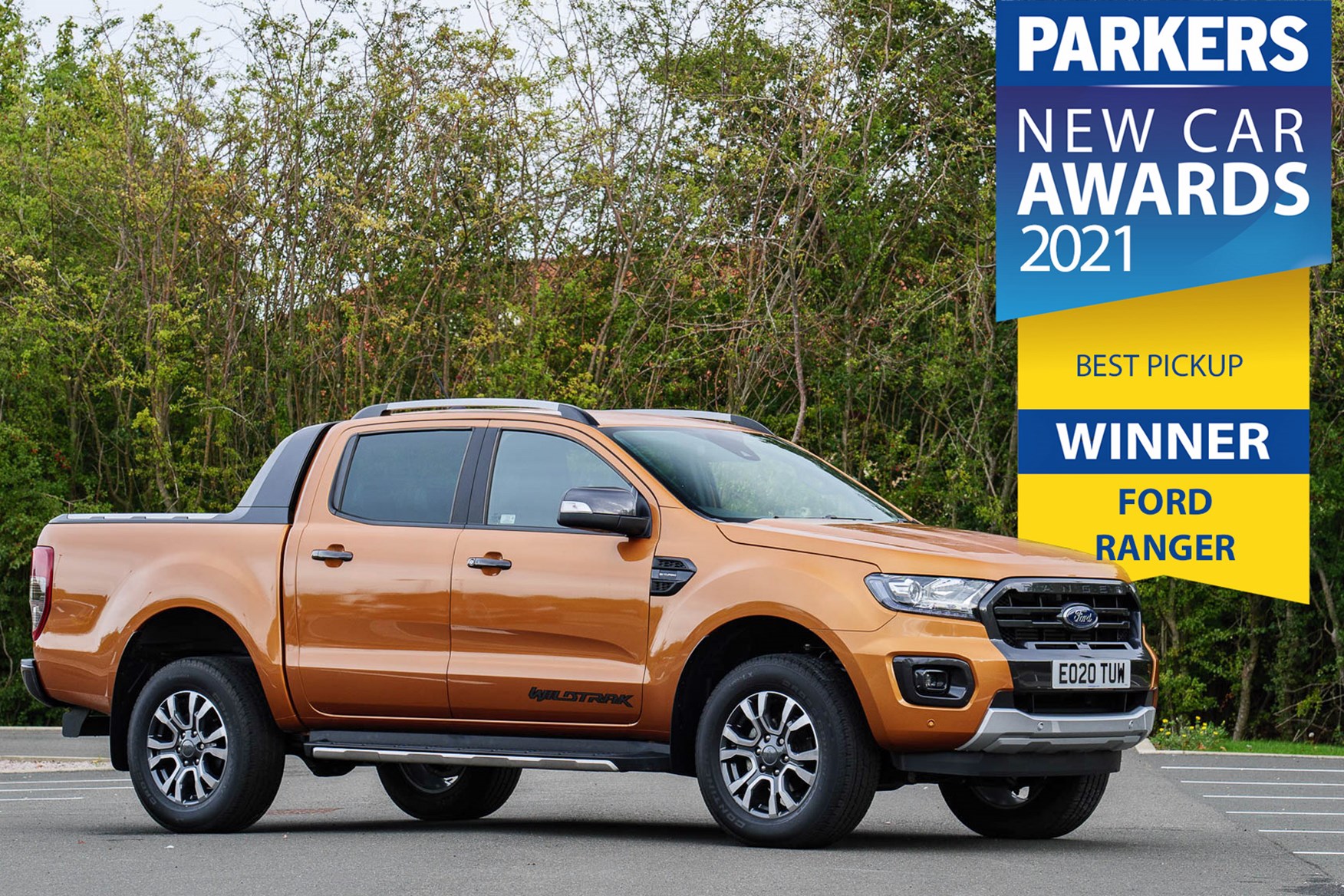
Parkers Pickup of The Year 2022, 2021 and 2020 - from style to strength, it's got everything
PROS
- Payload and towing capacity
- Refined 2.0-litre engines
- Plenty of performance
- Very well equipped
- Vast dealer network
CONS
- Noisy old 2.2 and 3.2 engines
- Fuel economy not great
- Some low-quality interior plastics
- Poor low-speed ride on older models
- Rivals offer longer warranty

Summary
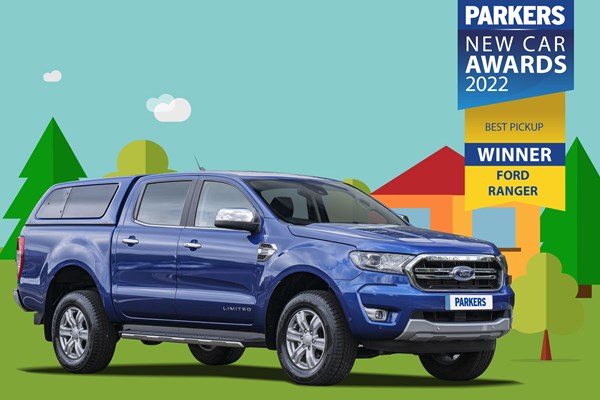
The Ford Ranger is the 2020, 2021 and 2022 Pickup of The Year winner in the Parkers New Car Awards, so it is undeniably one of the best pickups in the UK. This Ford Ranger review will take you through the all the pros and cons of this pickup truck, and explain why we rate these versions so highly. It was on sale until 2023, when it was replaced by the all-new Ford Ranger.
This is the third-generation Ford Ranger, a pickup that's designed to appeal to commercial and private buyers alike, being both tough and attractive. Trim levels run from basic working models to the popular Ranger Wildtrak, which now offers almost all of the comforts of a modern SUV. There's a high-performance Ranger Raptor model, too.
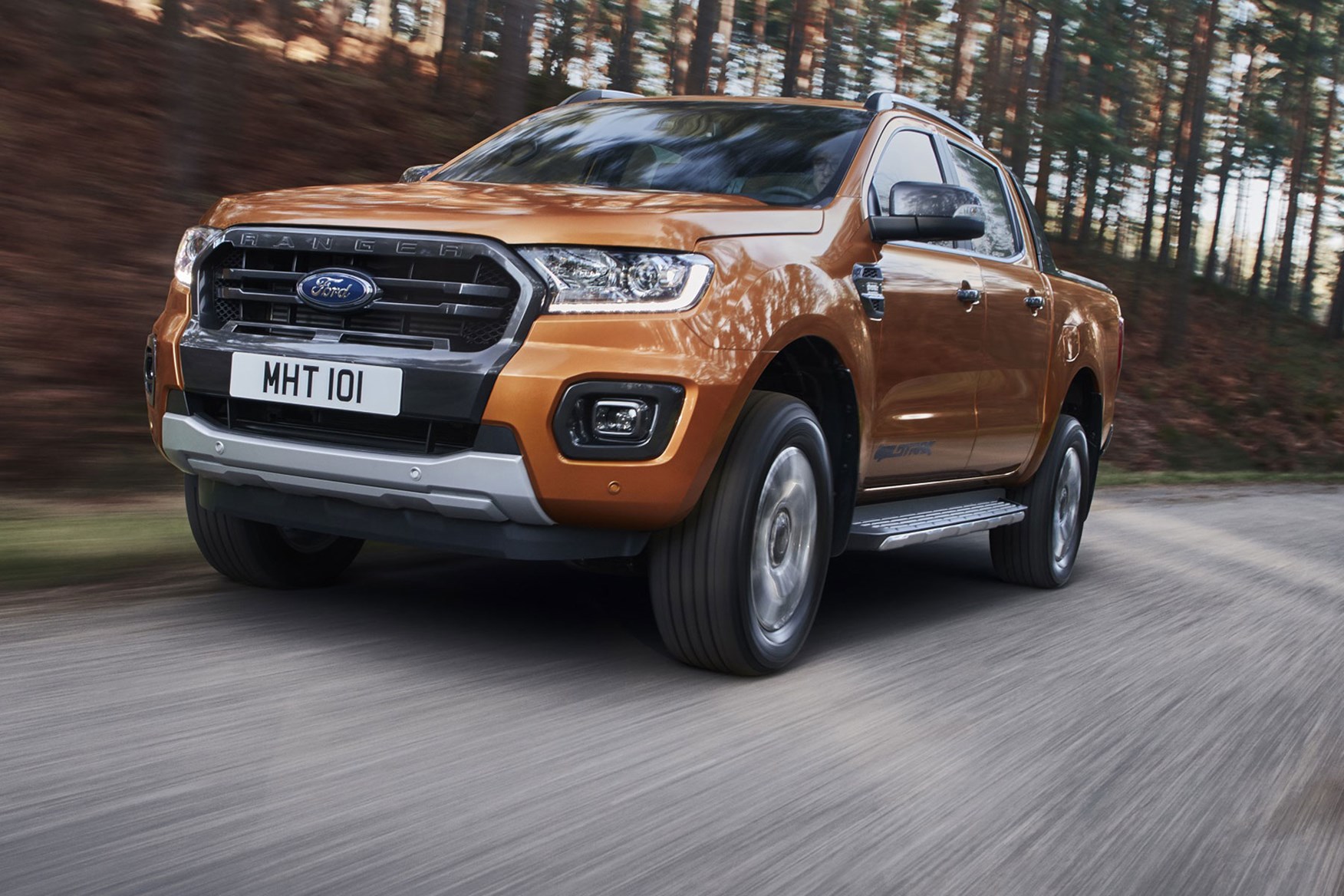
First introduced in 2011, this Ranger was updated with a new look inside and out in 2016, and then received a further facelift in 2019 when new 2.0-litre EcoBlue engines were added, offering up to 213hp (see below).
This most recent round of changes has turned a very good pickup into a great one, which is reflected in its victories in the Parkers Pickup of the Year contest.
It is set to replaced by a new Ford Ranger model at the end of 2022.
2021 Ford Ranger updates
In 2021, Ford introduced a Ranger chassis cab variant for the first time, and added a trio of special editions, the Wolftrak, the Stormtrak and the Ranger Raptor Special Edition.
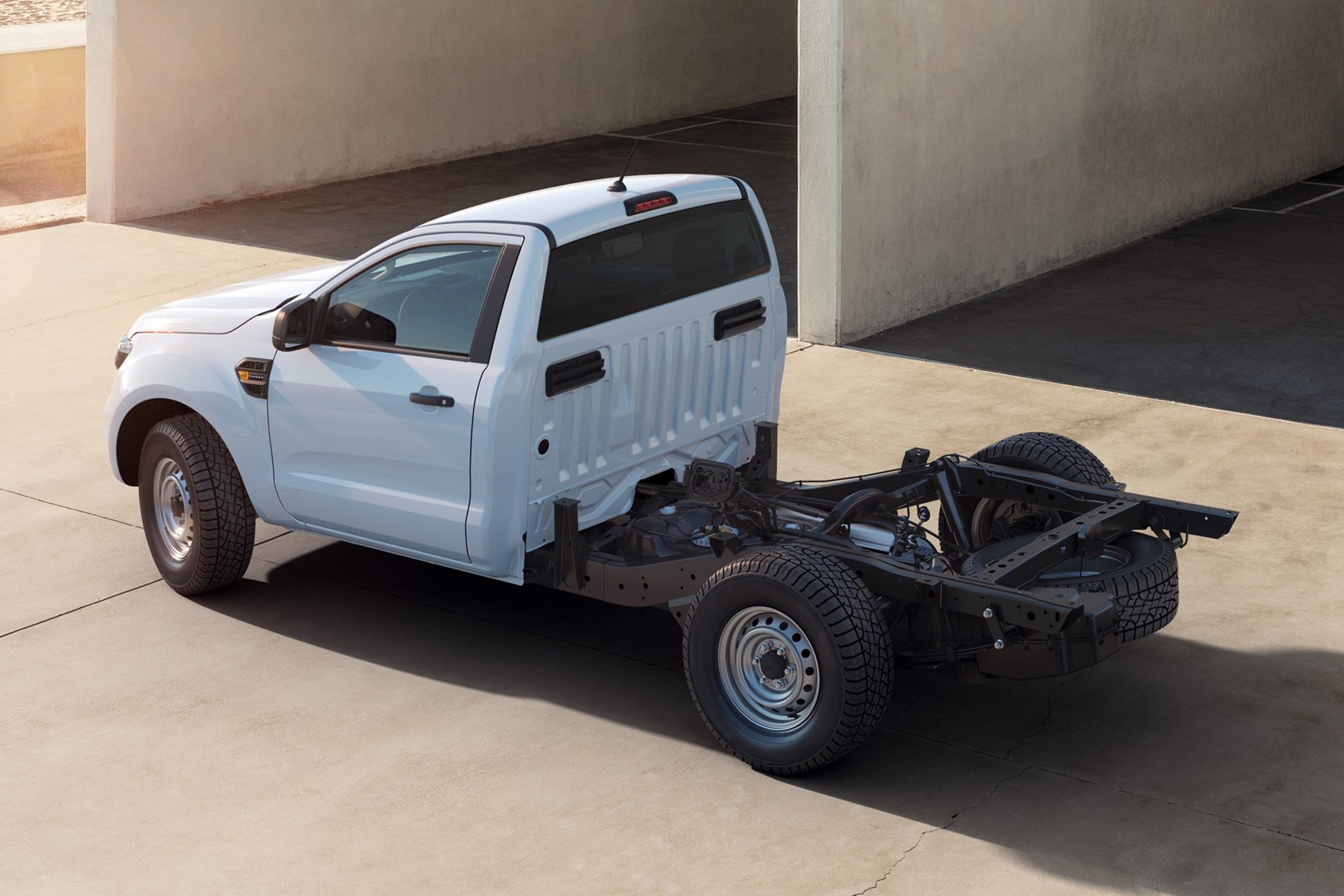
Designed for specialist conversions, the Ranger chassis cab is based around the single-cab model (known by Ford as the Regular Cab) in order to offer the greatest space and payload capacity for new rear bodywork and equipment. It also comes with four-wheel drive and the 170hp 2.0-litre EcoBlue diesel engine.
2020 Ford Ranger updates
Updates for the 2020 Ford Ranger included the end of production for the old 3.2-litre engine - meaning every UK Ranger is now powered by a 2.0-litre diesel - and the introduction of a new Ranger Thunder special edition.
Plus in June 2020, Ford announced all new Ranger models would be fitted with the FordPass Connect on-board modem as standard, allowing all owners to take advantage of the FordPass Pro smartphone app and Over-The-Air (OTA) software updates.
2019 Ford Ranger facelift and new 2.0-litre engines
While changes to the outside were minimal and changes to the inside almost non-existent, the 2019 Ranger brought in a completely new selection of engines, all based on the 2.0-litre EcoBlue turbodiesels already fitted in the Transit large van and Transit Custom medium van.
As a result, maximum power output is now 213hp, while the standard six-speed manual gearbox can be replaced on some models by an impressive new 10-speed automatic at extra cost.
The old 3.2-litre five-cylinder motor remained available (on the Wildtrak trim level only) until May 2020, but the original 2.2-litre four-cylinder engines were dropped immediately. You can read more about these earlier engines below.
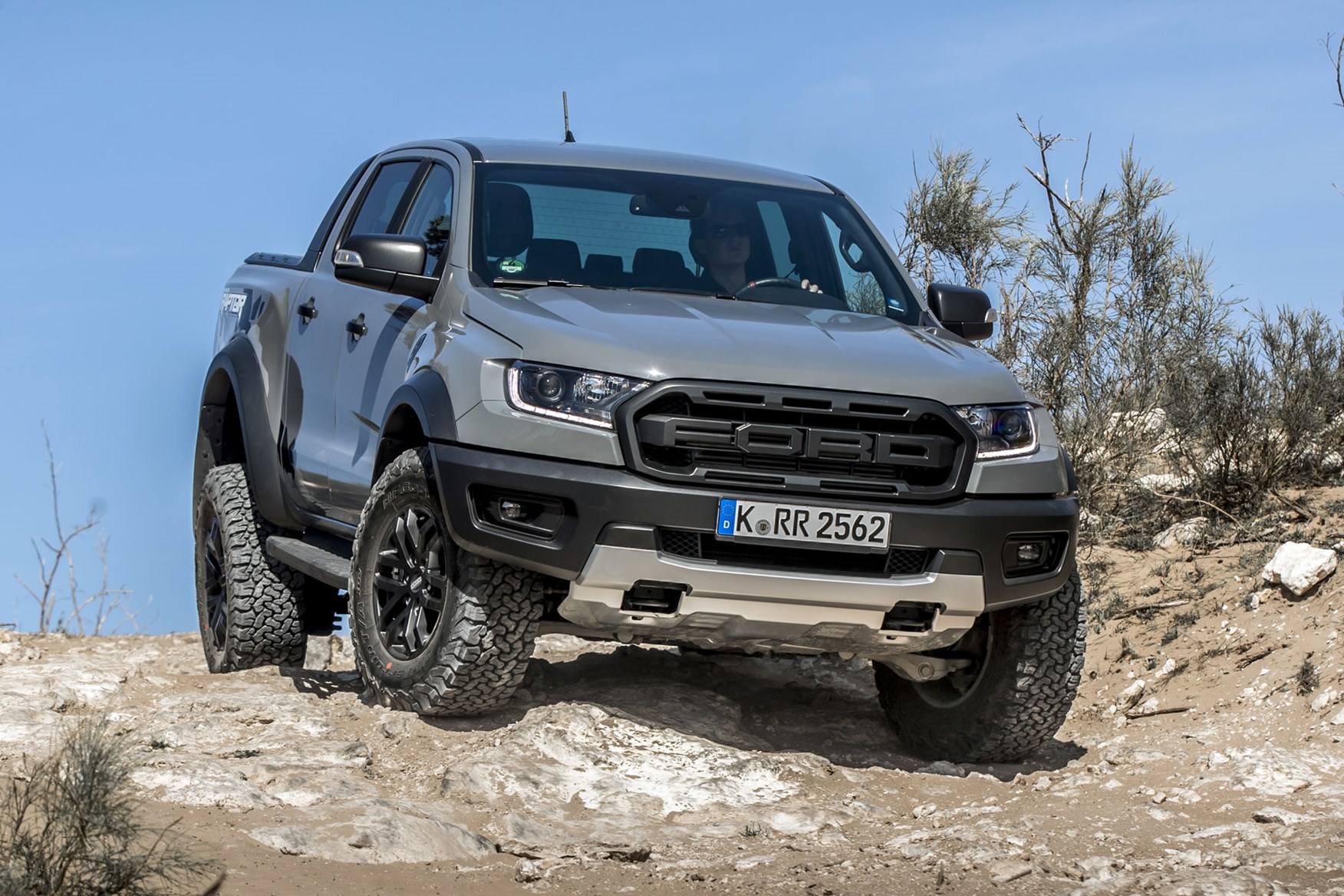
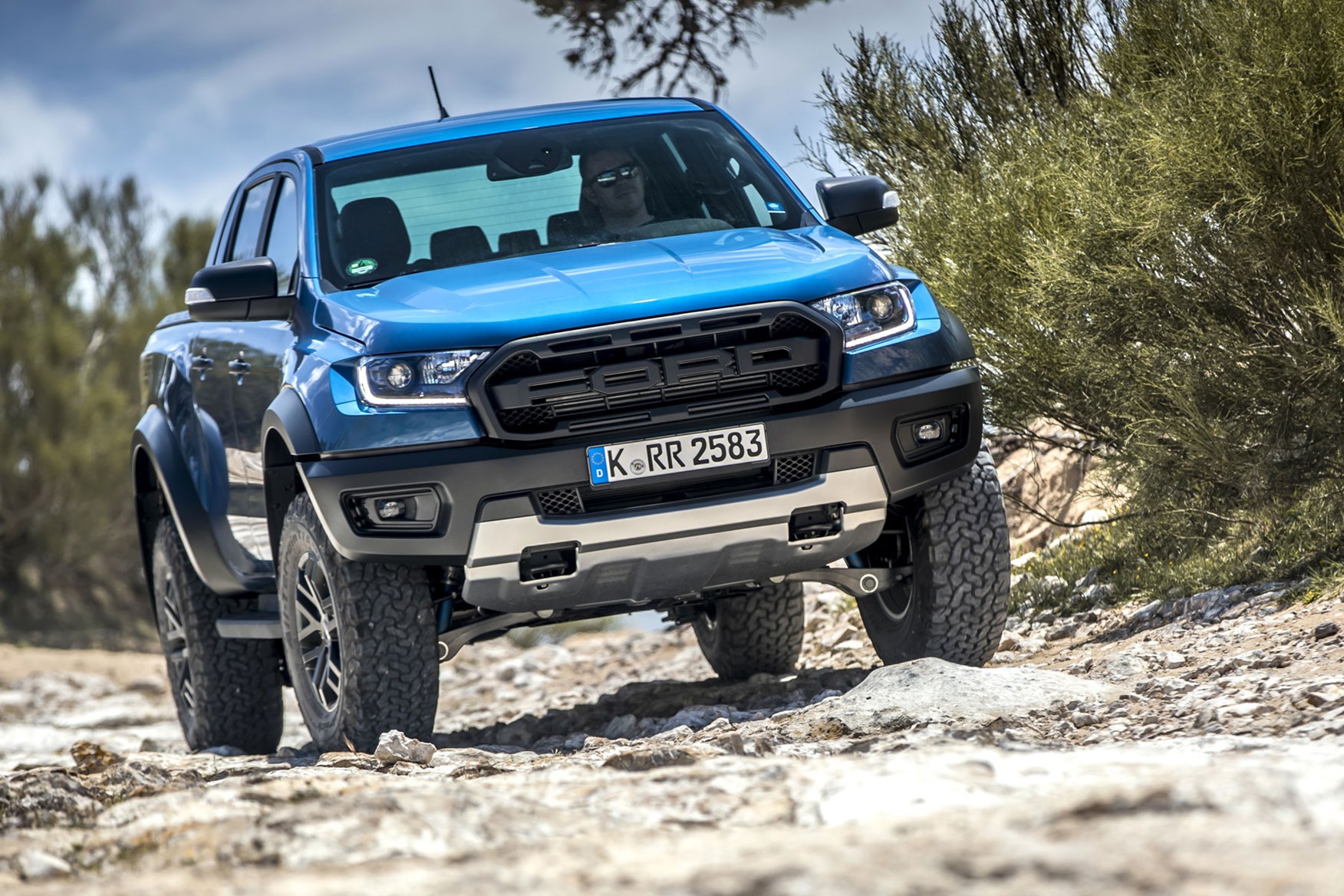
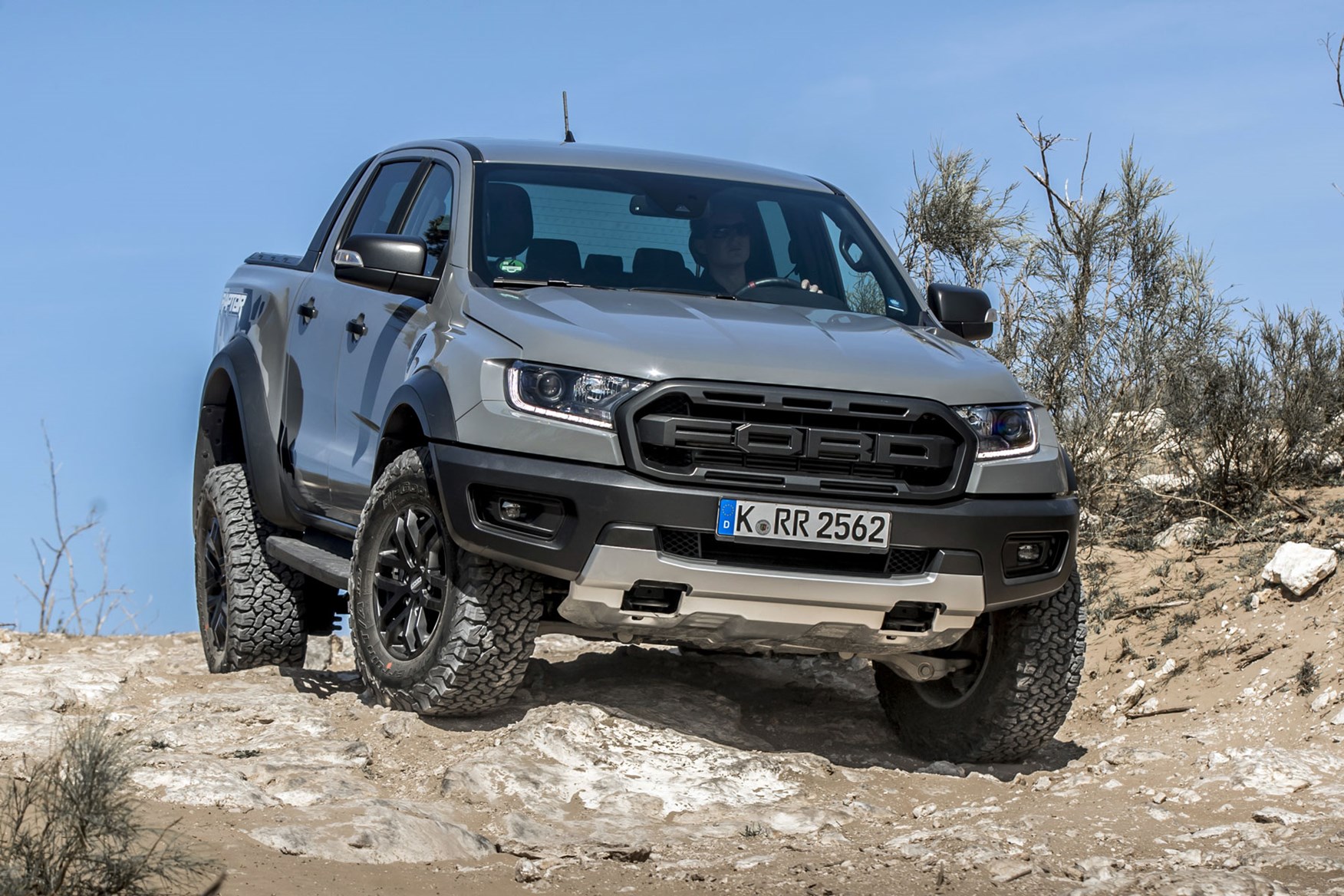
The 2019 facelift also brought in a whole host of new technology - including autonomous emergency braking (AEB) with pedestrian detection - and a new range-topping Ranger Raptor model (above) that's as comfortable on-road as it is immensely capable off it.
The Raptor is so comprehensively different to the standard Ranger we've dealt with it in a separate review.
>> Ford Ranger Raptor high-performance pickup review
Ford Ranger variants, trim levels and older engines
The Ranger is sold in Regular Cab, Super Cab and Double Cab body styles - the first two more often known as single-cab and crew-cab pickup configurations - plus a chassis cab from 2021. Trim levels range from basic working specifications to fully-loaded lifestyle models. There is a Ford Ranger to suit every kind of buyer.
Engine choice from launch until mid-2019 consisted of two 2.2-litre four-cylinder TDCi diesels, plus a large 3.2-litre five-cylinder TDCi diesel - the latter typically proving the better seller. Exact power output for each varies depending on year, with 130hp the minimum and 200hp the maximum. All were updated to meet Euro 6 emissions regulations in 2017.
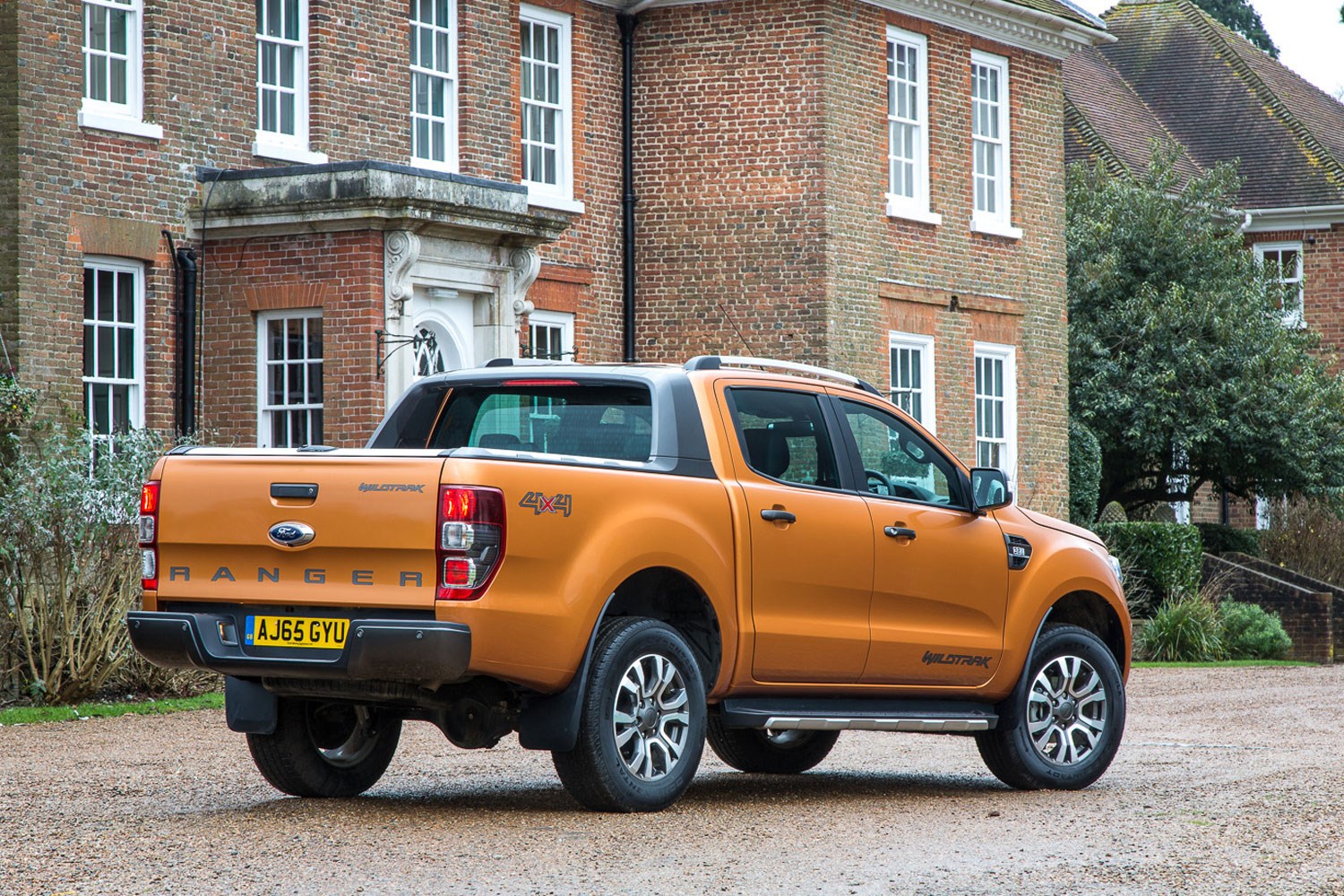
The Ranger has tidy road handling but earlier models have a firm ride, making it uncomfortable at low speeds in particular (especially in comparison to a conventional car or SUV).
Still, four-wheel drive, outstanding payload capacity and 3.5-tonne (3,500kg) towing capacity make it one of the most capable pickups available.
Ford Ranger rivals
Earlier models of Ranger were dependable workhorses that were praised for their overall capability and good dealership support. Rivals such as the Nissan Navara proved more refined and desirable, however.
To revitalise the Ranger for this generation, Ford redesigned it from the ground up. The planning appears to have done the trick, as it's gone on to become the UK's bestselling pickup by some margin.
This despite increased levels of competition from the likes of the Volkswagen Amarok and Mercedes-Benz X-Class (both now discontinued) at the lifestyle end of the market and the continuing presence of tough trucks such as the Toyota Hilux, Mitsubishi L200 and Isuzu D-Max to tempt operators looking for a workhorse.
Verdict: is the Ford Ranger any good?
With its impressive working credentials and extensive specification options, it's easy to understand how the Ford Ranger has become so popular with pickup buyers. Its good looks surely don't hurt, either, and the Ford dealer network is the UK's biggest, which helps. If you've got heavy loads to shift or tow, it is most definitely worth serious consideration.
Yet the 2.2-litre and 3.2-litre models never quite hit the mark for us; these engines are gruff, and they're not very comfortable.
The revised 2019 Ranger, however, is a much better prospect all round, with better engines, improved comfort and an array of up-to-date technology that makes up for the slightly rough and ready interior design. The Raptor is an outstanding innovation, while the lower specification Limited model is now almost car-like in its comfort.
A tough act for any rival to content with, and a worthy winner of the 2020, 2021 and 2022 Parkers Pickup of The Year Award.
Keep reading for the full Ford Ranger review, find out more about load capacity and towing on our dedicated Ford Ranger dimensions page, or use the quick links below to jump to the section that most interests you.
Skip to our full verdict on...
- Substantially improved driving experience from 2019
- 2.0-litre engines are powerful yet exceptionally quiet
- Older models still good to drive but less comfortable
From launch until the mid-2019 engine upgrade, to drive the Ford Ranger has always been a mix of impressive capability and competence with moderate frustration.
However, the arrival of the new 2.0-litre engines has tipped the balance firmly in the direction of all-round satisfaction. Though you may want to consider your trim level choice carefully if you're interested in comfortable ride quality.
Ford Ranger pre-2019 engines
Up until the 2019 facelift, Ford Ranger buyers had the choice of three engines:
- 2.2-litre TDCi four-cylinder turbodiesel with 130hp / 330Nm (134hp / 320Nm before the 2016 facelift)
- 2.2-litre TDCi four-cylinder turbodiesel with 160hp / 385Nm (150hp / 375Nm before the 2016 facelift)
- 3.2-litre TDCi five-cylinder turbodiesel with 200hp / 470Nm
While each one comes with plenty of low-down grunt, which helps the Ranger when moving a heavy load or towing, you have to work the 2.2-litre motors quite hard to make quick progress - at which point they become rather gruff and noisy.
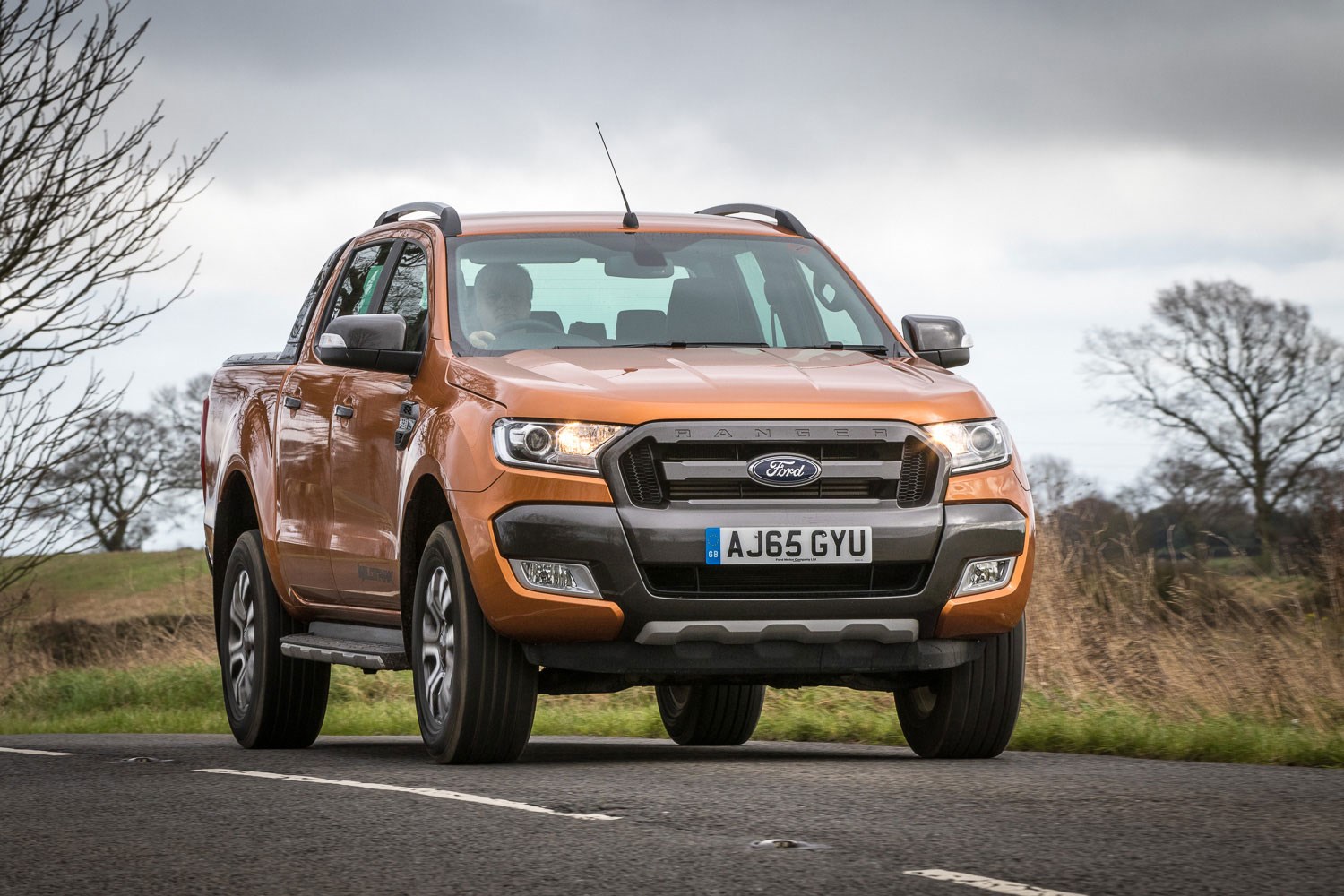
The 3.2-litre engine is better - as you'd expect, given how much bigger it is - but despite its impressive 200hp rating it falls someway short of the smooth driving experience available in more powerful versions of the Nissan Navara, let alone the big V6 options from the VW Amarok and Mercedes X-Class.
Ford Ranger 2.0-litre EcoBlue engines from 2019
Replacing the 2.2-litre engine from mid-2019 is a choice of three 2.0-litre EcoBlue four-cylinder turbodiesels, with the following power outputs:
- 130hp / 340Nm - single turbo
- 170hp / 420Nm - single turbo
- 213hp / 500Nm - twin turbo (badged bi-turbo)
As you can see, these new motors might be smaller, but they comprehensively outgun their larger long-standing predecessors for torque.
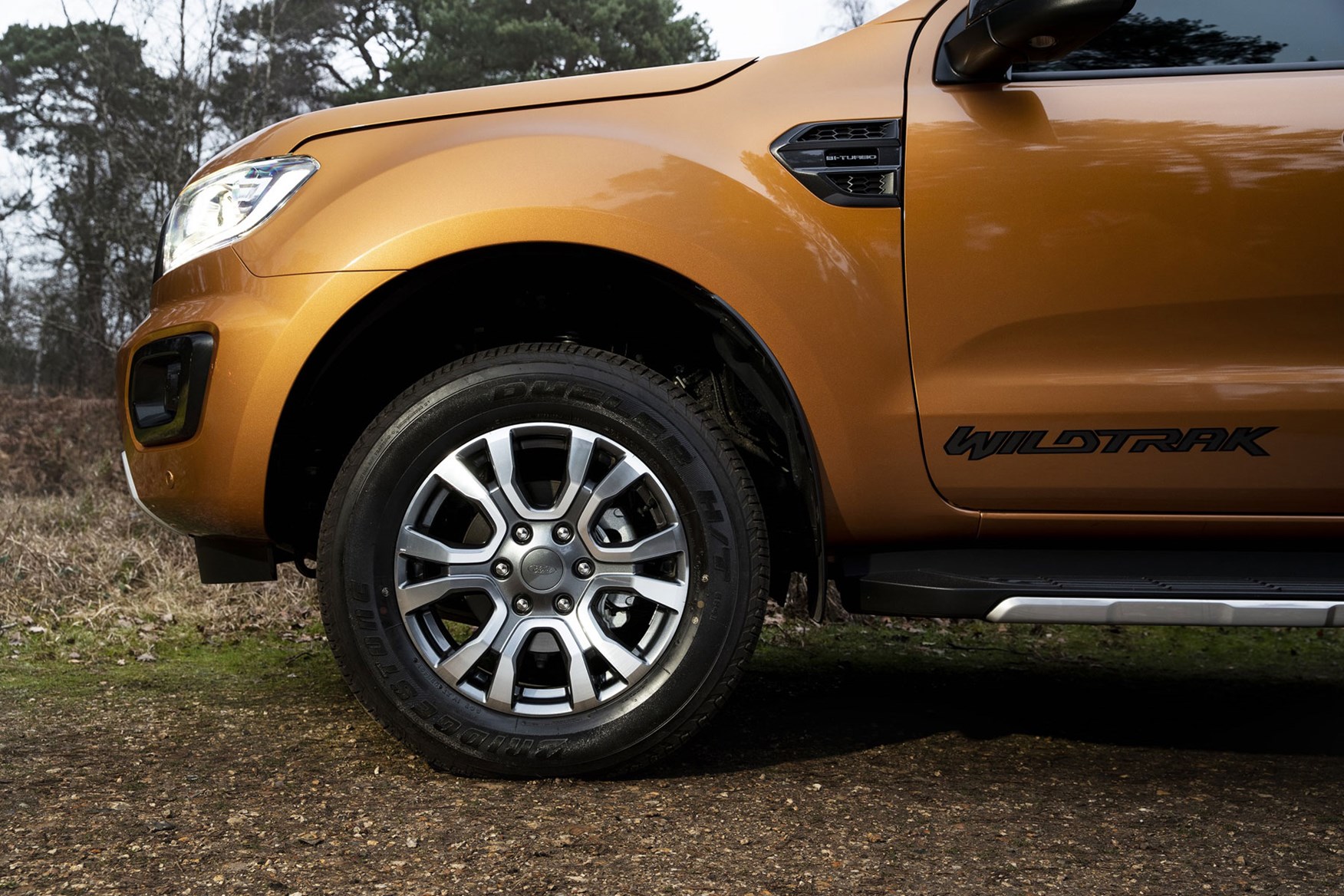
We've driven the 213hp bi-turbo extensively, and sampled the 170hp single-turbo model; we're still waiting on a chance to drive the 130hp version, but this is currently restricted to the entry-level XL regular cab, and is unlikely to disappoint in such a relatively lightweight model.
As is typical of Ford's EcoBlue engines, regardless of turbo count, the initial response is very keen, and they rev cleanly right through to the redline. There is no sense at all that you're likely to miss the extra physical capacity of the older units.
The performance isn't the first thing that strikes you about the EcoBlue Ranger, however. What really grabs you is just how astonishingly quiet they are - and not just compared with other pickup truck engines.
Clearly, the installation and isolation from the cabin is first rate, but Ford has also deployed noise-cancelling technology on higher-specification models to help filter out unpleasant sound frequencies.
But who cares how it's done - the point is that 2.0-litre Ranger, at least in its more lifestyle-orientated trim levels, is basically as quiet as a car. This alone transforms the driving experience, but there are other improvements, too, with high-spec models also getting a choice of driving modes as well as revised suspension.
Ford Ranger gearboxes
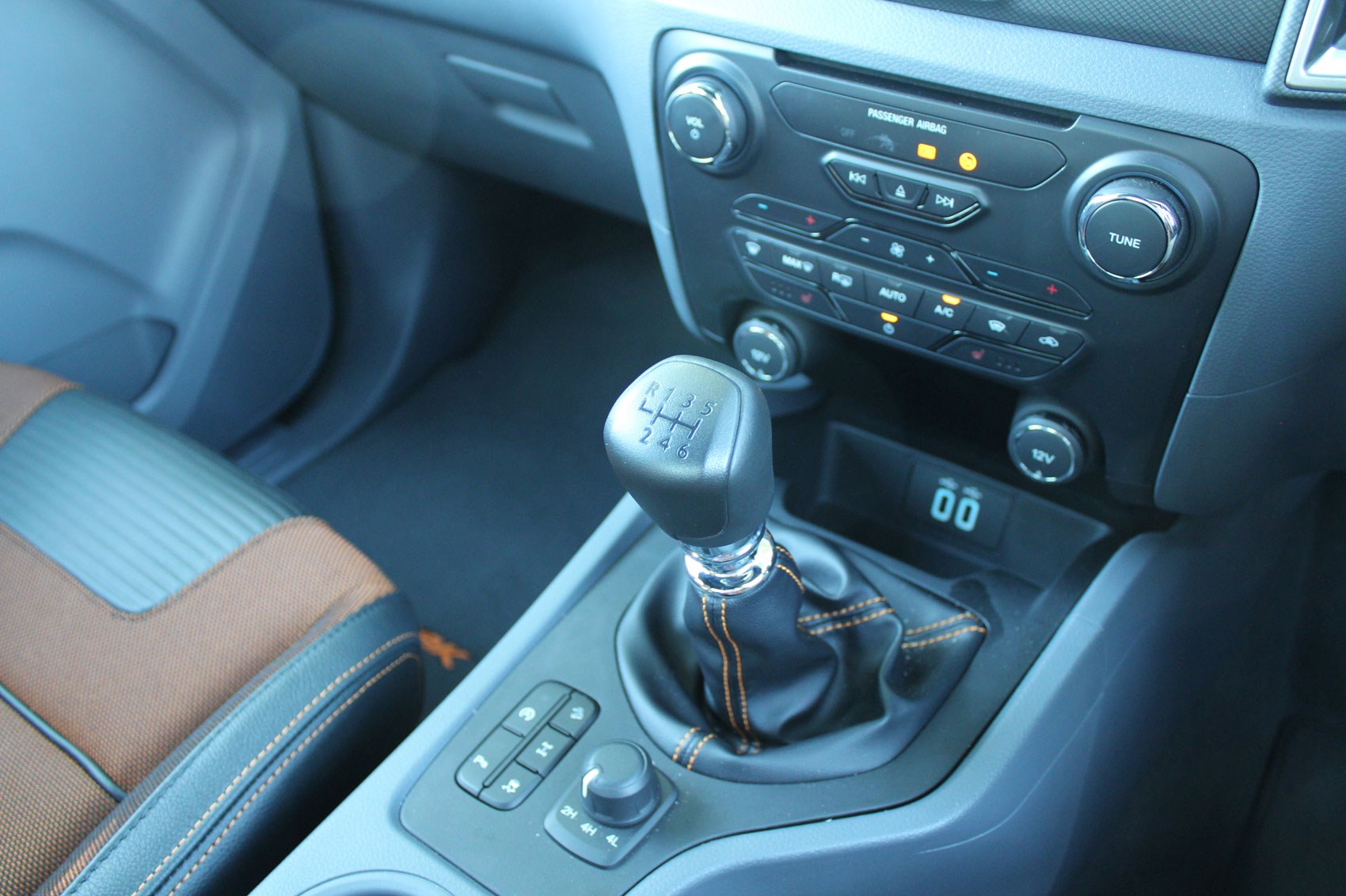
All Rangers come with a standard six-speed manual gearbox, which has a surprisingly short and accurate action - for a pickup. This makes more basic models such as the 2.0-litre Limited remarkably pleasant to drive.
Prior to the 2019 upgrade, higher-specification Rangers could be had with a competent - if thirsty - six-speed automatic.
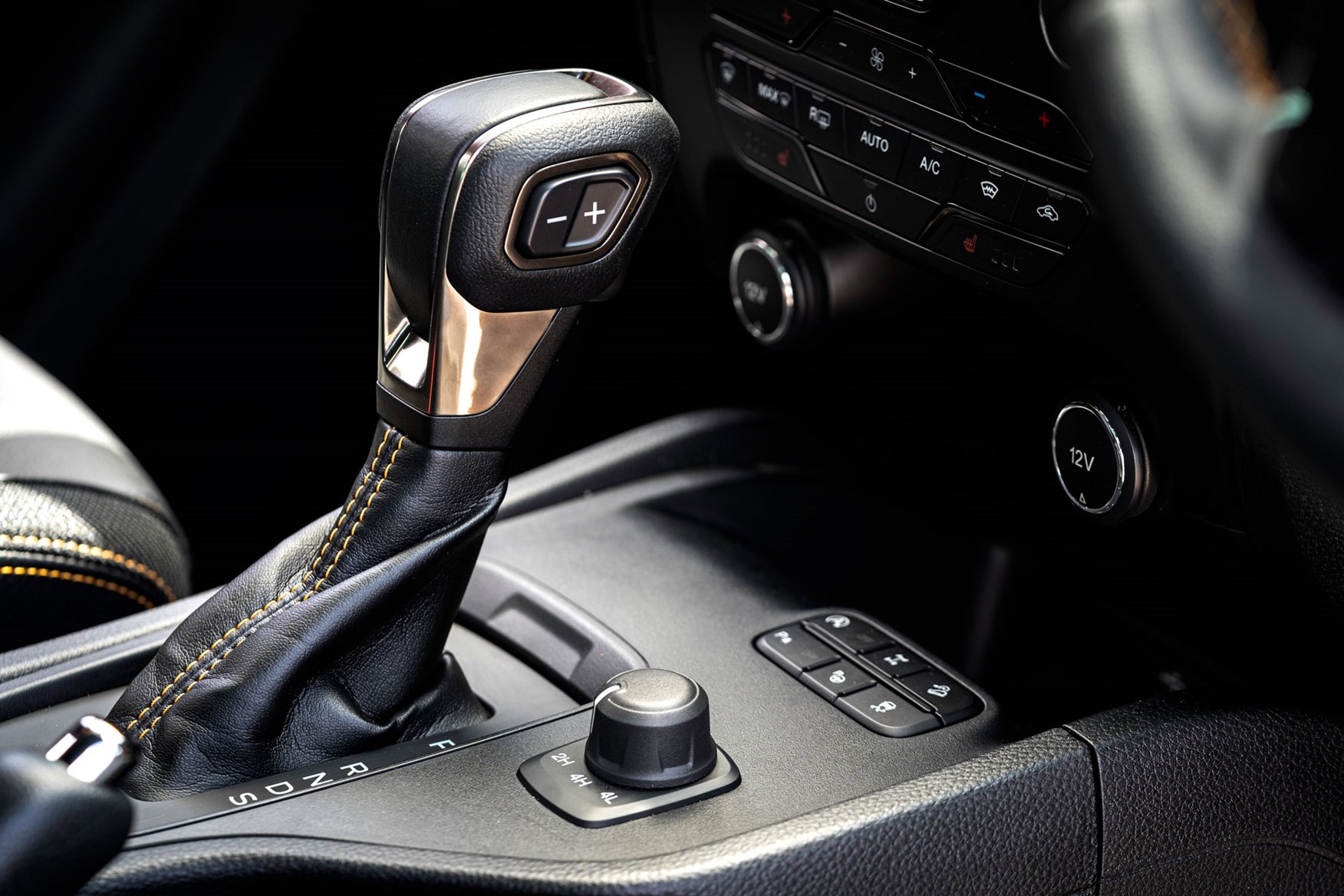
The newer 170hp and 213hp 2.0-litre engines can be fitted with a swift and smooth-shifting 10-speed automatic gearbox as an optional extra.
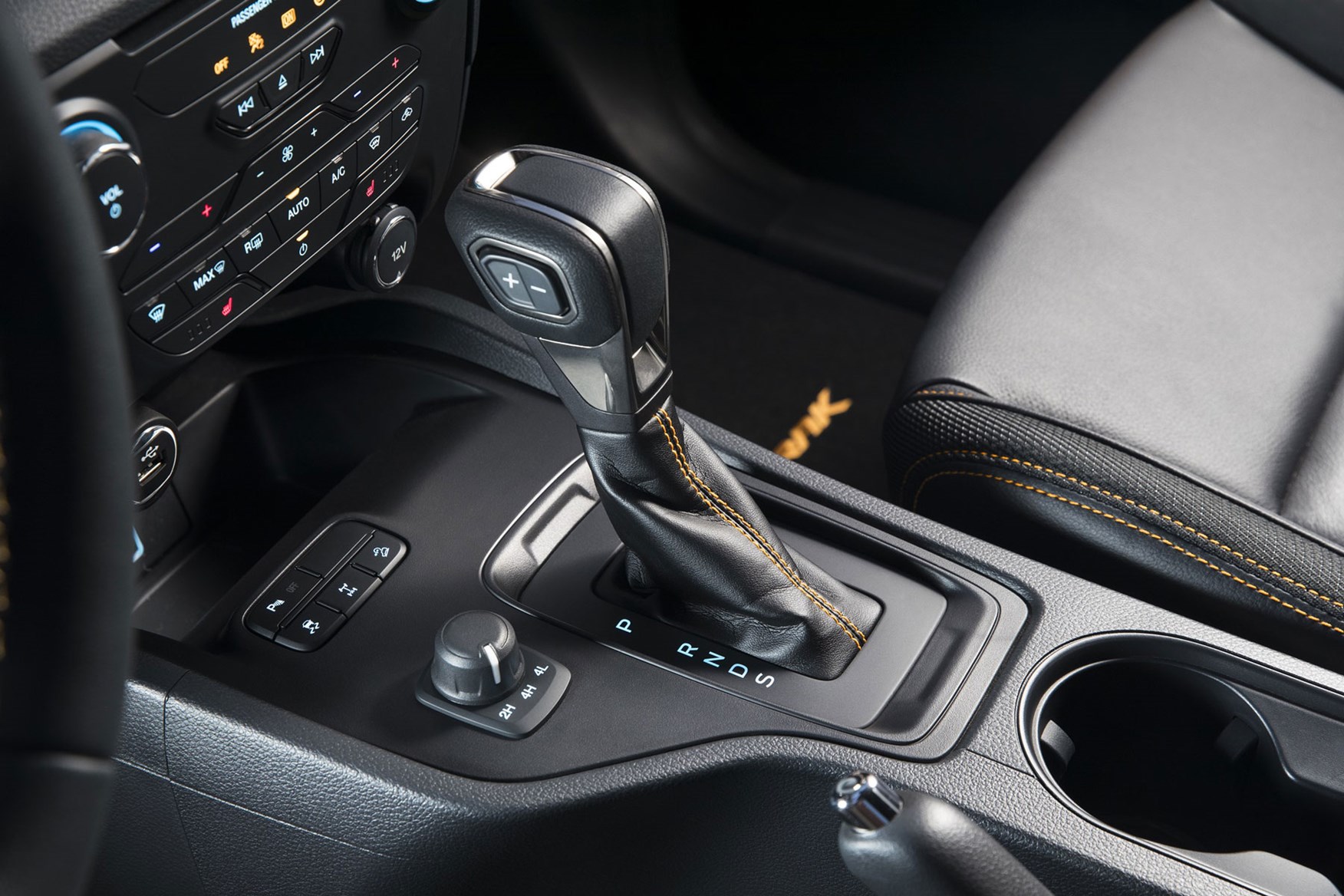
The trickiest thing about this is that if you opt to use the manual override you'll find there are now so many gears to choose from it can be rather overwhelming.
Fortunately, the 10-speed works very well in full automatic, where the additional ratios boost acceleration and reduce engine noise at speed.
Adding to the Ranger's versatility, Ford offers a choice of final drive ratios, allowing you to tailor the vehicle towards performance, economy or even towing.
Ford Ranger four-wheel drive system
The most basic Regular Cab models are available with a choice of two- or four-wheel drive, with all other Ranger models are fitted with four-wheel drive as standard.
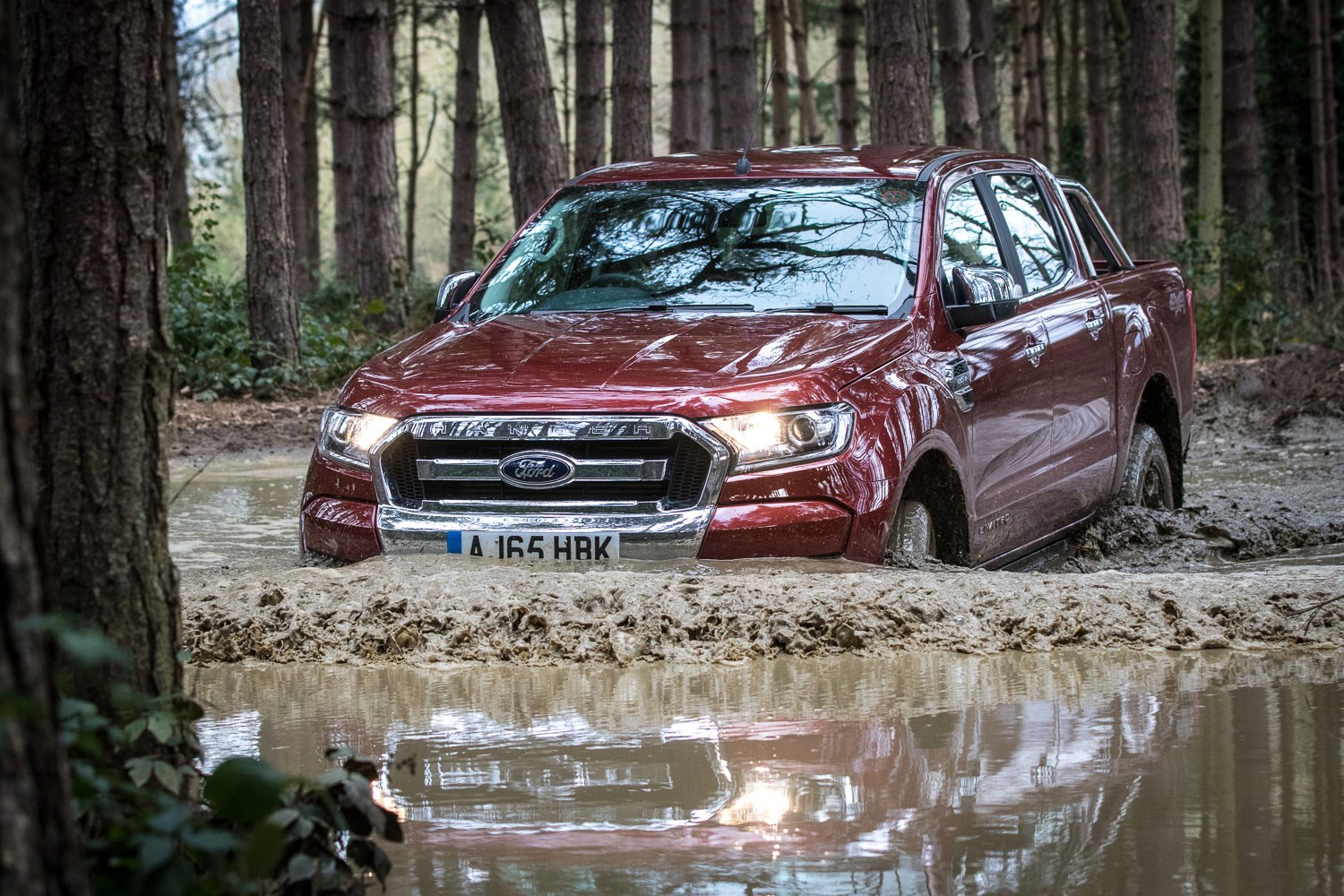
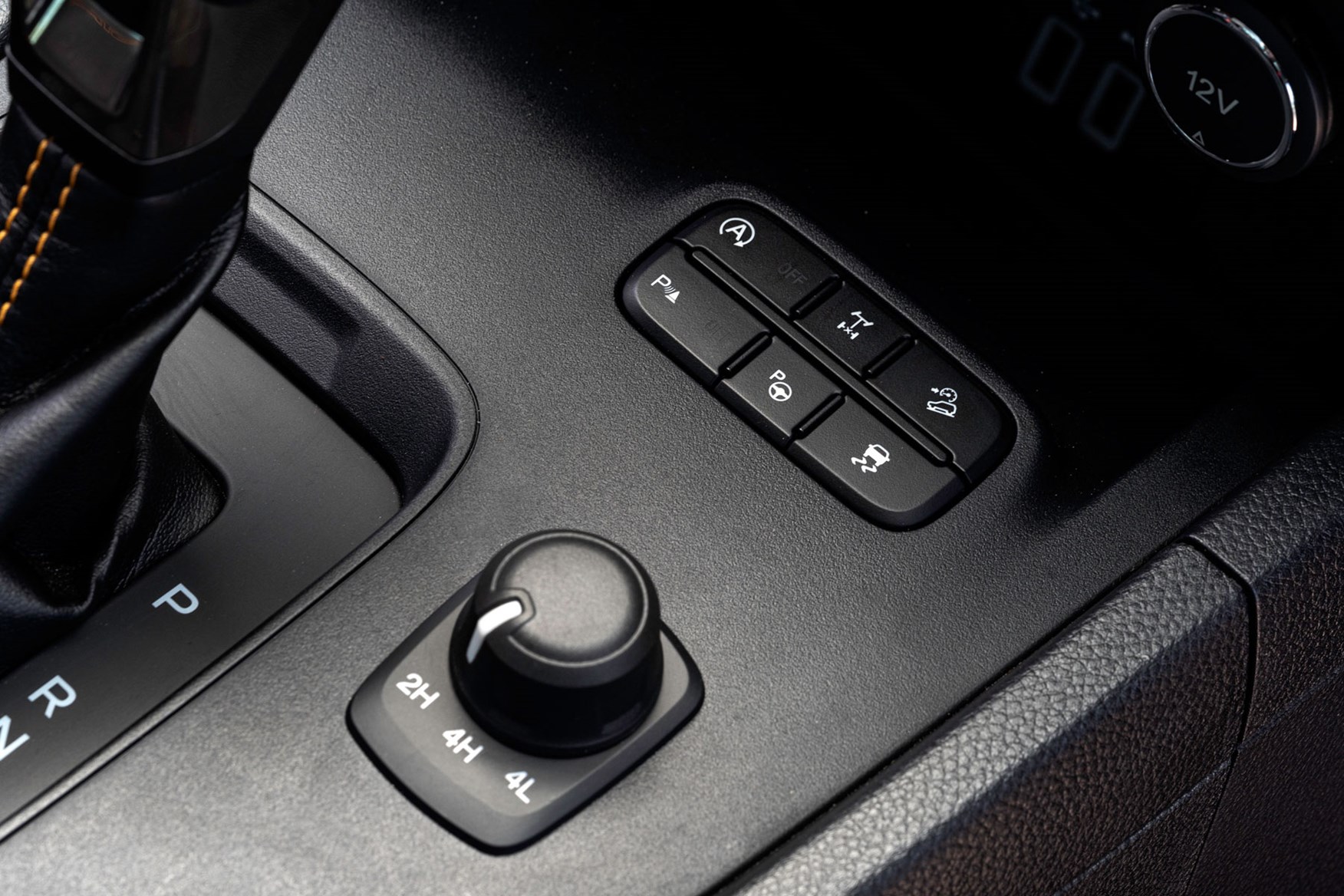
The four-wheel drive system has a choice of modes, which can be switched while you're driving up to moderate speeds with just the twist of a dial. The Raptor has its own settings, but more on that below.
Ford Ranger off-road specifications (2019-on):
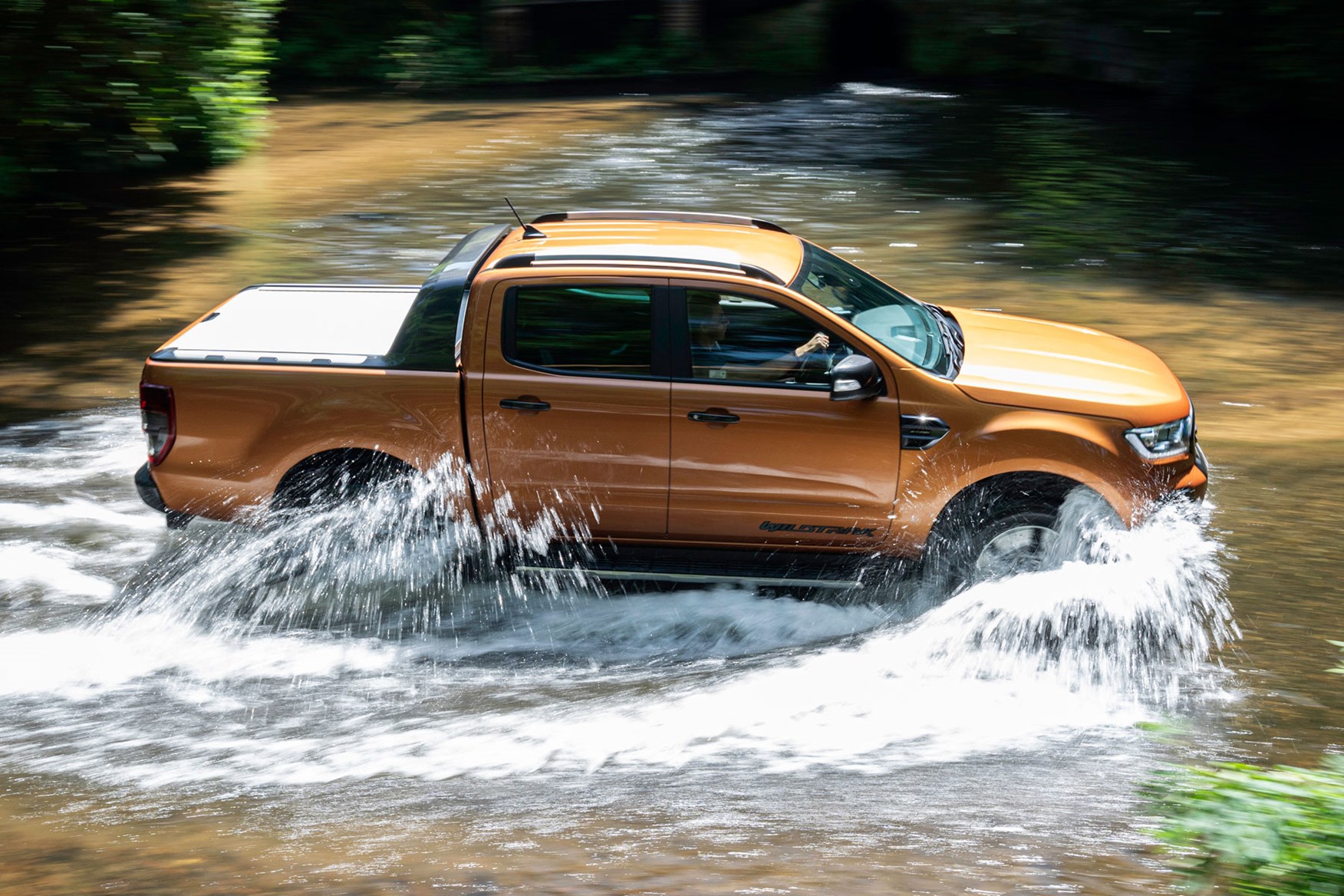
- Wading depth: 800mm
- Ground clearance: 230mm
- Approach angle: 29 degrees
- Departure angle: 21 degrees
Ford Ranger ride and handling
The Ranger has always steered well, with a relatively tight turning circle and good body control on twisting roads - meaning it doesn't roll around very much and changes direction smartly.
The trade-off for this prior to 2019 has forever been a slightly uncomfortable ride - especially at lower speeds, where the Ranger can feel very jiggly. This improves as you go more quickly, however, making this one pickup that's as happy on fast A- and B-roads as it is hauling goods on site.
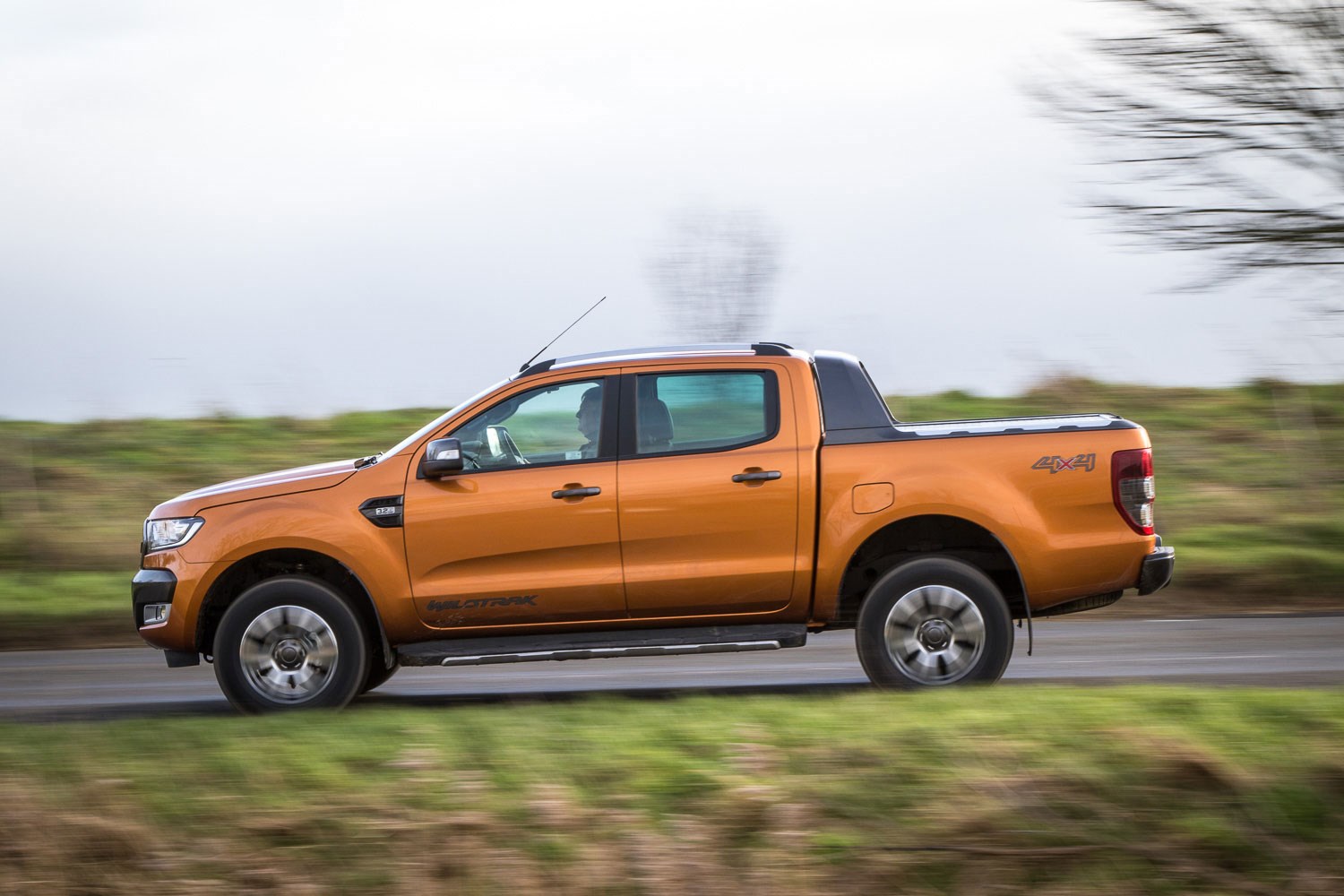
The 2.0-litre models available from mid-2019 are better yet in every area. The lighter engine aids direction changes, while revised suspension irons out most of the low speed irritability - even if you'll find the Wildtrak, which comes on large 18-inch wheels, remains noticeably firm.
So if comfort is key for you, we'd suggest forgoing the full suite of bells and whistles the Wildtrak offers and selecting the Limited trim instead. With smaller wheels and slightly softer suspension tuning, this is now a really comfortable pickup with close to car-like behaviour on-road.
Sudden dips and bumps will still upset the 2019-onwards Rangers' composure, but overall this is now a really likeable driving experience.
The most comfortable version of all, though, is the Ranger Raptor - thanks to its amazing off-road suspension.
What's the Ford Ranger Raptor like to drive?
The Ranger Raptor is a high-performance model, which, like the big Ford F-150 Raptor sold in the USA, is heavily optimised for high-speed off-road driving.
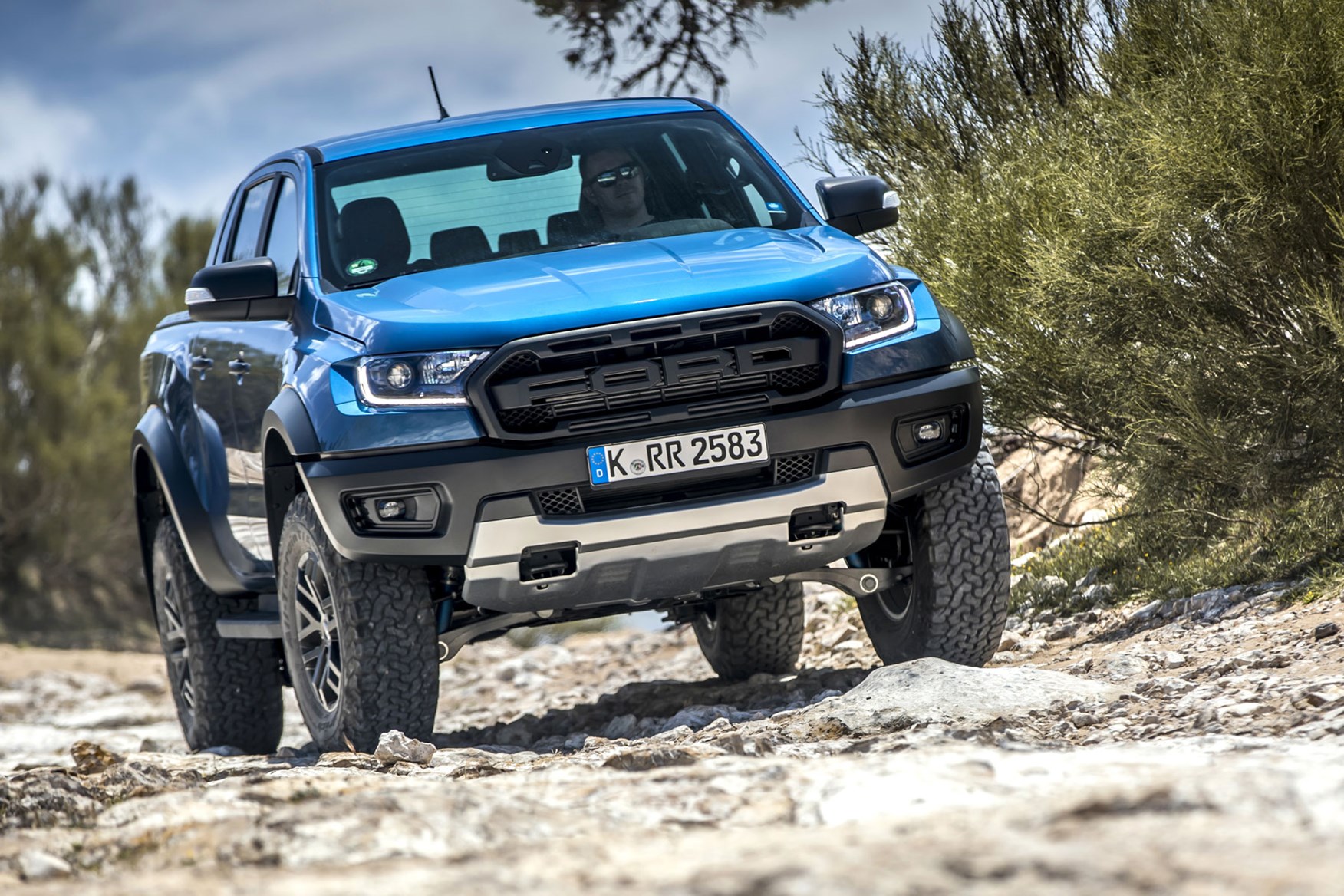
It joined the Ranger line-up as part of the 2019 makeover, powered by the 213hp 2.0-litre twin-turbo EcoBlue diesel engine and fitted with the 10-speed automatic gearbox as standard.
We've got a review exclusively dedicated to this exciting new Ranger Raptor variant. This comprehensively covers not only what the Ranger Raptor is like to drive, but also all of the modifications that make it so special.
It's quite the incredible piece of kit, and something the UK pickup truck market has never seen before.
You'll pay a substantial price for it, though.
- User-friendly cab with upgraded materials for 2019
- Comfortable seats and plenty of space inside
- Extra tech for 2019 includes Apple CarPlay, Android Auto and AEB
The plastics and detailing aren't quite as high in quality as those found in conventional Ford cars, but overall the Ranger's cabin feels tough and well built - in a manner appropriate for this kind of vehicle.
Ford Ranger seat comfort
Thanks to a wide range of adjustment, drivers shouldn't have any issue finding a good driving position, but with the exception of the figure-hugging items in the Raptor, the seats could do with more side support to stop you sliding about.
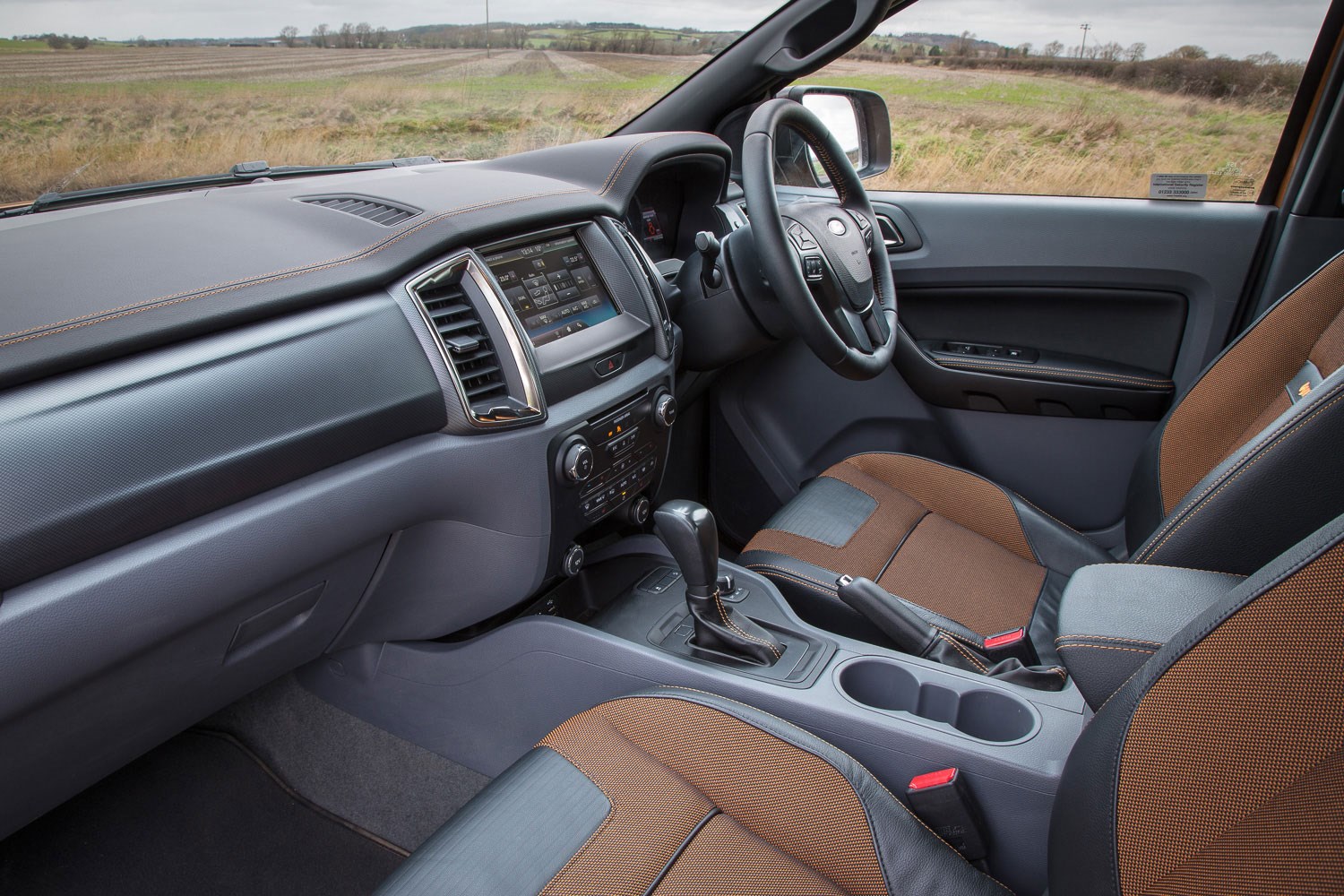
Still, there's plenty of space inside, and you should find the cabin generally free from rattles and squeaks.
Ford Ranger refinement
While on the road, wind and tyre noise are reasonably limited, but you will experience quite a bit of vibration and engine noise from 2.2-litre models especially - at low speeds, and particularly when the engine is cold.
The newer 2.0-litre motors do not seem to suffer from this problem at all. Even started from cold they are quiet and car-like. So much so that you're more likely to be bothered by tyre roar than engine noise in these.
Storage and visibility
There are a variety of storage pockets and cubbyholes, including a large 8.5-litre centre console bin. But like most pickups, the Ranger's interior isn't as practical as that of a van.
Visibility, an important factor in bigger vehicles, is good thanks to large door mirrors. But you will still need to take care when you park.
Ford offers parking sensors and reversing cameras to help with this, and the latest models are available with automatic park assist, allowing them to identify suitable spaces and then park themselves.
Ford Ranger 2016 facelift interior upgrade
The 2016 upgrade brought in a new cab design with a simplified but functional, approach.
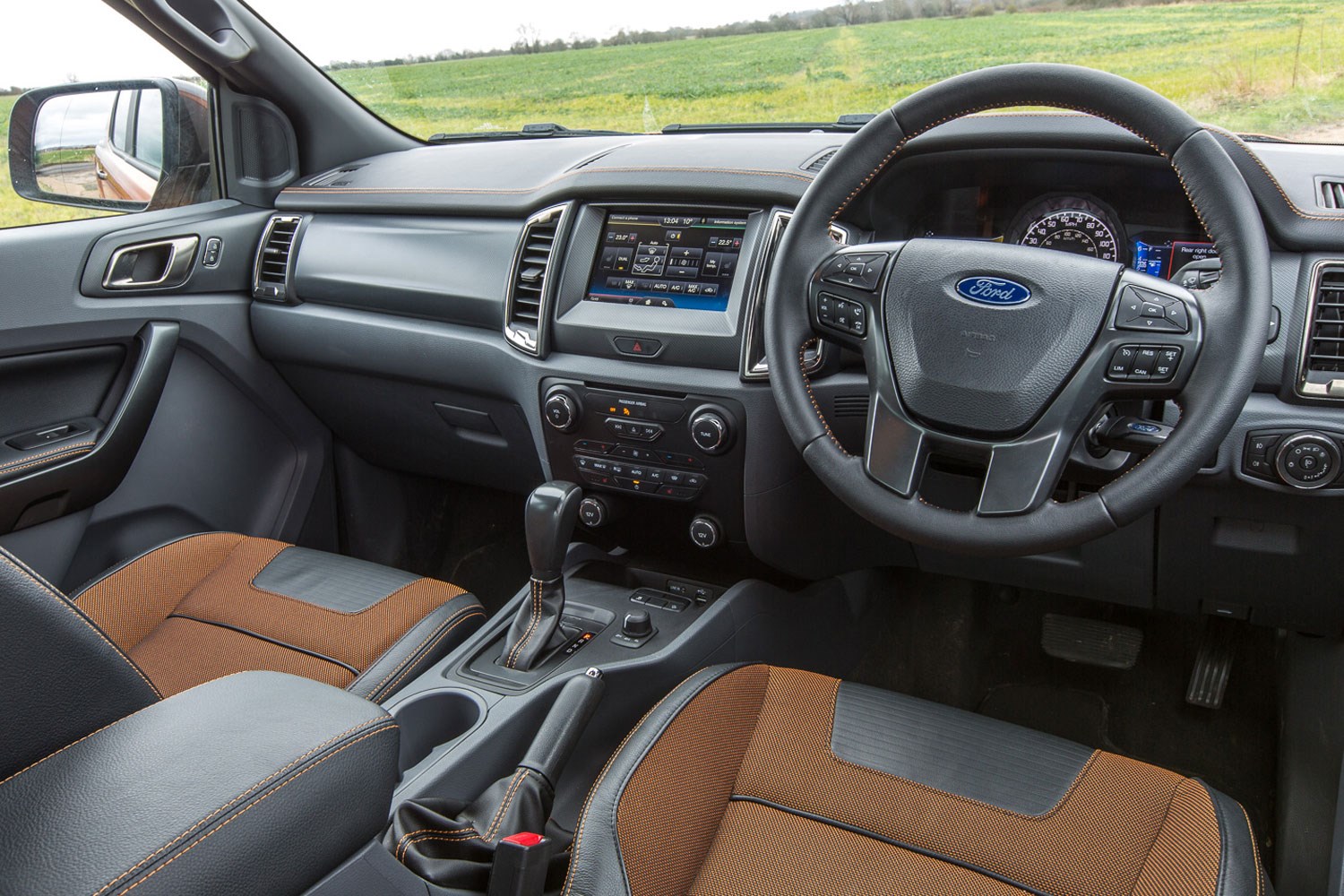
This included a new 8.0-inch display screen and upgraded Ford Sync infotainment system, fitted as standard on the Limited and Wildtrak, and an optional extra on the XL and XLT.
A host of new driver assistance technologies were also introduced at the same time, including Lane Keeping Alert and Lane Keeping Aid, and Adaptive Cruise Control with Forward Alert.
More tech added in 2019
No major changes to the interior design of the 2019-onwards models, but some of the trim materials have been revised, with new Ebony Black finishing and greater depth and shine to painted areas, increasing the impression of quality.
A trick that's actually worked very well.
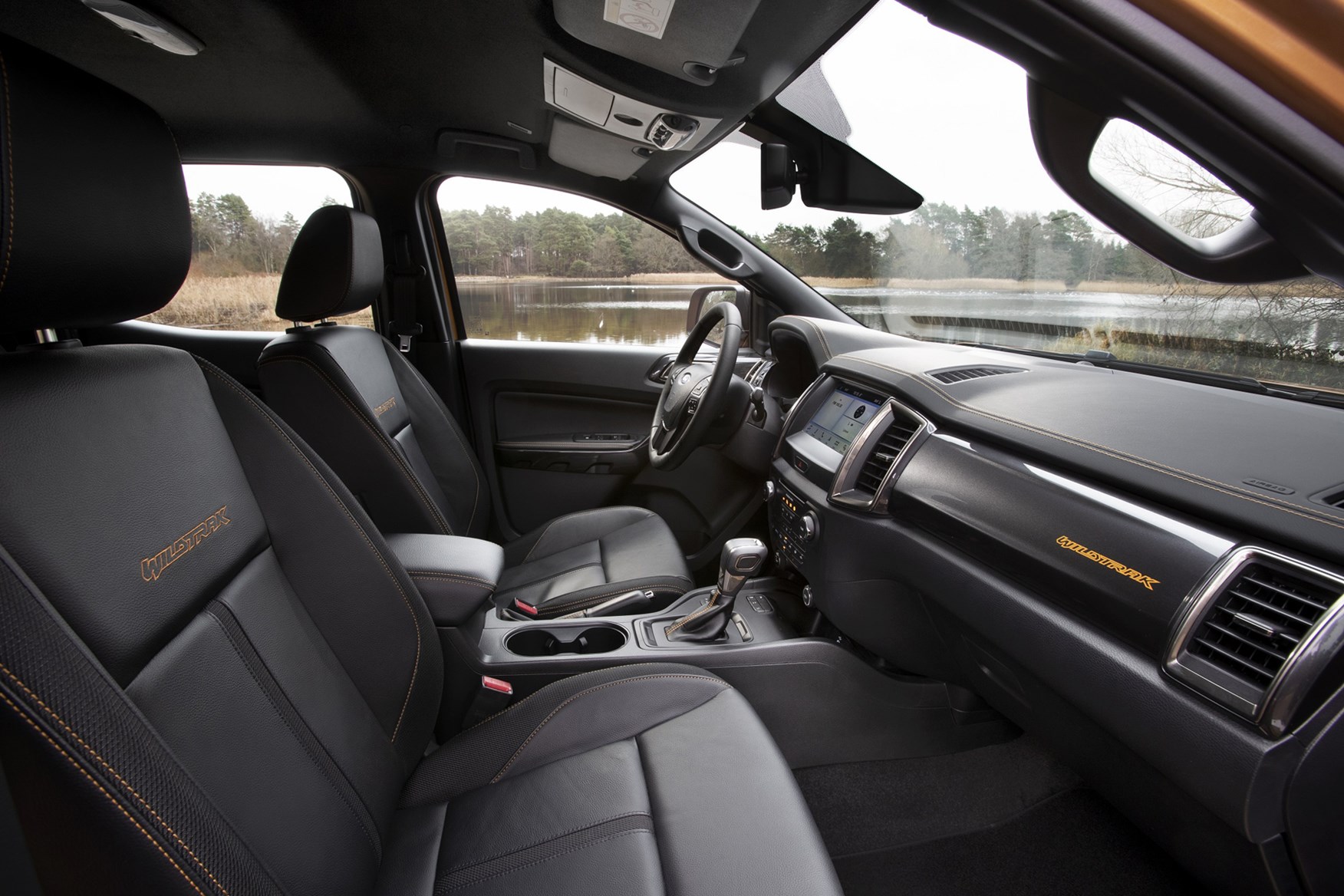
The tech count has also increased, with the latest Ford Sync 3 infotainment system including Android Auto and Apple CarPlay connectivity, while FordPass Connect offers a 4G mobile hotspot that can connect to as many as 10 devices.
The same system allows you to access the vehicle remotely via your smartphone - including the ability to lock and unlock it, check tyre pressures, oil level and mileage, and check the Ranger is still where you parked it.
Keyless entry and start are new for 2019, too. As is the active noise cancelling system mentioned in the Driving Experience section above.
Autonomous emergency braking with pedestrian detection is also new from 2019.
- Wide choice of trim levels with excellent standard kit
- Variety of optional extras to tailor your truck
- But not the longest warranty and short service intervals
As with most Ford products, the Ranger is highly competitive when it comes to value for money - it's not the cheapest pickup on the market, but you get plenty in exchange for your cash.
Many rivals offer better warranty protection now, however, and the Ranger's fuel economy is far from the best in the pickup truck class, regardless of which engine you choose.
Ford Ranger service intervals
For non-2.0-litre models, the service intervals are every two years or 18,000 miles (30,000km in Europe).
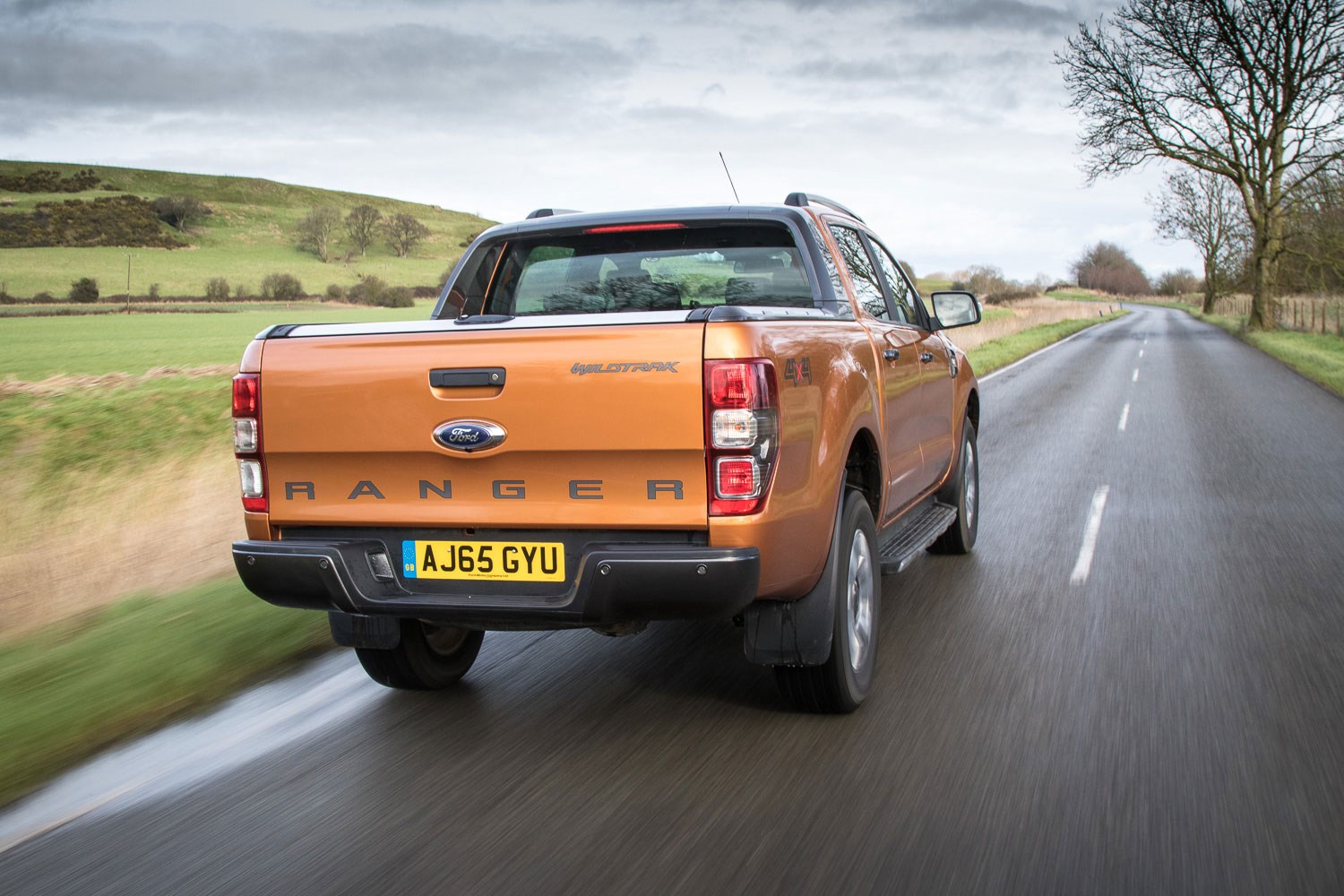
Unusually, this interval has been shortened for the newer engines, with 2.0-litre EcoBlue models requiring a service every 12,500 miles or two years, plus an annual inspection for safety.
Ford Ranger warranty info
The Ranger comes with a one-year unlimited mileage warranty, which is extended by a further two years up to 60,000 miles, giving a total of three years' coverage unless you've a very high-mileage user.
A 12-year anti-corrosion or 'perforation' warranty means you shouldn't have any issues with rust damage - but do get the bodywork checked every time you take it for a service in order to keep this warranty intact. Make sure it's noted in the service book.
Overall, the Ranger shouldn't cost much to maintain and unexpected bills should be rare. But several rivals now offer five-year warranty packages and longer mileage allowances.
Ford Ranger mpg
Fuel economy isn't the Ranger's strongest area, even after the introduction of the newer 2.0-litre EcoBlue engines, which are supposed to be at least 4% more efficient that the 2.2-litre engines they replace (9% when it comes to comparing the 10-speed automatic with the old six-speed auto).
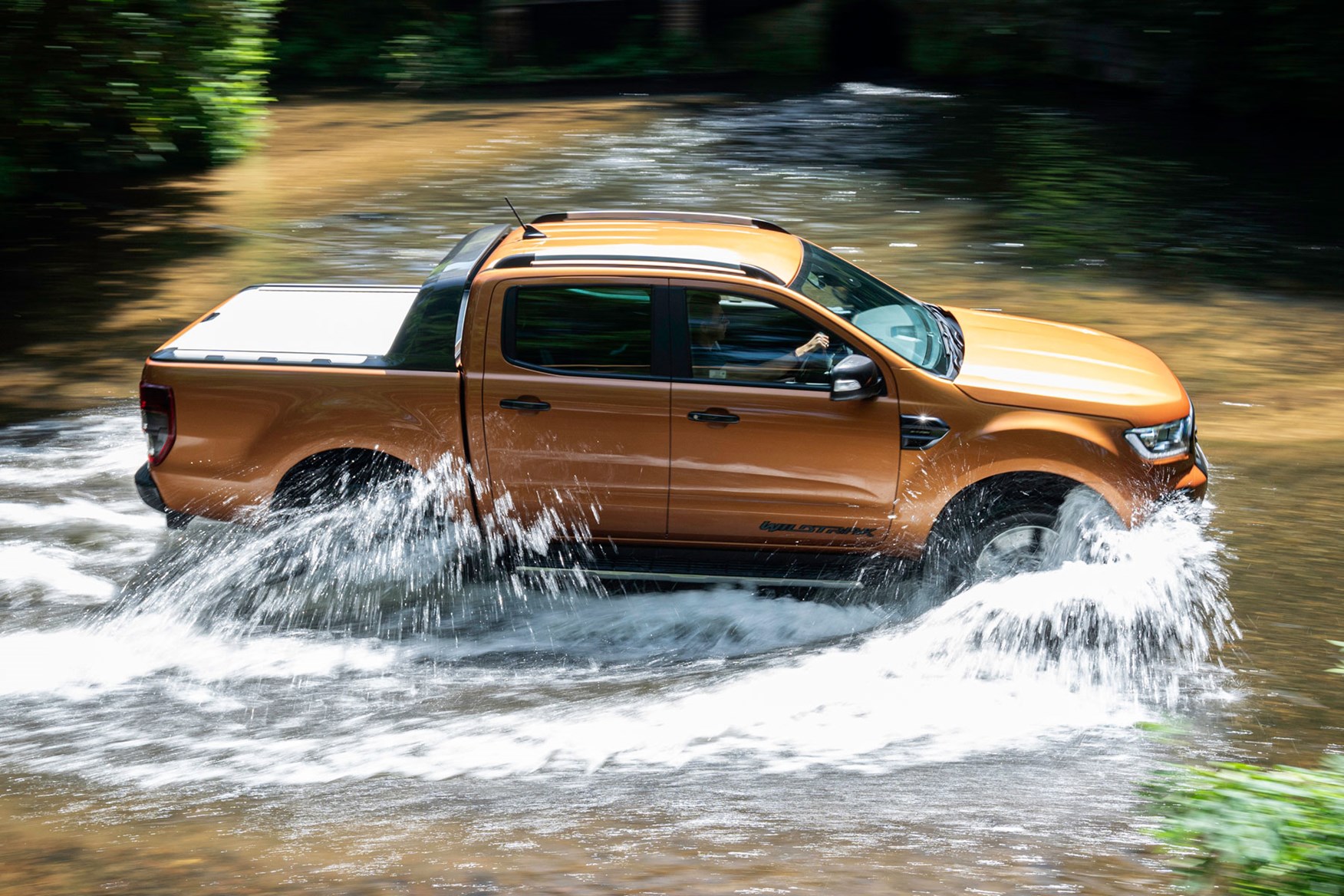
However, the official figures still aren't great, with Double Cab models claiming between 35.8mpg and 40.9mpg when fitted with the manual gearbox - the difference due to the varying weight of trim levels, power outputs and choice of final drive ratios (as discussed in the Driving Experience section above).
Automatic Rangers with the 2.0-litre engine claim between 31.7mpg (that's the Raptor, which is auto only) and 36.7mpg.
The 3.2-litre engine that soldiered on in the Wildtrak until May 2020 is said to manage between 29.7mpg and 33.2mpg.
Expect to get less than these figures out in the real world, though stop-start technology is now standard (except on the 213hp six-speed manual).
Ford Ranger AdBlue consumption
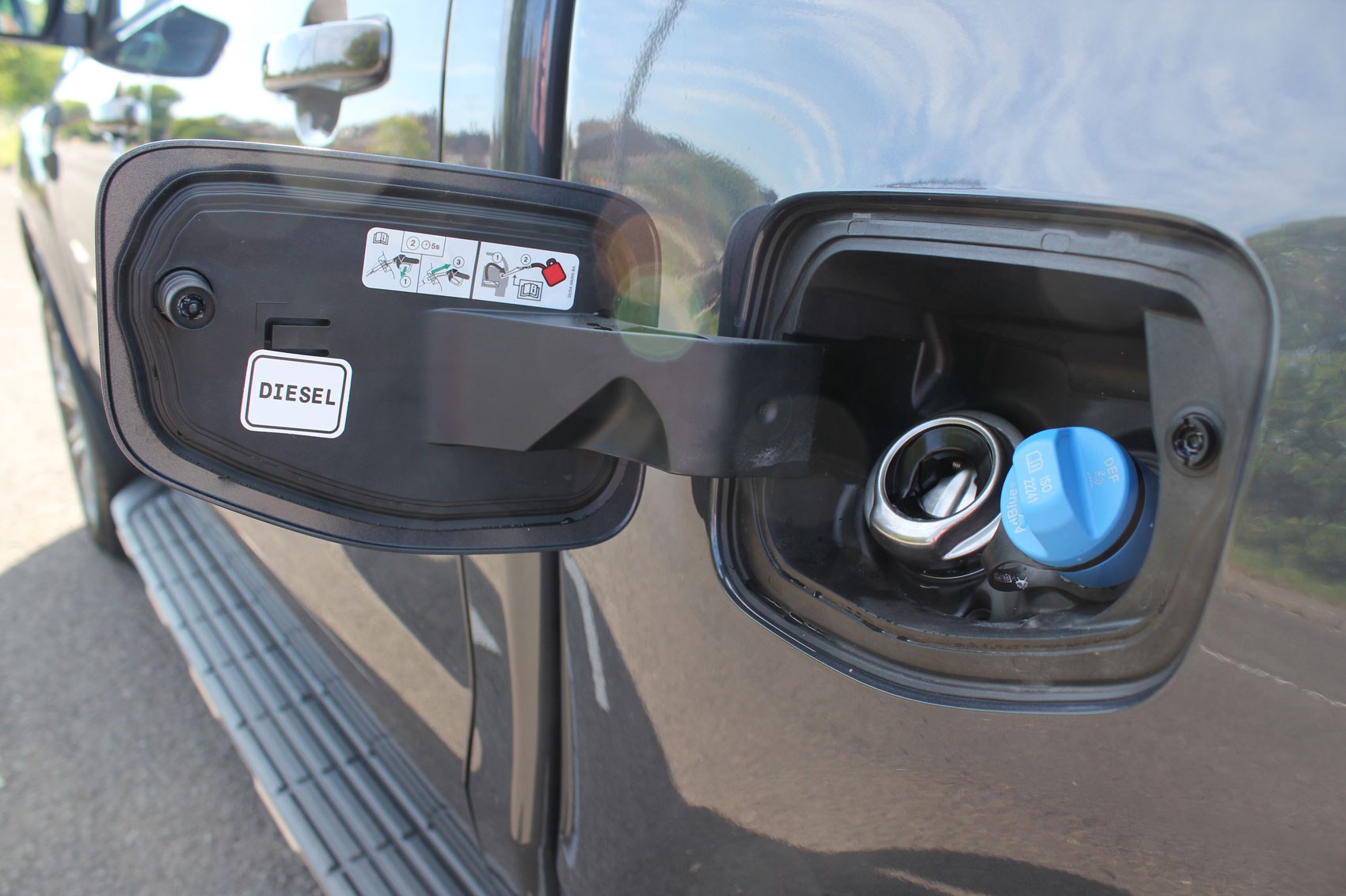
Any Ford Ranger that meets Euro 6 emissions regulations is fitted with an AdBlue tank (you can easily tell if yours has one by checking for two fillers under the fuel flap). This needs to be refilled whenever it empties, otherwise the truck will refuse to start.
The tank is not especially large, and the amount of AdBlue required by the emissions control system will vary with usage and load.
Theoretically, you should get around 6,000 miles per tankful, but some owners report half that distance when travelling heavily loaded or while towing, especially when the vehicle is new.
Ford Ranger standard equipment
The Ranger comes in four standard trim levels. XL and XLT are mostly aimed at working operators, while Limited and Wildtrak target the lifestyle crowd, or those who simply want a little more luxury with their truck.
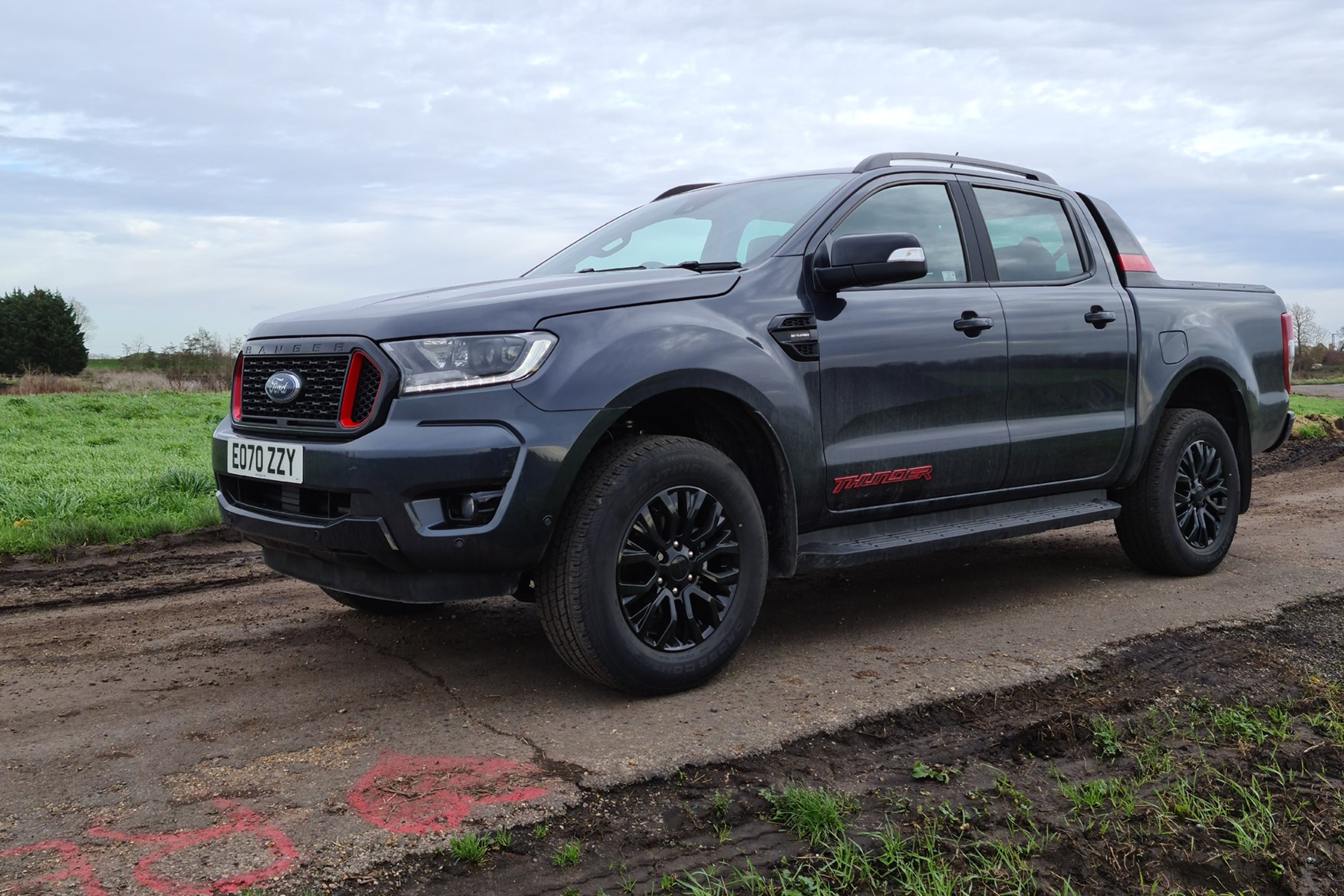
In addition to this there is the Raptor - which we've detailed this in a separate review - and Ford often has a special edition on the go, the most recent example being the Ranger Thunder (pictured above).
These are the highlight standard equipment items for each specification; for full details of safety and security equipment see that section, below.
Ford Ranger XL standard spec highlights:
- 16-inch steel wheels
- Body-coloured front bumper
- Electric, heated door mirrors
- Ford Easy Fuel capless refuelling system
- Under-run bar
- Rear mudflaps
- Stop-start
- Quickclear heated windscreen
- Air-conditioning
- Cruise control
- DAB radio
- Bluetooth
- Electric front windows
- Six-way adjustable driver's seat
The XL is the only Ranger to come in the Regular Cab bodystyle (better known as a single cab) as well as the Super Cab and Double Cab options; engine choices are the 130hp and 170hp 2.0-litre EcoBlue motors, available with the six-speed manual gearbox only.
Ford Ranger XLT standard spec highlights (in addition to XL):
- 16-inch alloy wheels
- Chrome exterior trim (door handles, door mirrors and front grille)
- Chrome rear under-run bar
- Plastic moulded side steps
- Front foglights
- Rear bedliner with 12v socket
- Power tailgate lock
- Power-folding door mirrors
- Automatic lights and wipers
- 4.2-inch Ford Sync infotainment system
- Leather-trimmed steering wheel with audio controls
- Auto-dimming anti-dazzle rear view mirror
- Overhead console
- Illuminated vanity mirrors in the sunvisors
The XLT comes in Super Cab and Double Cab bodystyles in combination with the 170hp EcoBlue engine and six-speed manual gearbox only.
Ford Ranger Limited standard spec highlights (in addition to XLT):
- 17-inch alloy wheels
- Keyless entry and start
- Rear-view camera
- Rear parking sensors
- Bi-Xenon headlights with LED daytime running lights
- Door mirrors also include puddle lights
- Chrome tubular sports bar
- Rear tinted glass
- EasyLift tailgate
- 8.0-inch Ford Sync 3 infotainment system with Apple CarPlay and Android Auto
- Eight-way power adjustable driver's seat with heating and lumbar support
- Leather interior
- Ranger floor mats
- Power converter
- Centre console cool box
The Limited is also available in Super Cab and Double Cab, this time with a choice of 170hp or 213hp - both optionally available with the 10-speed automatic transmission.
Ford Wildtrak standard spec highlights (in addition to Limited):
- 18-inch alloy wheels
- Grey exterior detailing (in place of chrome)
- Titanium effect inserts in plastic moulded side steps
- Aerodynamic sports hoop with side rails and built-in load bed light
- Roof rails
- Door mirrors also include side indicators and titanium effect finish
- LED front foglights
- Satellite-navigation
- Part-leather trim design with contrast stitching
- Black headlining
- Wildtrak floor mats
- Ambient lighting
- Off-road pack with locking rear differential and underbody protection
The Wildtrak comes as a Double Cab, and is the only 2019-onwards Ranger to still use the 200hp 3.2-litre engine - though the 213hp 2.0-litre is also available (and would be our choice).
A six-speed manual gearbox is standard, though you can have a six-speed auto in the 3.2 and the 10-speed auto on the 2.0 if you want to pay extra for them.
The 3.2 was finally discontinued for all Rangers in May 2020.
Ford Ranger optional extras
Ford offers a large range of optional extras for its pickup, covering everything from practicality to active safety. A selection of options packs also group popular items together at a reduced cost for extra value.
- Oil pump failure a worrying concern
- EcoBlue engines can have injector issues
- Few recalls since 2011, though
First thing to note here is that Ford has more dealers than any other manufacturer in the UK, so if something does go wrong with your Ranger you shouldn't be too far away from a place that can fix it.
The Ranger also outsells all its rivals on a regular basis, so the number of vehicles on the road can make problems appear more common.
Oil pump issues and other reliability problems
Reliability of this pickup is not flawless. The most serious issue seems to be oil pump failure on some 2.2-litre engines, which can happen with very little warning and subsequently cause the engine to seize - a big bill if it happens out of warranty.
There have also been reports of gearbox failures, issues with injectors and problems with Mass Air Flow (MAF) sensors, the device that measures the air entering the engine in order to make sure the right amount of fuel is also added.
A large number of Rangers (nearly 14,000 in the UK) were also checked for faulty injectors in 2015, but any problems found should have been corrected free of charge as part of an official recall. See more about these below.
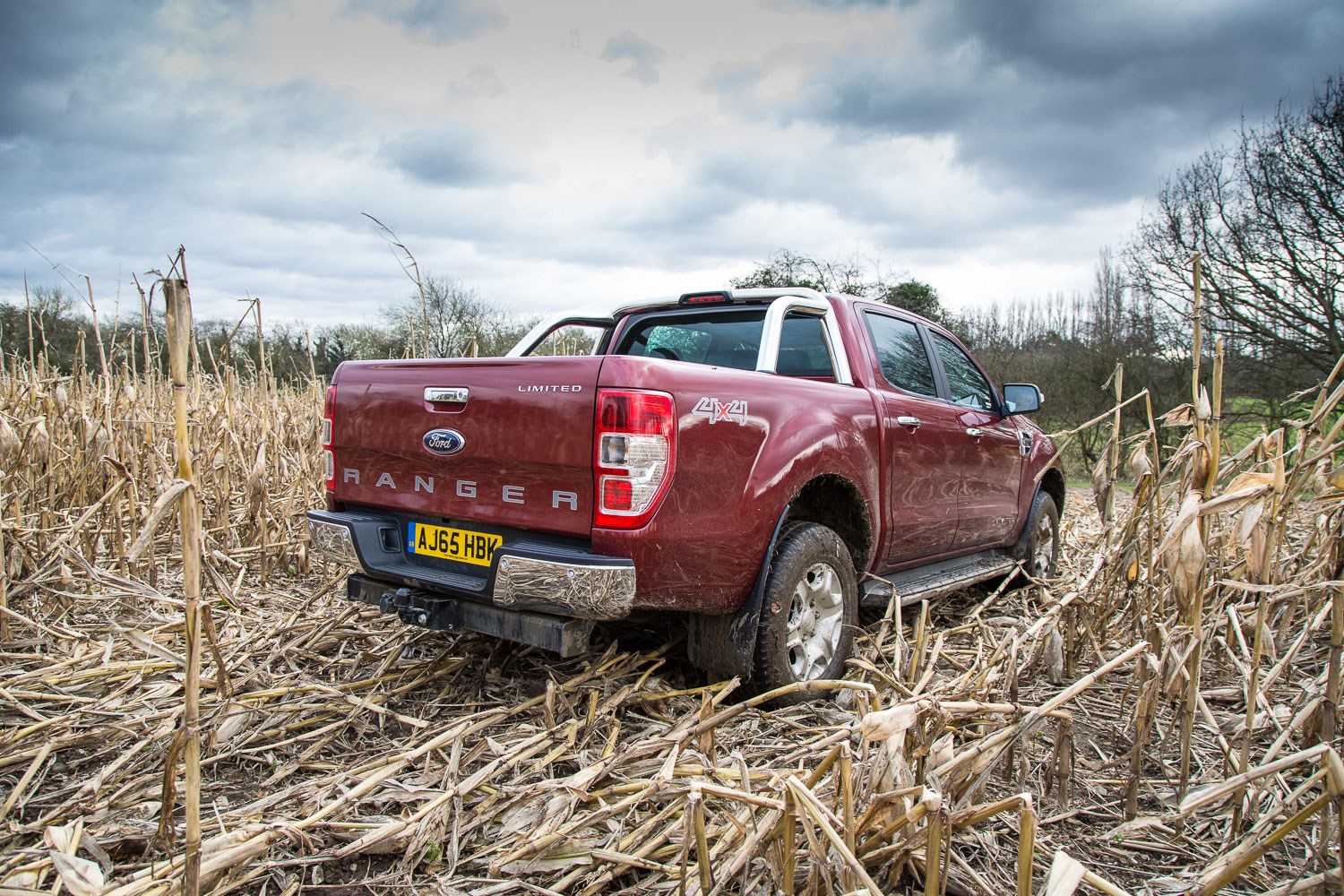
If buying used, a professional inspection is advised; these pickups are very likely to have been used hard. Look and listen for signs of rough running, hesitation when acceleration and any unusual rattling noises.
Official recalls
There have also been a number of official recalls. This is not unusual - most vehicles suffer from some of these - and in fact, for a vehicle that's been on sale for so long, the Ranger actually hasn't had many.
A few early models were checked for a potential automatic transmission issue that might see the gearbox shift from sixth to first (yikes), and seat backs that failed to engage correctly.
The injector issue mentioned above was related to Rangers built in 2014 and 2015, and could cause the engine to cut out while driving.
Later there was issue with gearshift cables that could come loose and damage a rear driveshaft, and 50 Rangers were recalled for a potential problem with the side airbags.
Ford Ranger EcoBlue injector fault
Since the Ranger has only been offered with EcoBlue engines since mid 2019, and Ford started acting seriously on injector issues with the EcoBlue engines in September 2019, there shouldn't be a major problem here.
But the company has issued a service action to replace potentially faulty injectors in these engines, and some Rangers could be affected. Worth checking on if buying an early EcoBlue model used, but the replacement work should have been carried out under warranty at no charge to the original owner.
Over-The-Air software updates
All Rangers fitted with FordPass Connect - standard equipment from mid-2020 - benefit from remote software update capability. This not only means your Ranger's on-board systems should always be up-to-date without you having to visit a dealer, it should also provide some wireless fault-fixing.
Potentially this promises a welcome reduction in vehicle downtime.
- First pickup to get a five-star Euro NCAP rating
- Lots of high-tech safety options
- Alarm as standard
This generation of Ford Ranger made history by being the first pickup to receive the maximum five-star Euro NCAP crash safety rating when it was tested in 2012.
The Euro NCAP test procedure has been made tougher since, but safety remains an impressive selling point for the Ranger.
Ford Ranger safety
All current versions come with:
- Electronic stability control (ESC)
- Trailer sway control
- Emergency brake assist
- Seven airbags
- Three-point seatbelts for all positions.
The Ranger is also available with electronic aids such as hill descent control, lane-departure warning and forward collision alert - later upgraded to autonomous emergency braking with pedestrian detection.
Ford Ranger security
A Thatcham Category 1 alarm system is standard, and factory-fit tonneau covers can be specified for those who need to cover the cargo bed.
The FordPass Connect connectivity system can give you further peace of mind by allowing you to locate your Ranger at any time via the FordPass Pro app on your smartphone.
This will already send you alerts if the alarm is set off, but from late 2020 a new FordPass Pro Guard Mode will also warn you if someone tries to access the vehicle even if they're using a genuine key.
Which Ford Ranger (11-22) is best for me?
Still trying to work out which Ford Ranger is best for you? Check out the following individual model reviews for more inspiration:
- MS-RT Ford Ranger review - tested February 2023
- Ford Ranger Thunder special edition review - tested November 2020 (opens in new window)
- Ford Ranger Black Edition review - tested May 2018
- Ford Ranger Wildtrak Euro 6 review - tested June 2016
- Ford Ranger Limited 3.2 Euro 5 review - tested February 2016
We can also help you find new and used Ford Rangers near you:
>> New Ford Ranger pickup for sale
>> Used Ford Ranger pickups for sale
MS-RT Ford Ranger review
Tested February 2023 by Tom Wiltshire
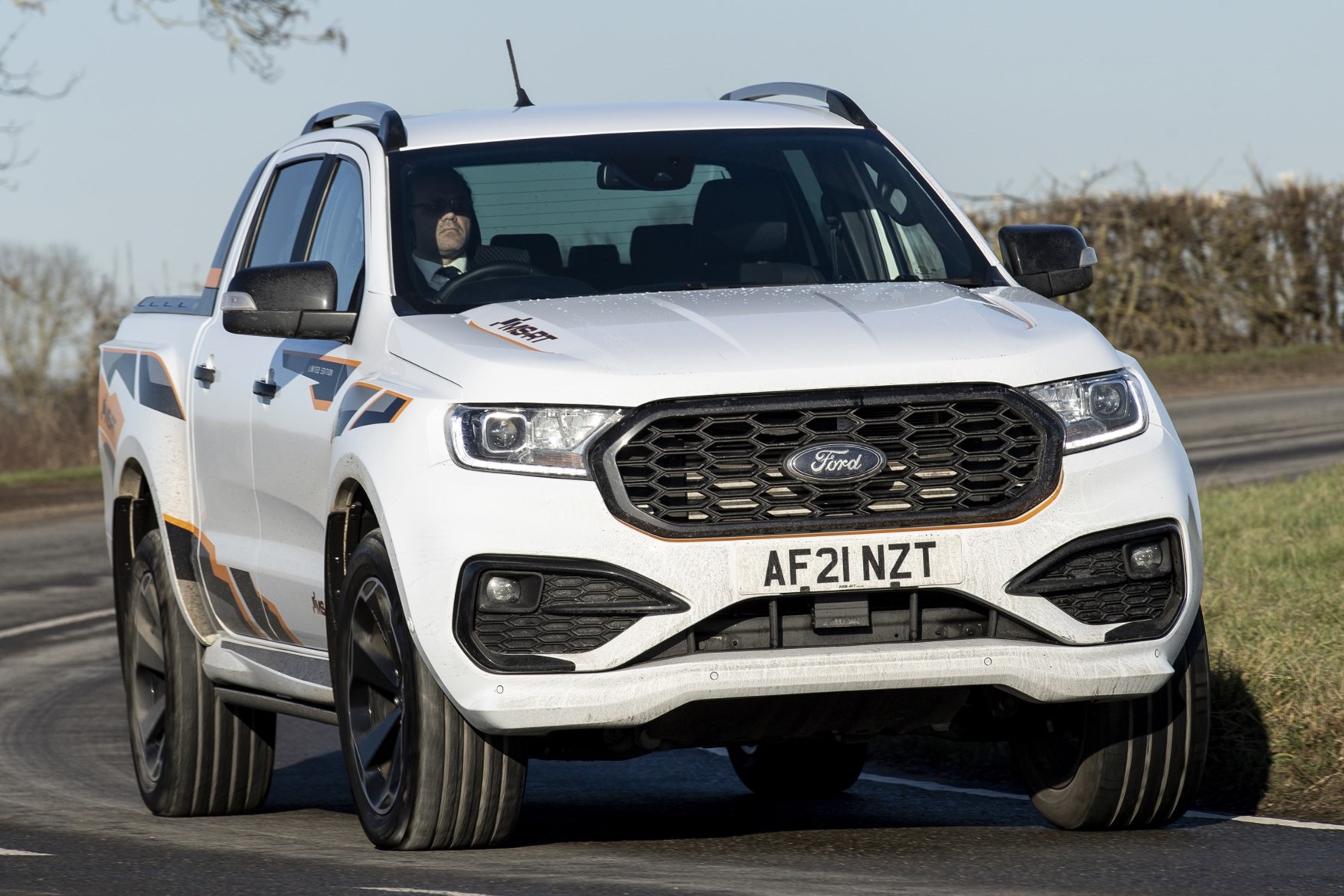
- Special edition Ranger breathed on by MS-RT
- All the capability with a visual upgrade
- Pricey, though
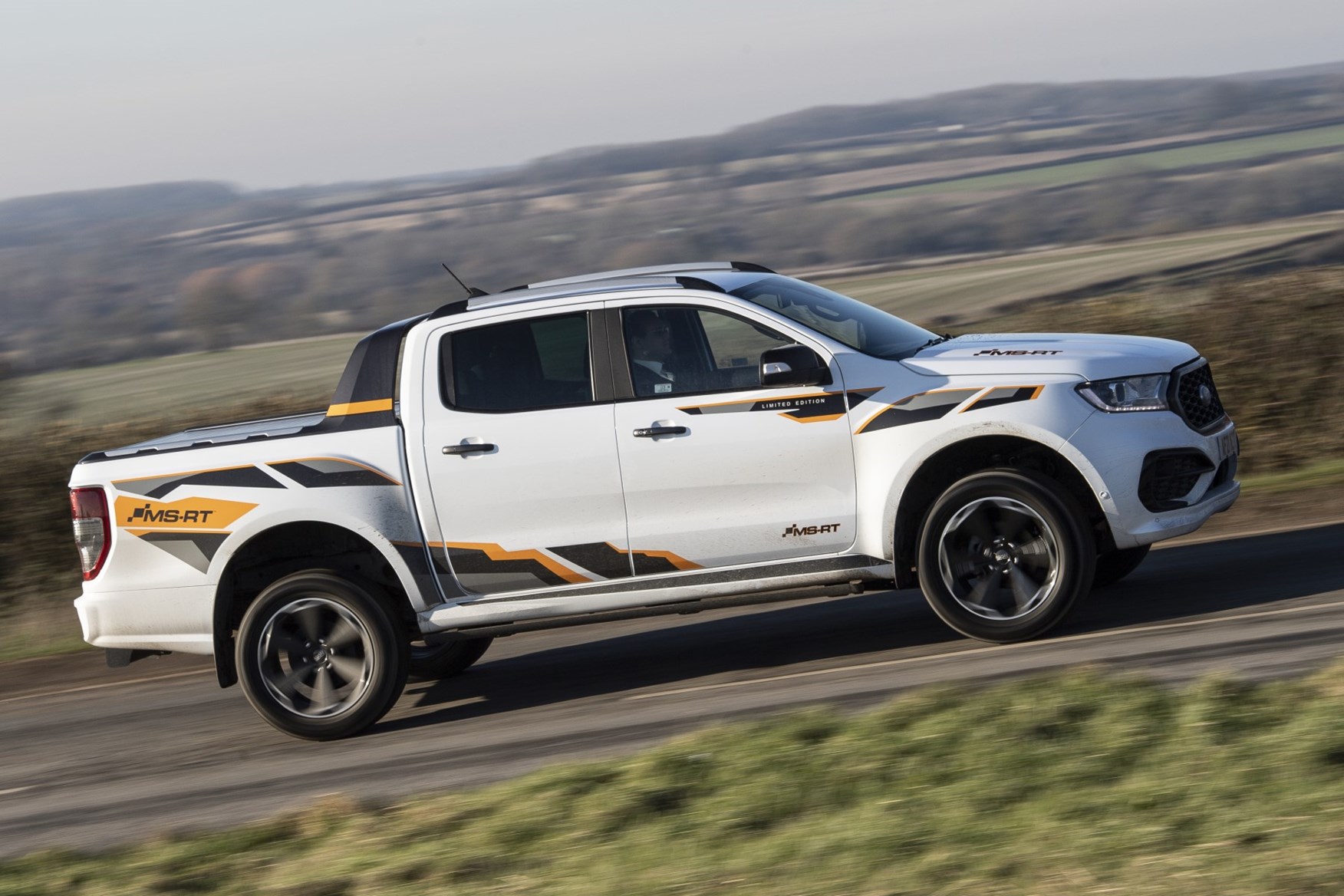
MS-RT might not exactly be a household name, but if you’re a fan of your souped-up Ford vans then you might be familiar. Formerly named M-Sport, MS-RT takes Ford vans and gives them a serious visual makeover in addition to some performance upgrades.
MS-RT has now turned its hand to the Ranger pickup. This outgoing model is not long left for the world, and its replacement is imminent – but that hasn’t stopped Ford from embracing MS-RT’s tweaks and selling their upgraded Ranger through Ford dealerships.
The issue the MS-RT Ranger has that doesn’t exist with its upgraded Transits is the existence of the Ranger Raptor. MS-RT can’t step on Ford’s own toes, so the Ranger has to be a little toned down compared to its usual fare. That hasn’t stopped them from trying their best, though…
What’s changed on the MS-RT Ranger?
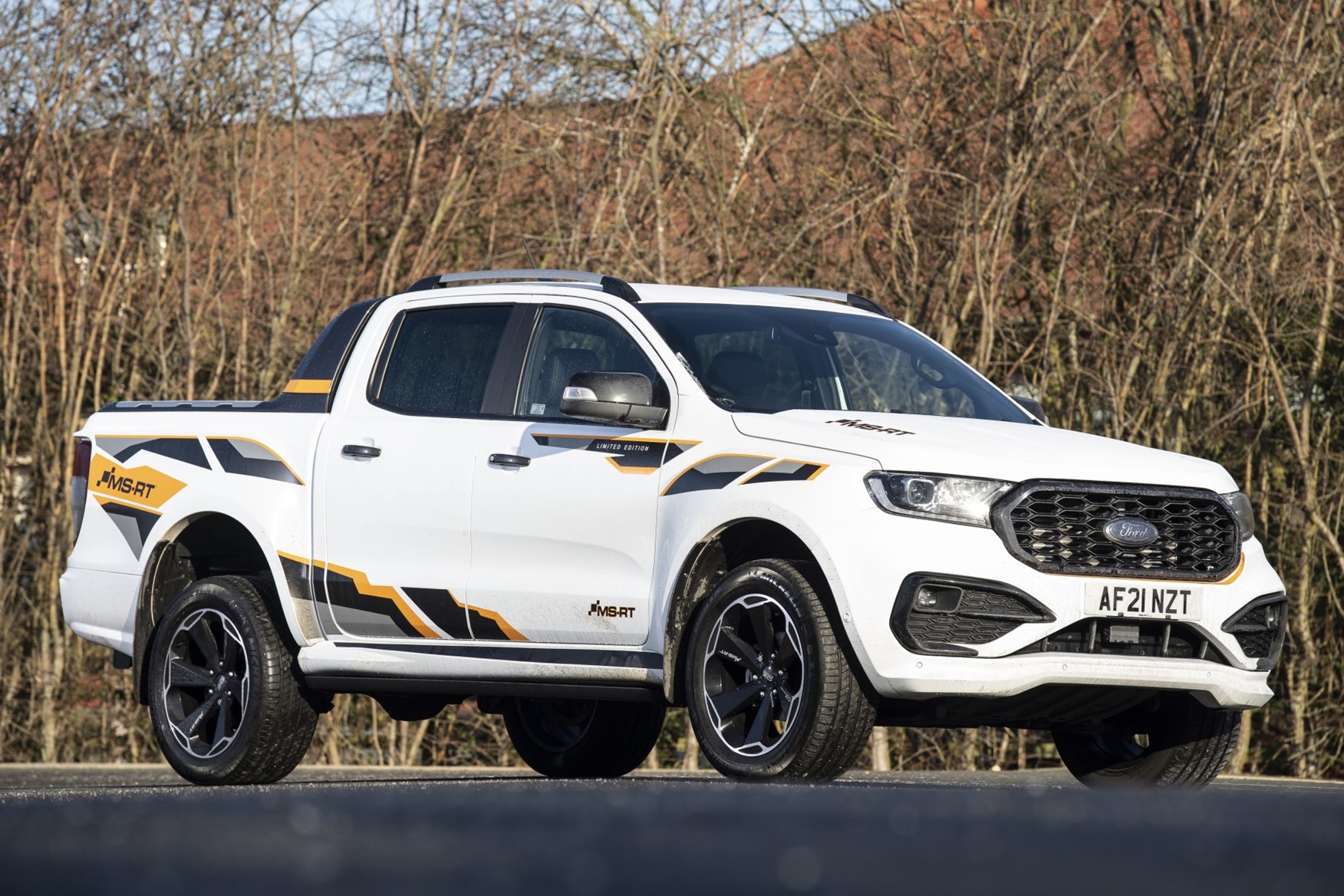
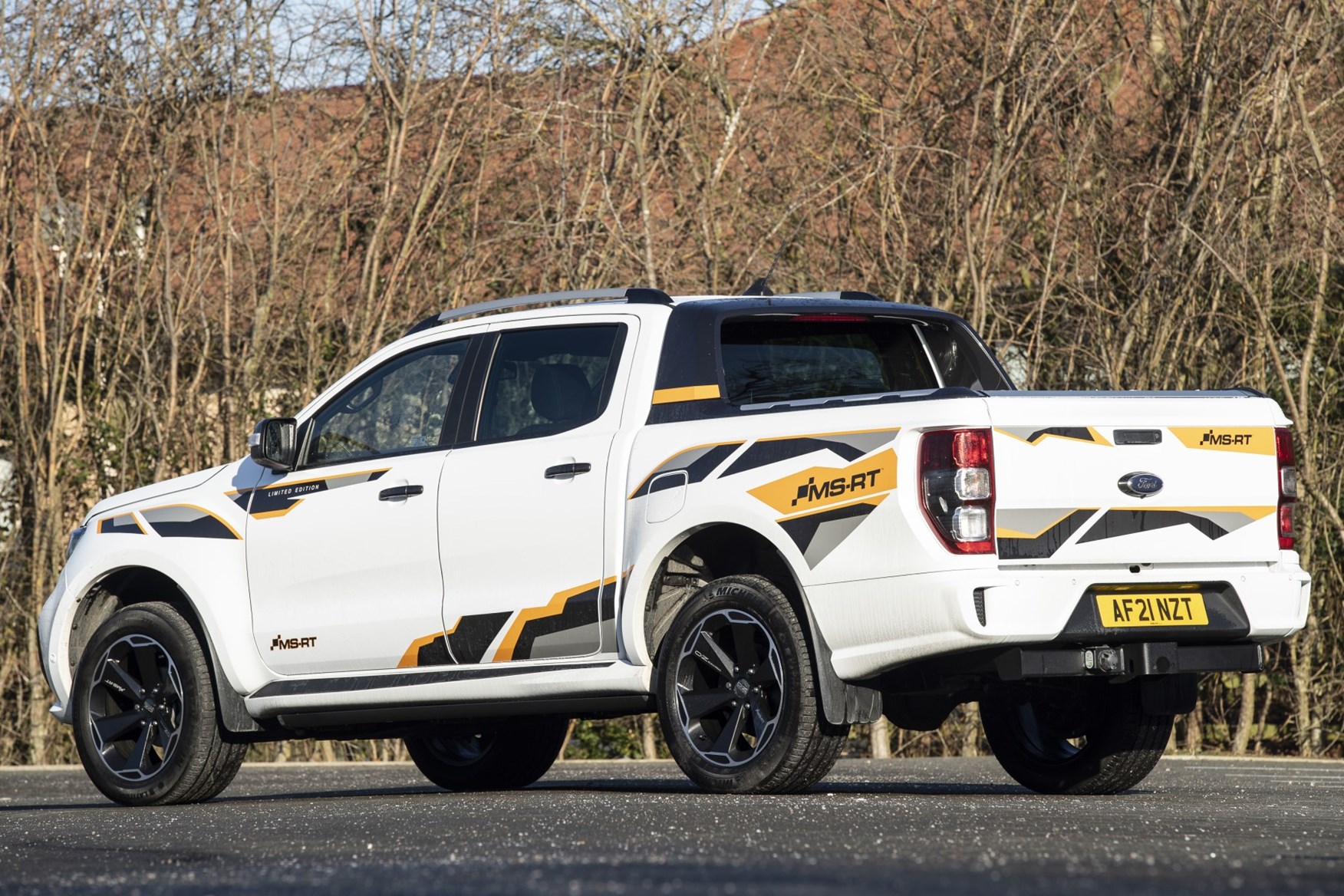
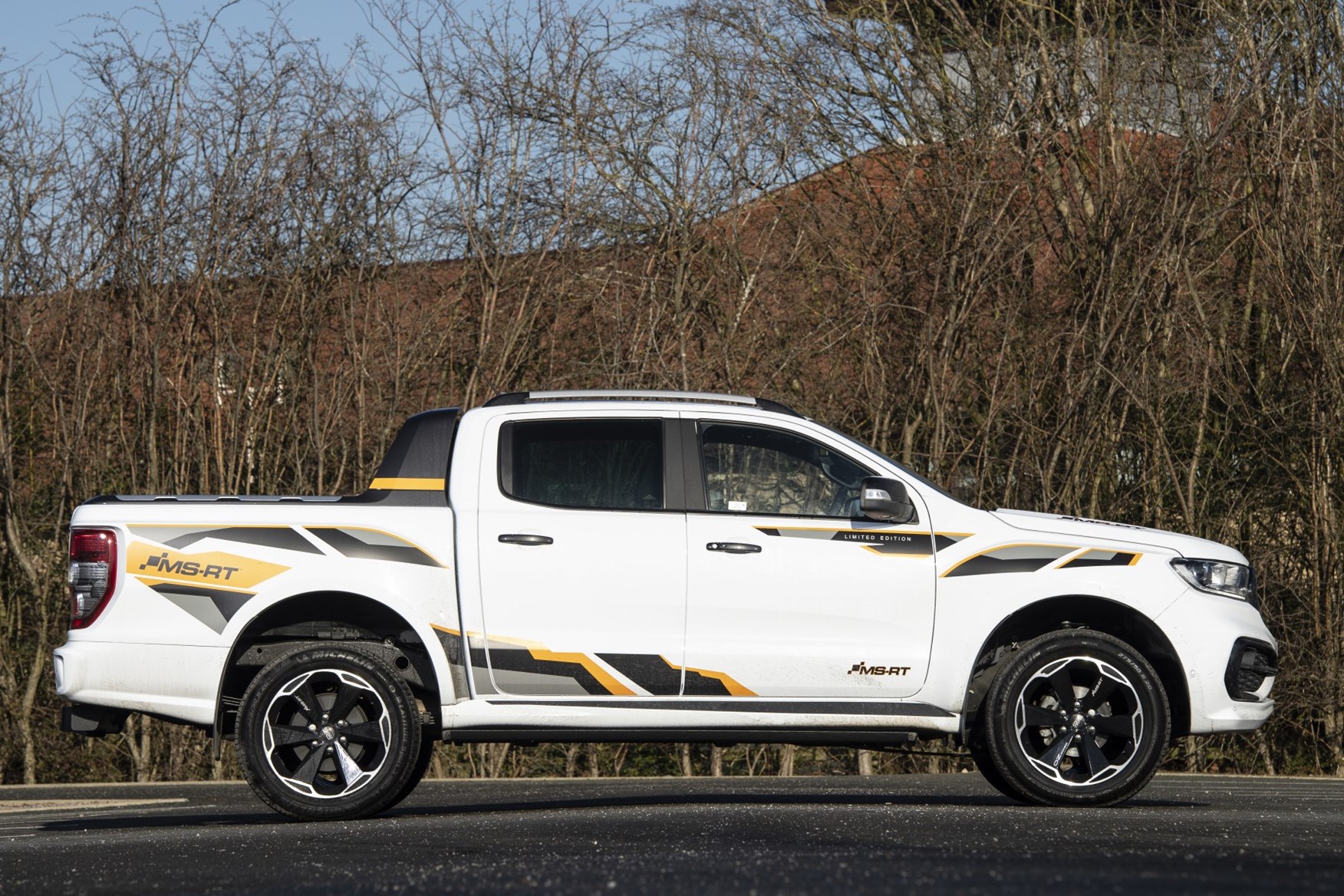
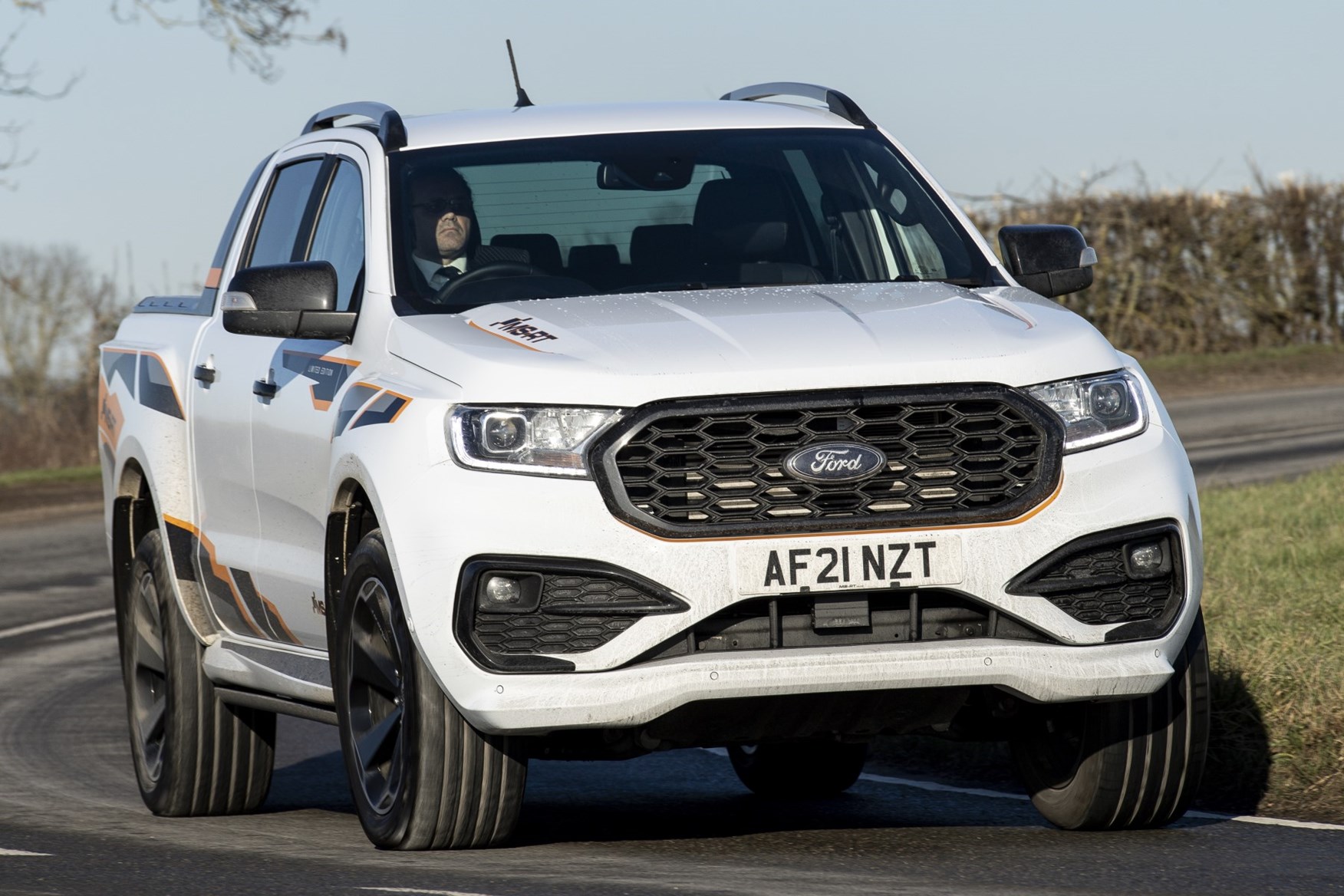
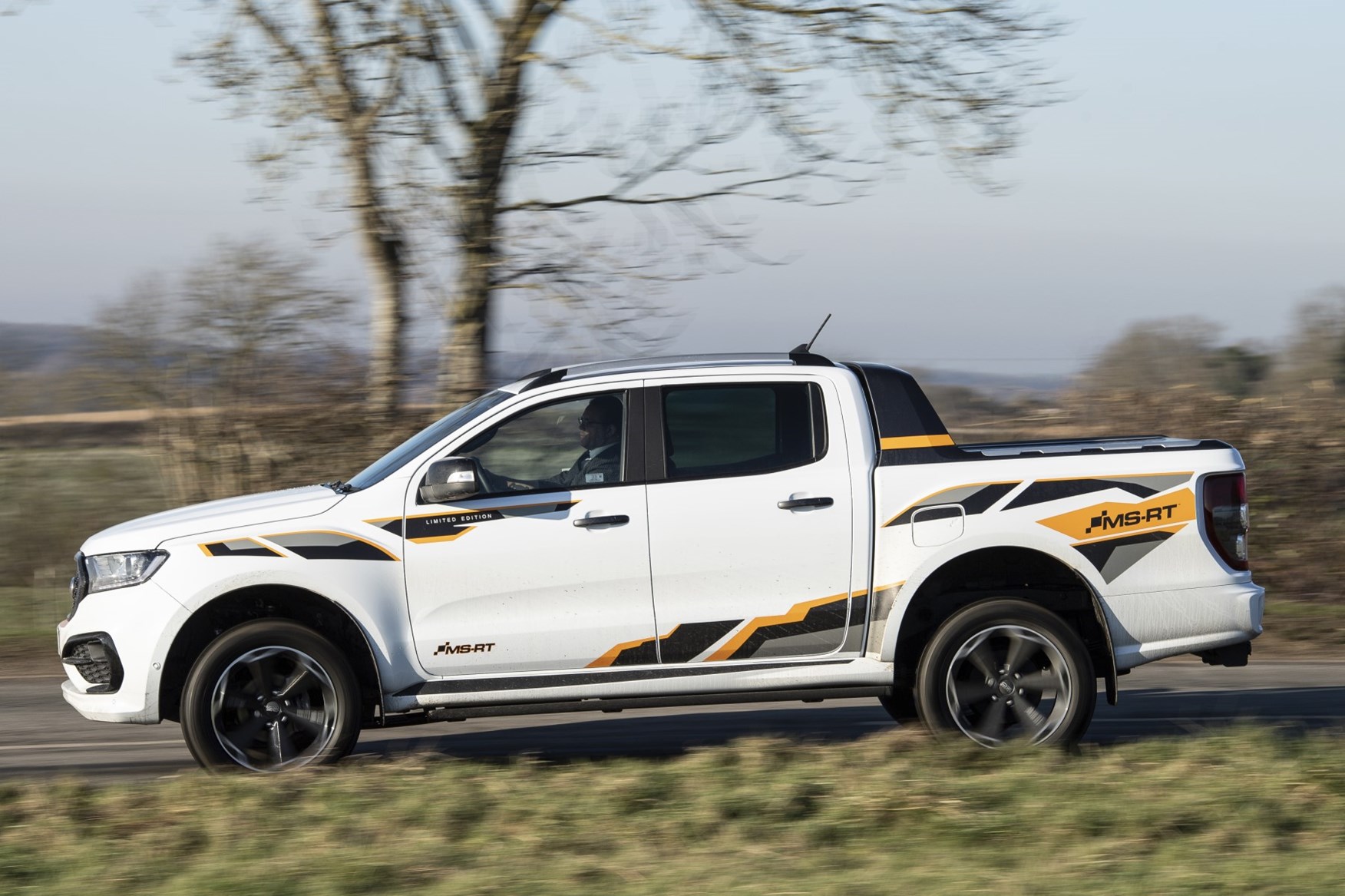
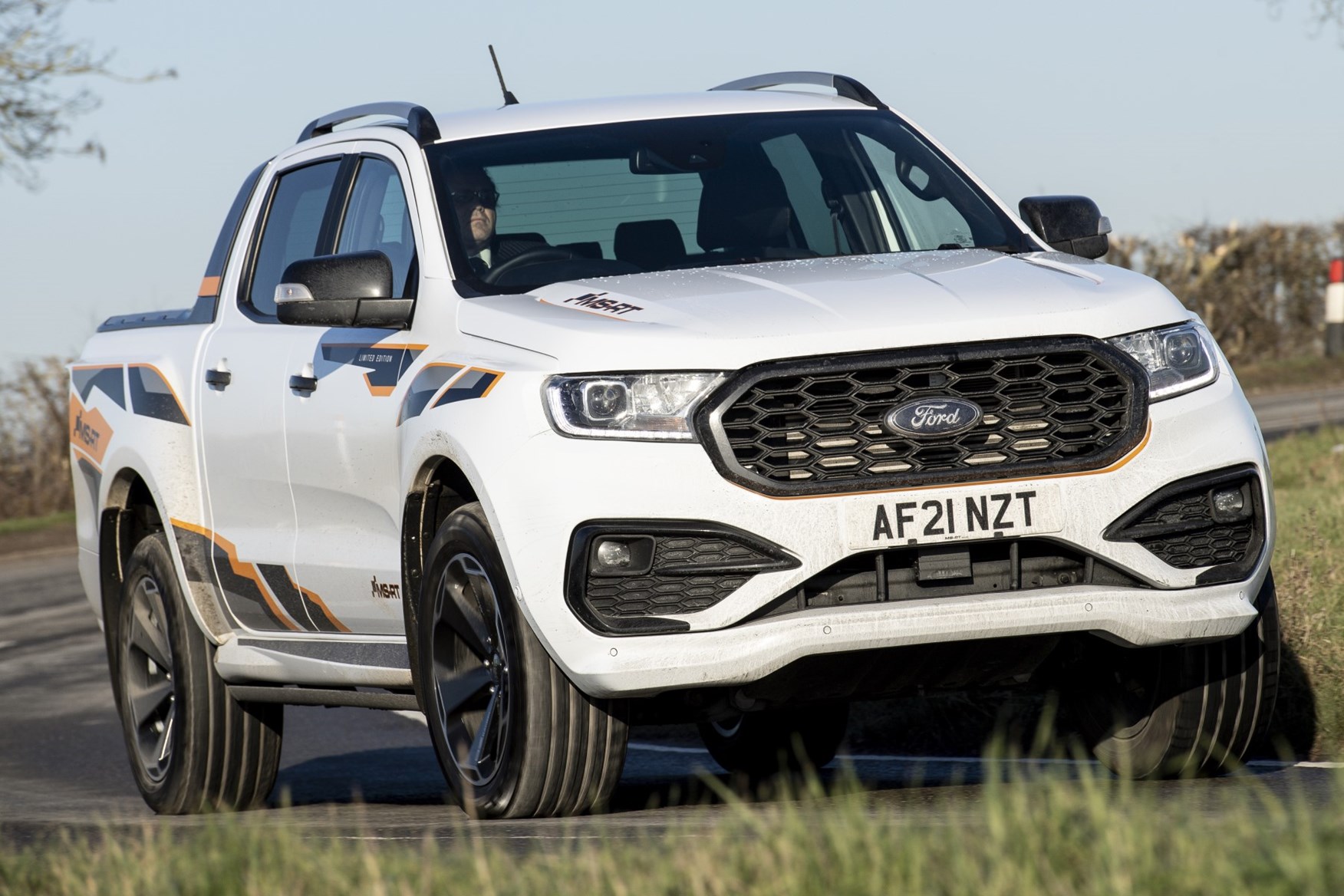
For the most part, it’s a visual upgrade. You can’t miss the flared wheelarches front and rear, or the 20-inch OZ Racing alloy wheels they sheathe. There’s a new honeycombed front grille, reshaped front bumper, and an aerodynamic load bar over the bed.
Our test model came in the ‘Frozen White’ which is saved from looking remotely subtle by a glut of bright orange decals.
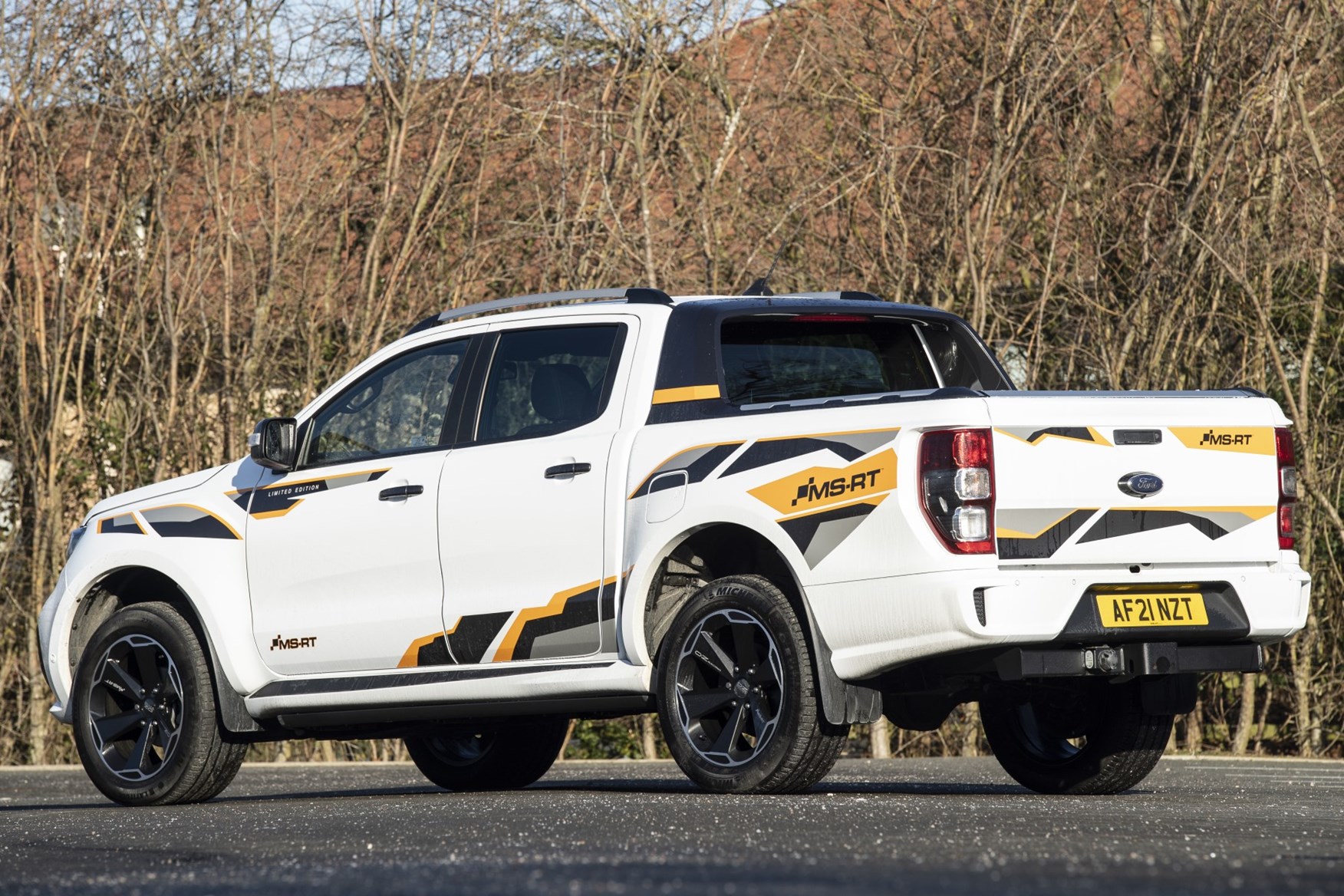
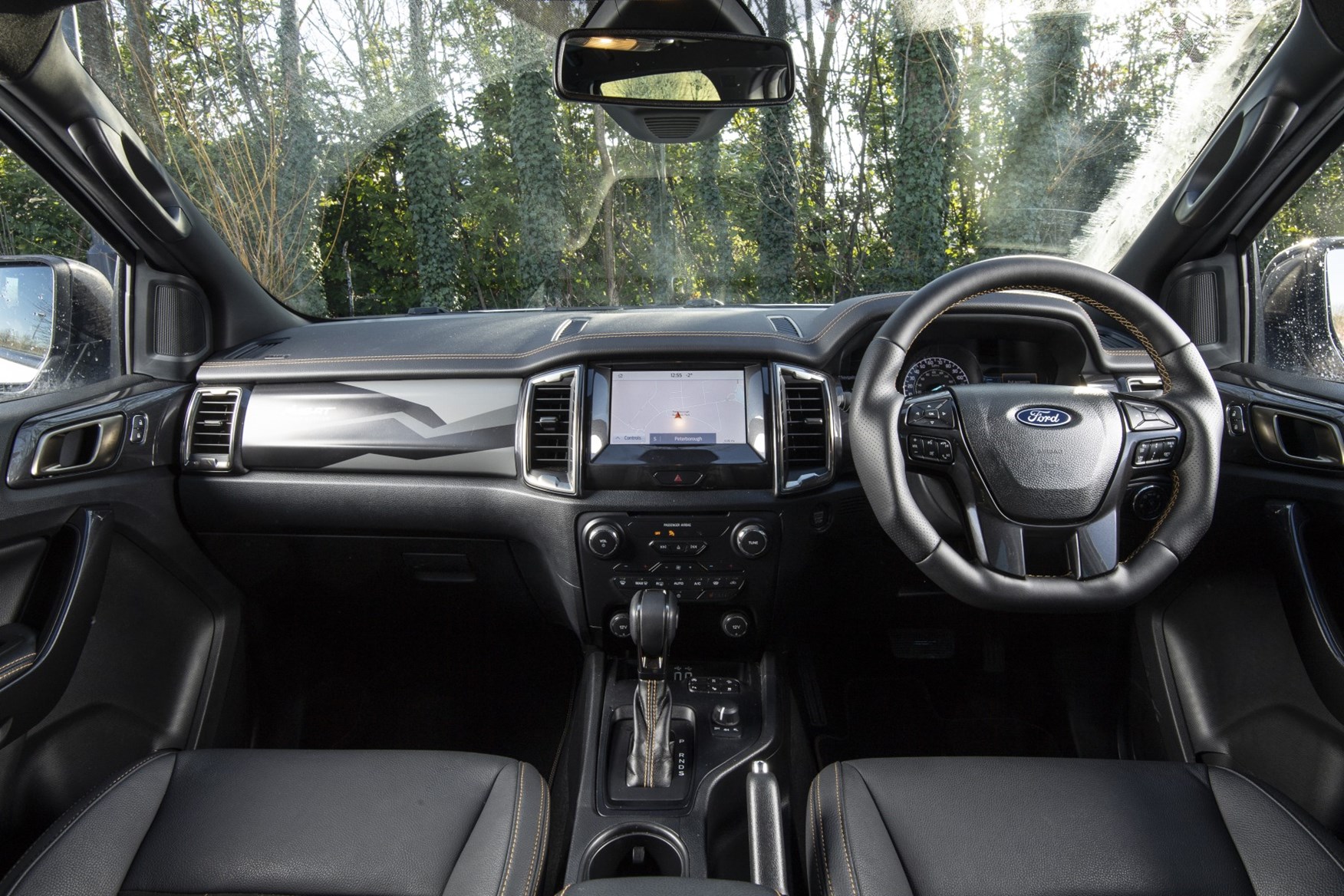
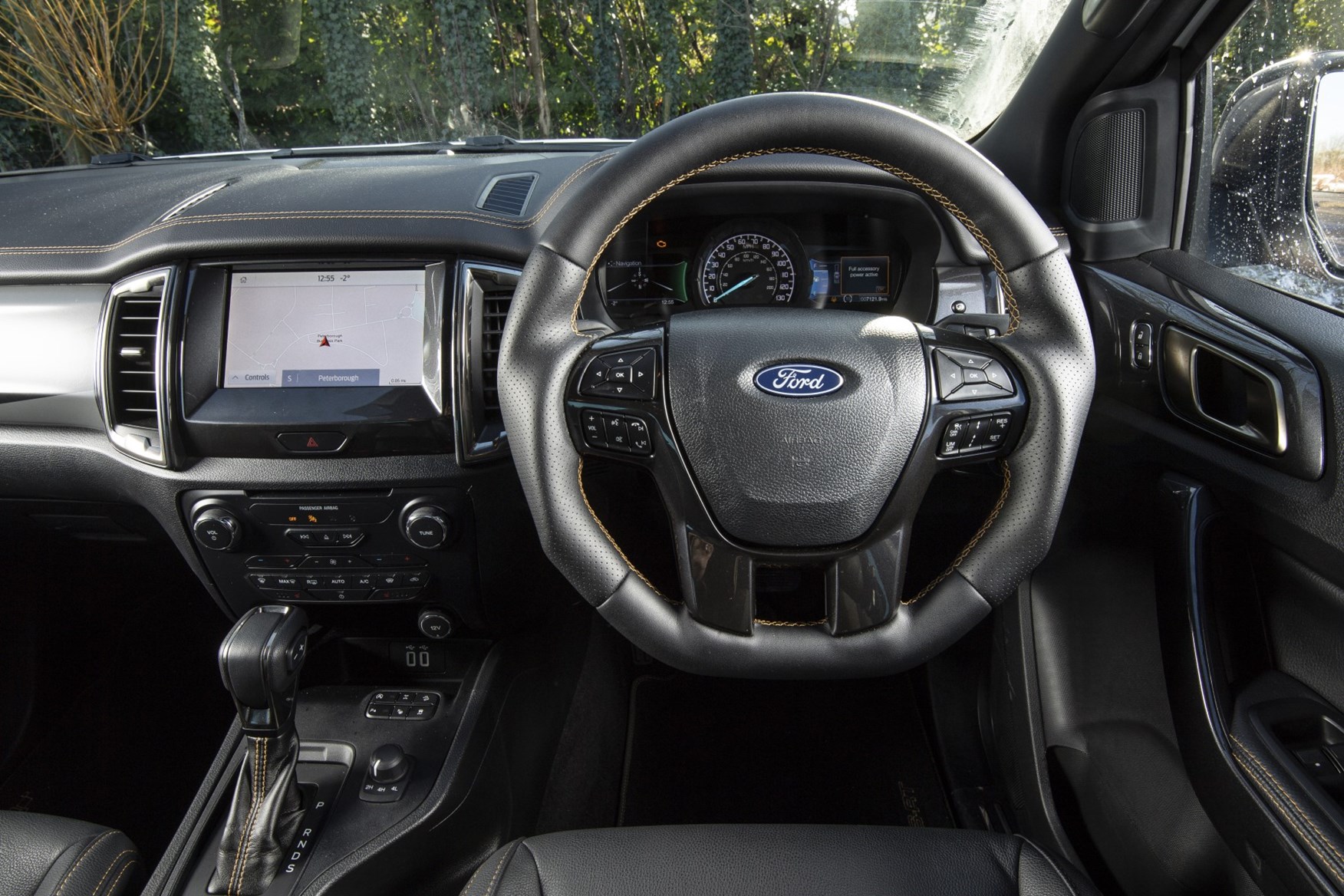
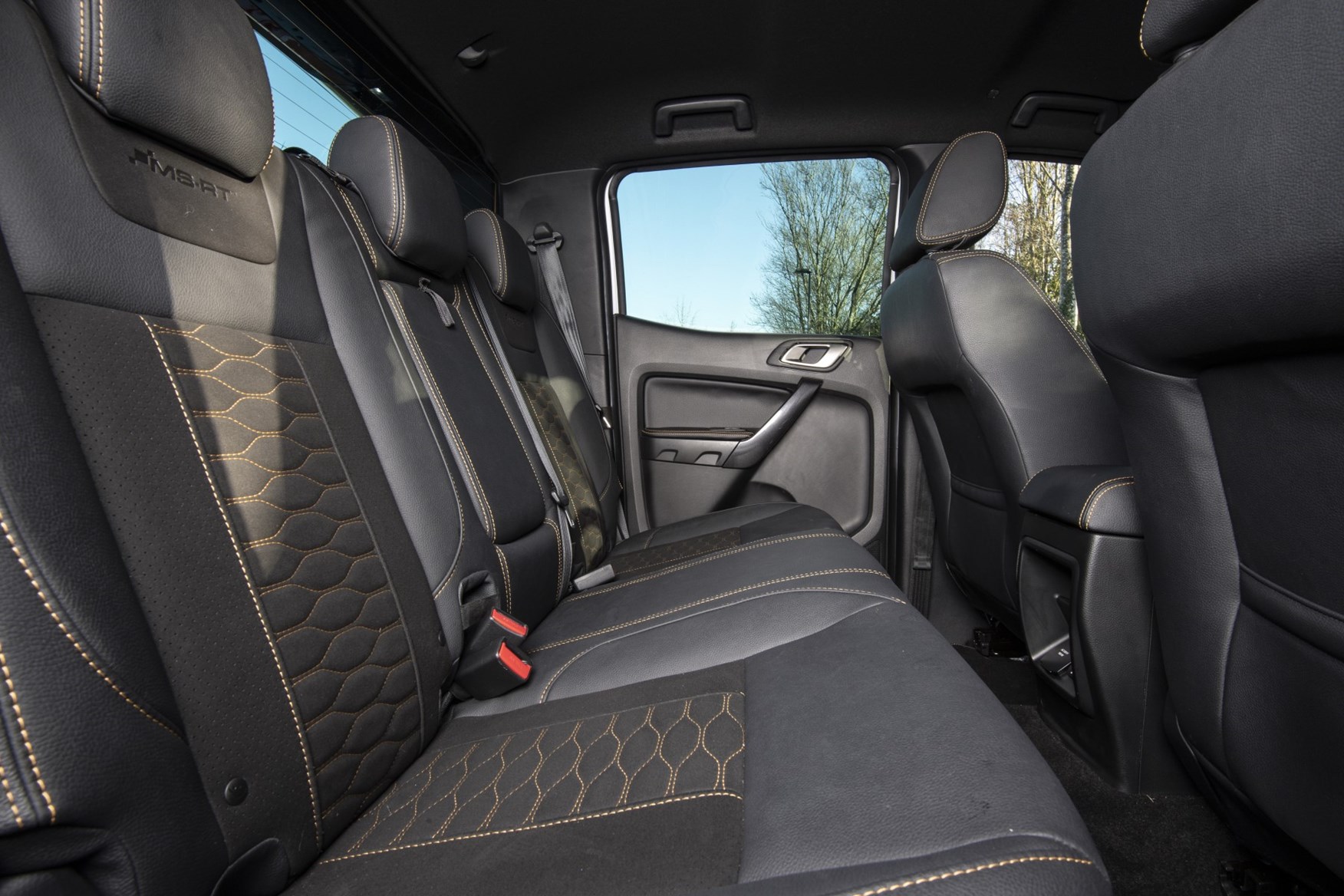
Step into the cabin via automatically deployed electric side steps and you’re greeted by an interior that’s mostly standard Ranger. There’s new leather trim with orange stitching, plus the ambient lighting and heated front seats in common with the Ranger Wildtrak.
You also get a resculpted steering wheel (more on that later) and MS-RT floor mats and scuff plates.
Other than the new wheels, MS-RT hasn’t made any mechanical changes to the Ranger.
What’s it like to drive?
Even being based on a pickup that is, at its core, over a decade old isn’t detrimental to the MS-RT Ranger’s driving dynamics. Like all Rangers, this is an excellent pickup to drive.
It’s powered by Ford’s top-spec engine, the 213hp 2.0-litre EcoBlue diesel. It feels suitably muscular, if not overly swift, and makes for relaxed progress at the legal limit. Paired to Ford’s slick 10-speed automatic gearbox, it’s a little hyperactive with gearchanges but does an effective job of keeping the engine in its power band.
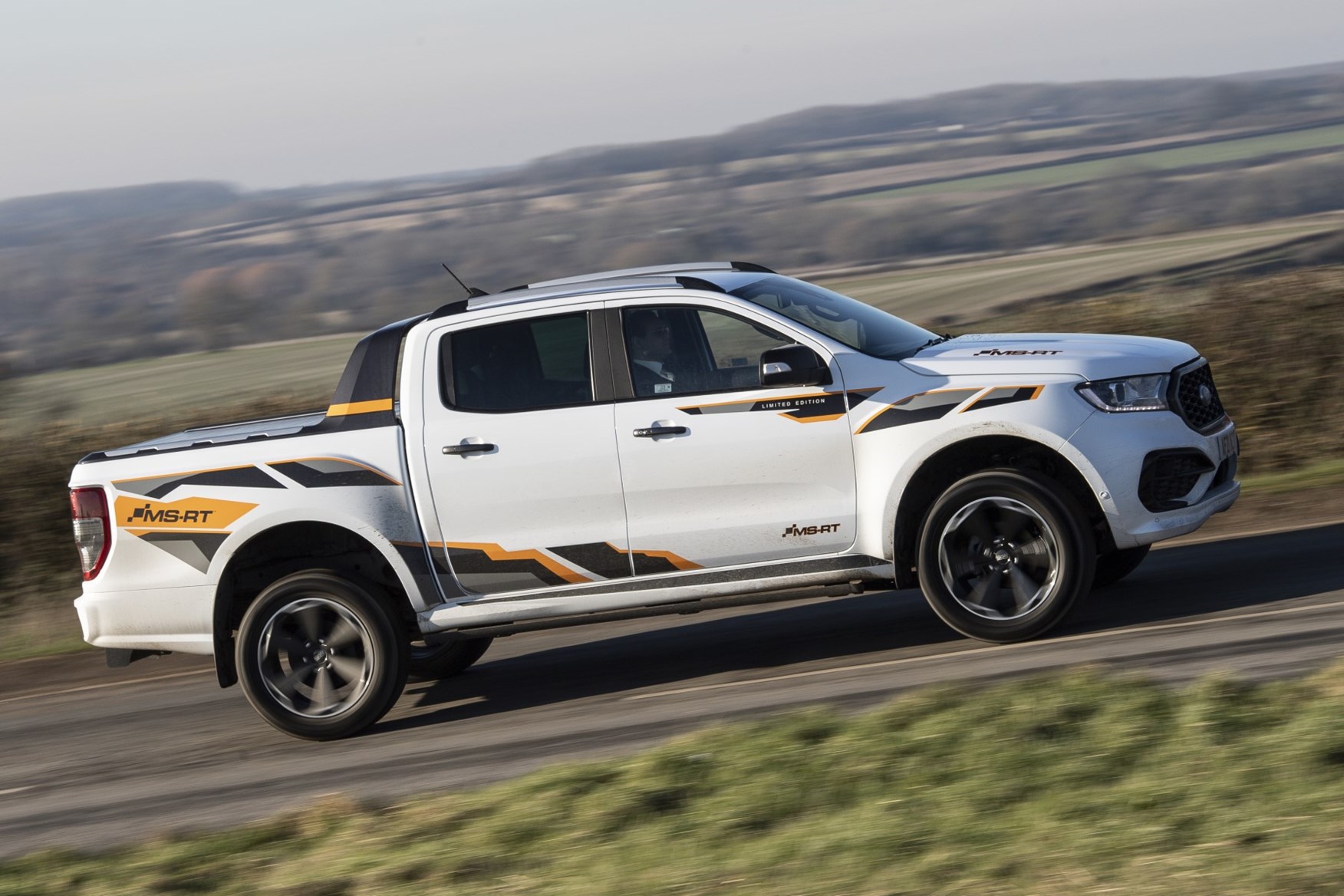
The bigger wheels and thus lower-profile tyres of the MS-RT make for a slightly crashier ride than the standard Wildtrak, but it remains composed over most bumps and unlike some pickups the rear end doesn’t feel as though it needs a load in to tie it down.
What’s the interior like?
The MS-RT makeover is most obvious on the steering wheel. It’s been resculpted into something rather resembling a pair of tumours – ostensibly to give you a better grip, but anyone with average or smaller hands it’s actually less secure as you can’t really get your hands all the way around.
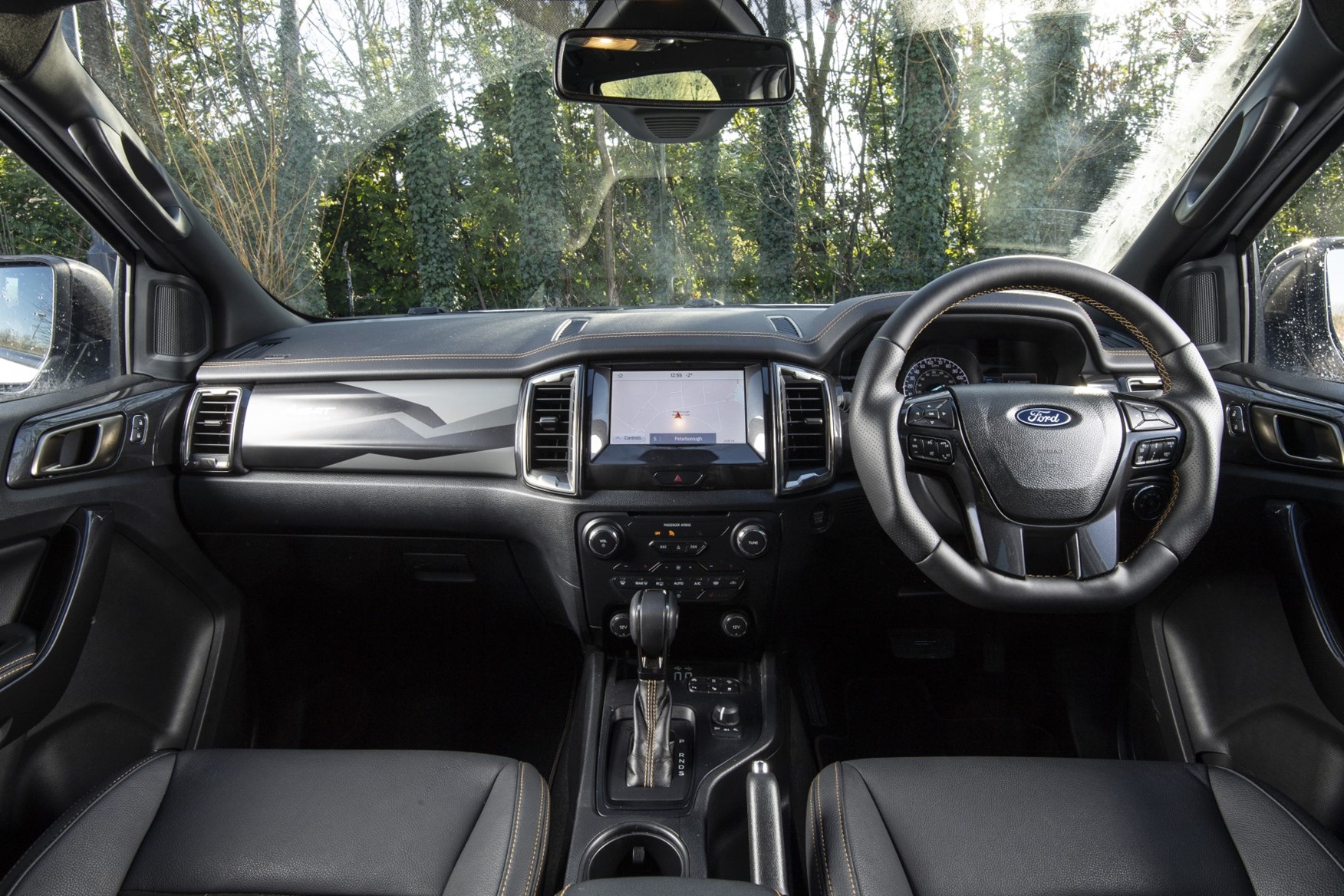
Adopting a 10-and-2 hand position as opposed to the usual quarter-to-nine does get you onto a more ordinarily proportioned section of the wheel, but it’s still quite uncomfortable to hold.
The rest of the interior is more successful, with the leather seats proving very comfortable. Ford’s SYNC3 touchscreen system might be a little outdated now with its vast bezels and aging interface, but the provision of Apple CarPlay and Android Auto means you can easily bypass this for your phone’s software. And we appreciate the simplicity of the part-physical, part-digital dials, which are very clear to read.
How practical is it?
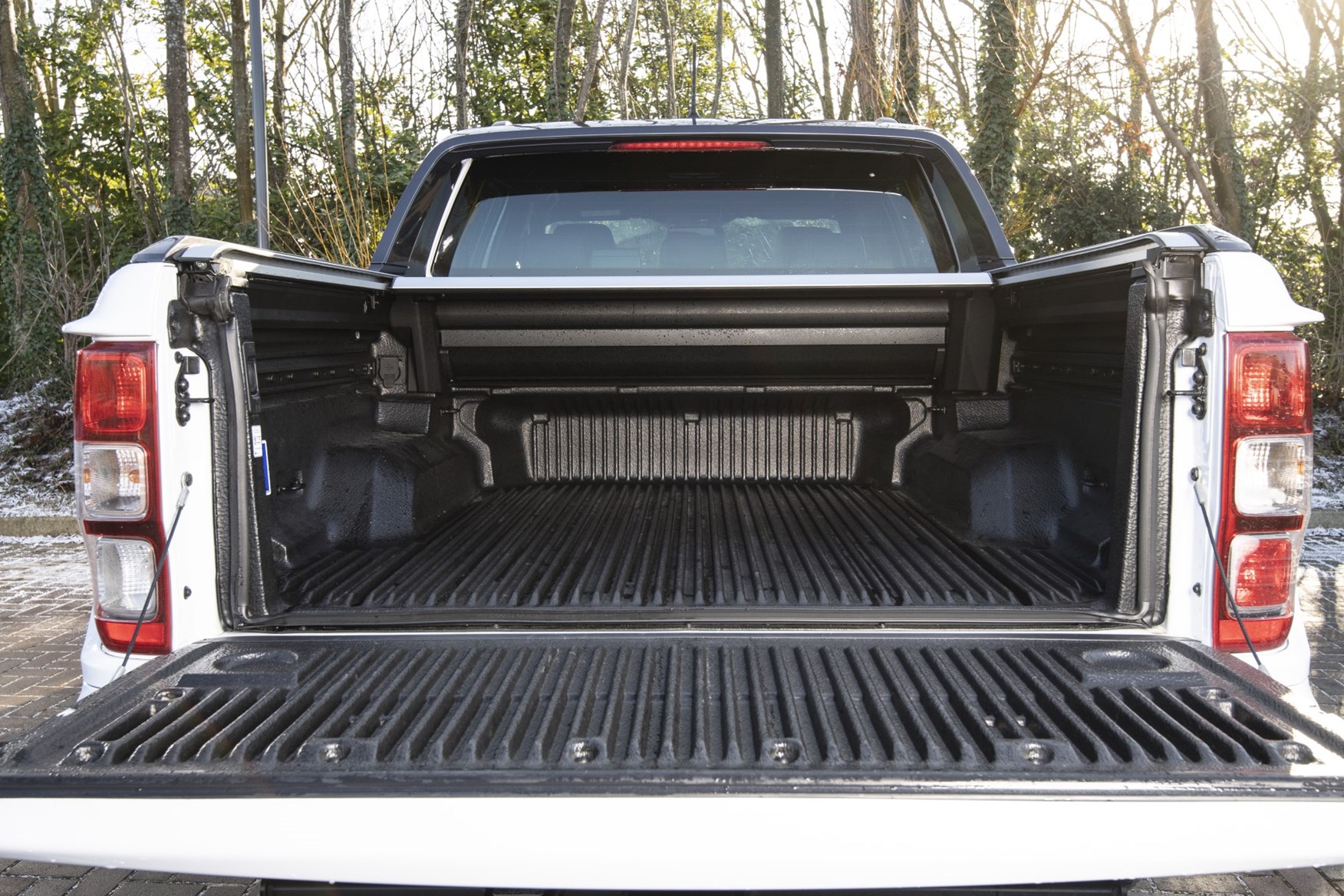
A major advantage the MS-RT Ranger has over its beefier Ranger Raptor cousin is payload. With a capacity in excess of a ton, the MS-RT can still qualify as a commercial vehicle for tax purposes, saving a significant amount of money on the purchase price.
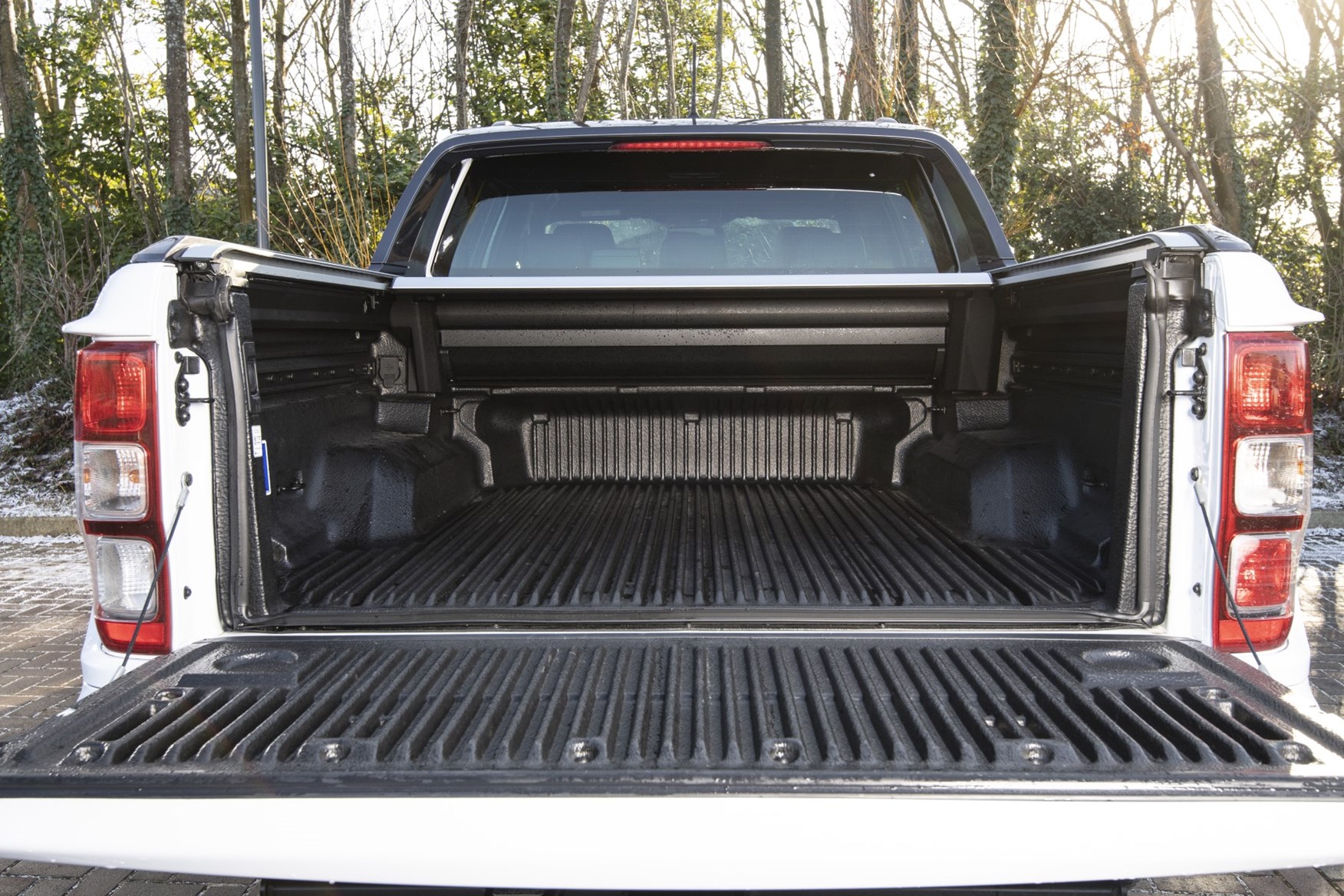
That utility will also come in handy for anyone using their MS-RT Ranger for actual work, though the standard electric load cover does limit overall capacity in the rear for an improvement in security. The MS-RT Ranger will still tow up to 3,500kg.
Should you buy one?
With a price in excess of £50,000 ex-VAT, the MS-RT Ford Ranger is destined to remain a niche choice. If you desperately want something as eye-catching as a Ranger Raptor but need a truck that can still carry over a ton of payload, it could fill the brief.
A more sensible Ranger would still be our choice – certainly one with a normal steering wheel – but we suspect more people would be better off waiting for the all-new model, launching later this year, which is a significant improvement. Still, it’s rather telling that even at the end of its life, we’d rather drive a Ranger than almost any other pickup…
Ford Ranger Black Edition review
Tested May 2018 by CJ Hubbard
- Limited edition version of UK’s bestselling pickup driven
- Based on Ranger Limited – but completely de-chromed
- Lots of standard kit, ideal for Batman enthusiasts
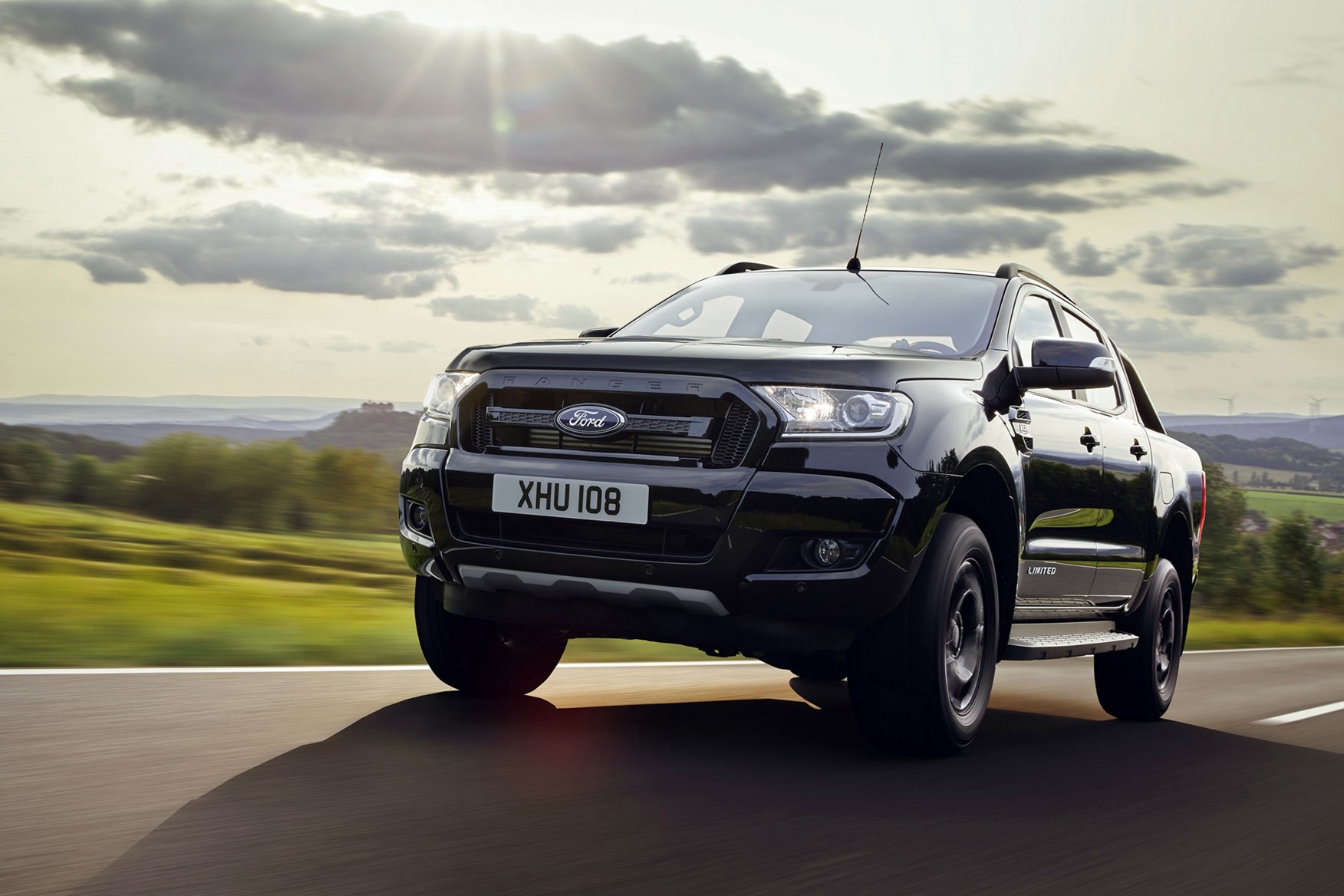
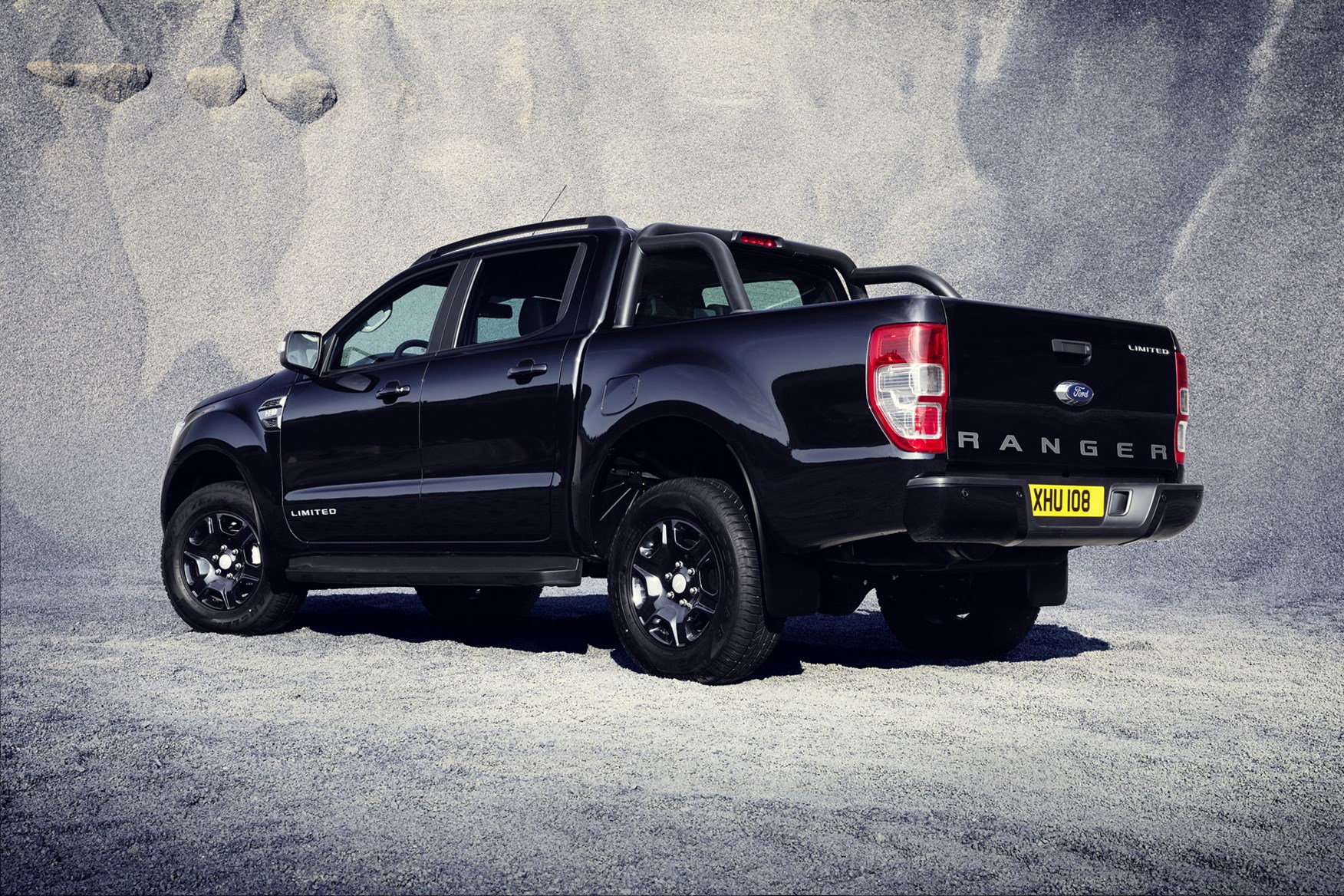
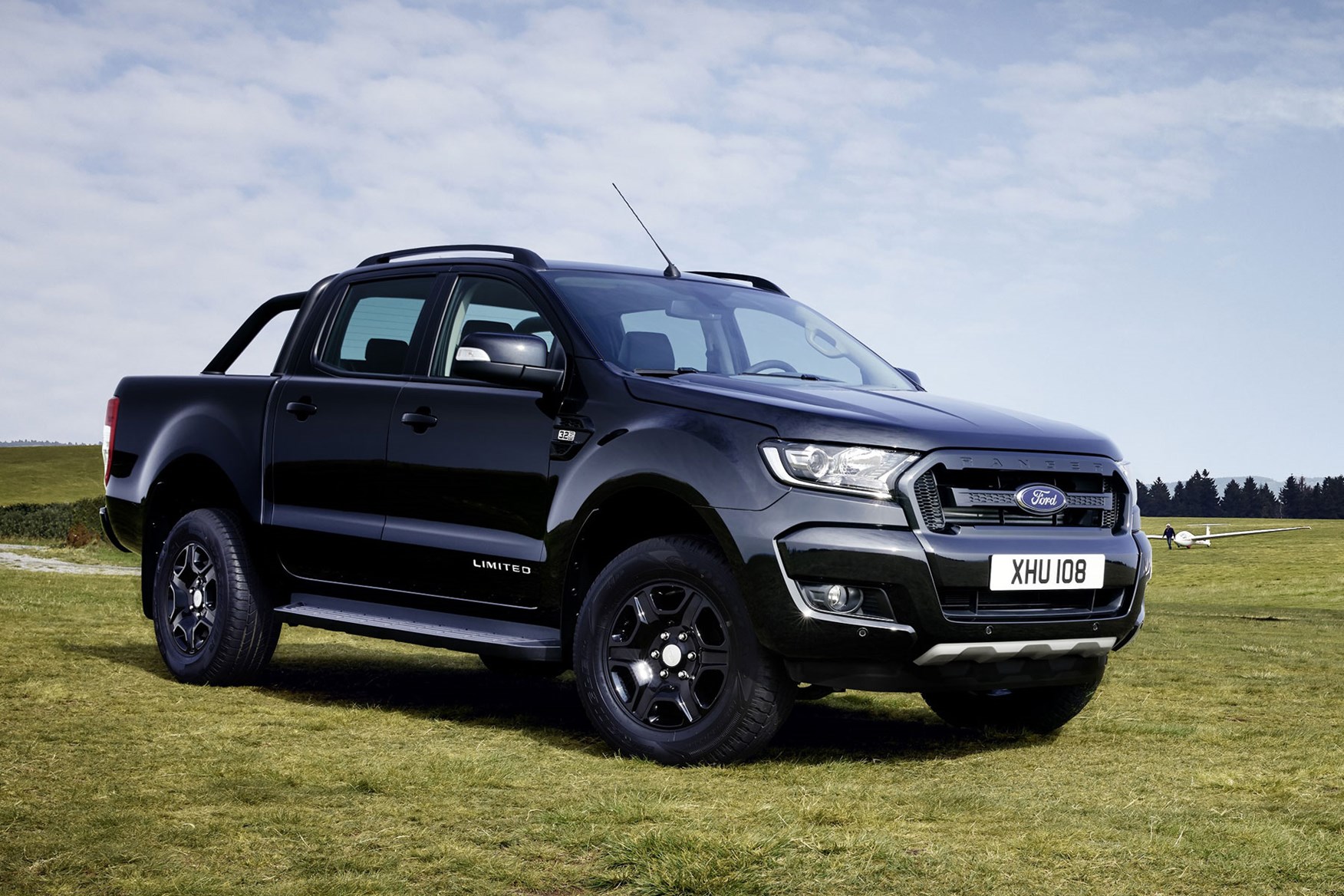
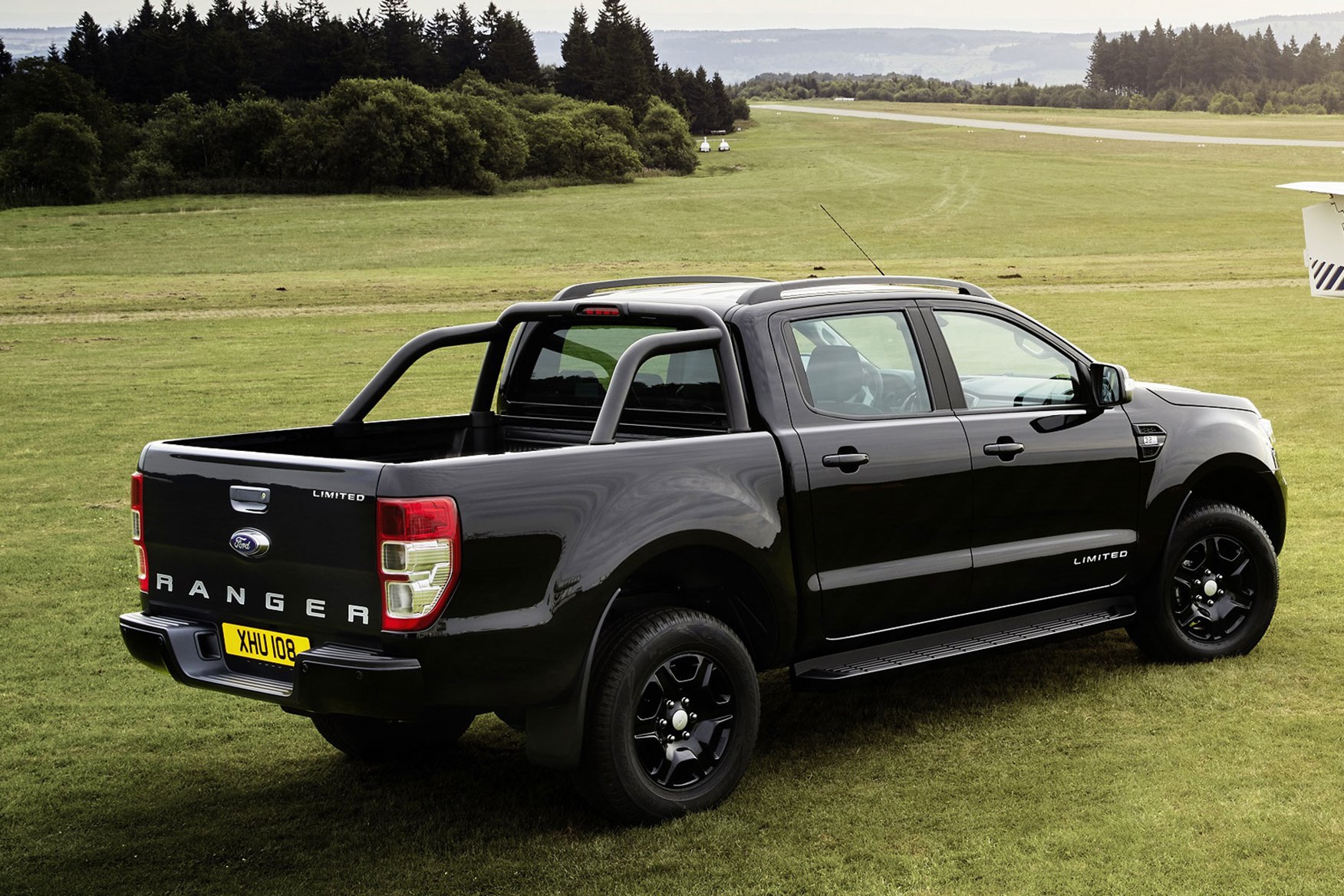
The Ford Ranger is hardly a pickup lacking in assertiveness in standard form, but if you really want to scare Audi drivers out of the outside lane we suggest you take a closer look at this limited-run Black Edition model.
We’re not sure we’ve ever seen such a sinister-looking pickup.
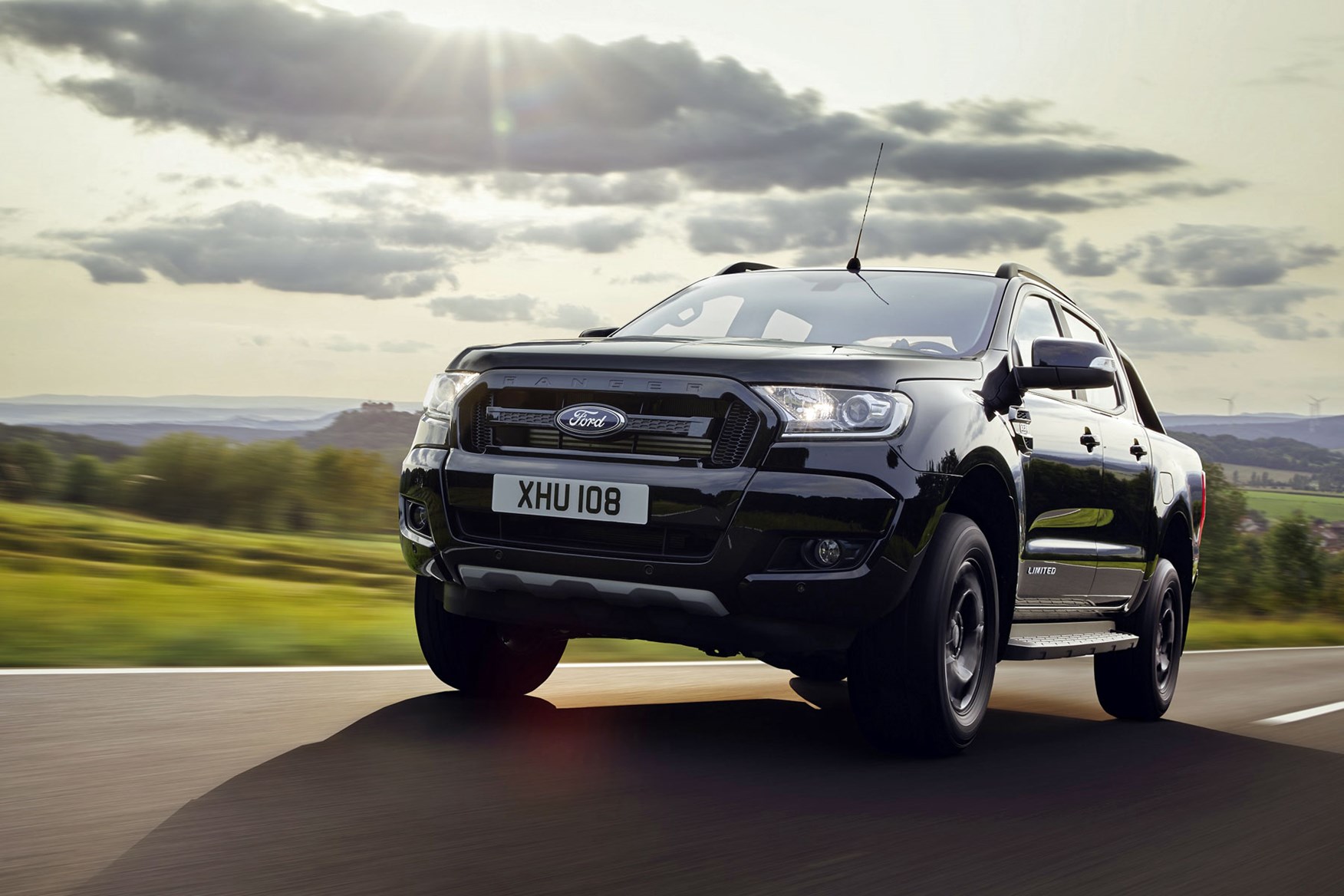
As the name suggests, almost everything on the exterior of this Ranger has been tinted black – if you’re into dressing up as Batman or Darth Vader, this has got to be the truck for you.
Is it as much of a badass as it appears? Keep reading our Ford Ranger Black Edition review to find out…
What’s special about the Ford Ranger Black Edition?
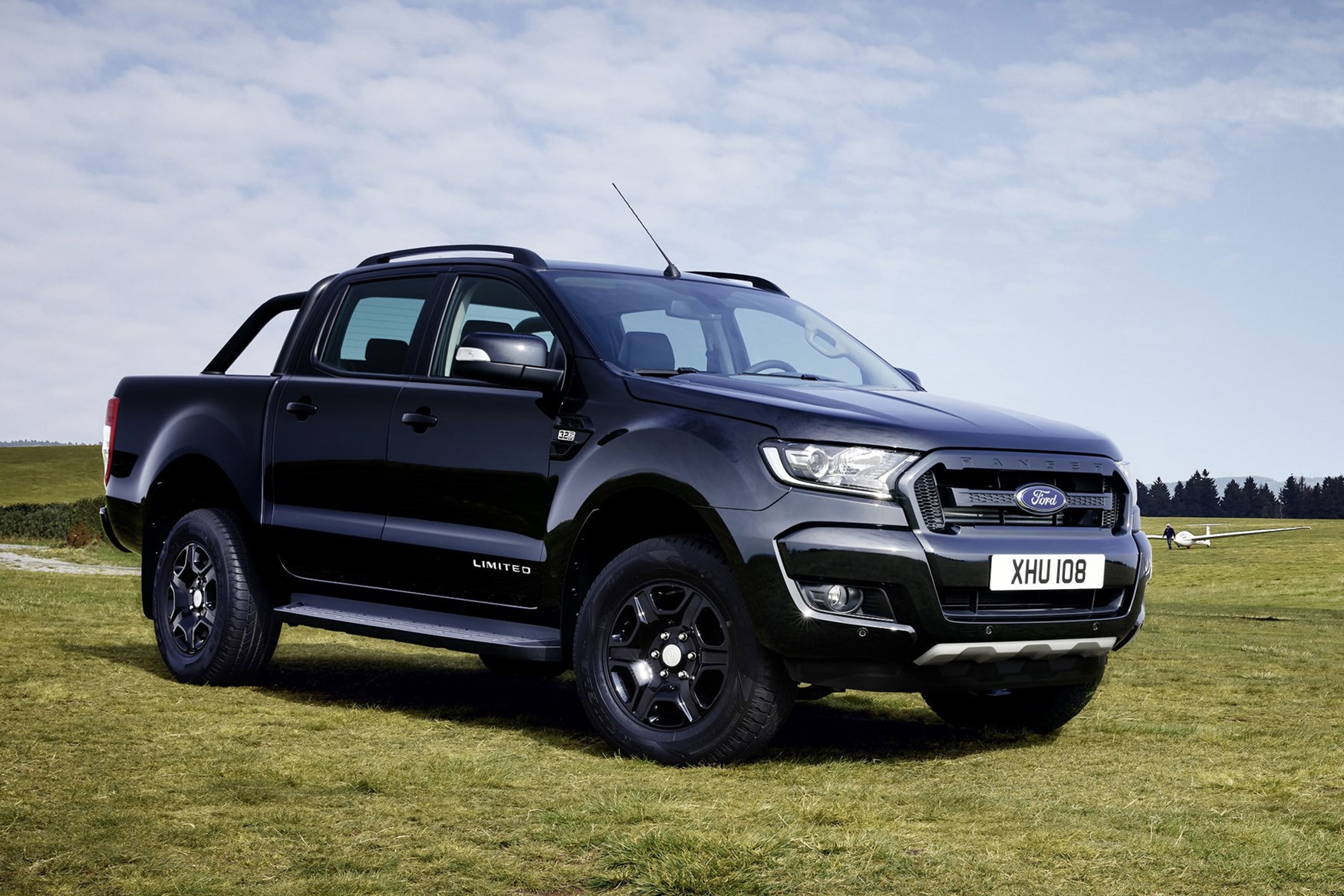
Beyond the Darth-spec exterior design, you get a shed-load of standard equipment – to the extent that while the Black Edition is based on the Ranger Limited trim level, it’s got most of the fancy features of the flashier Wildtrak model.
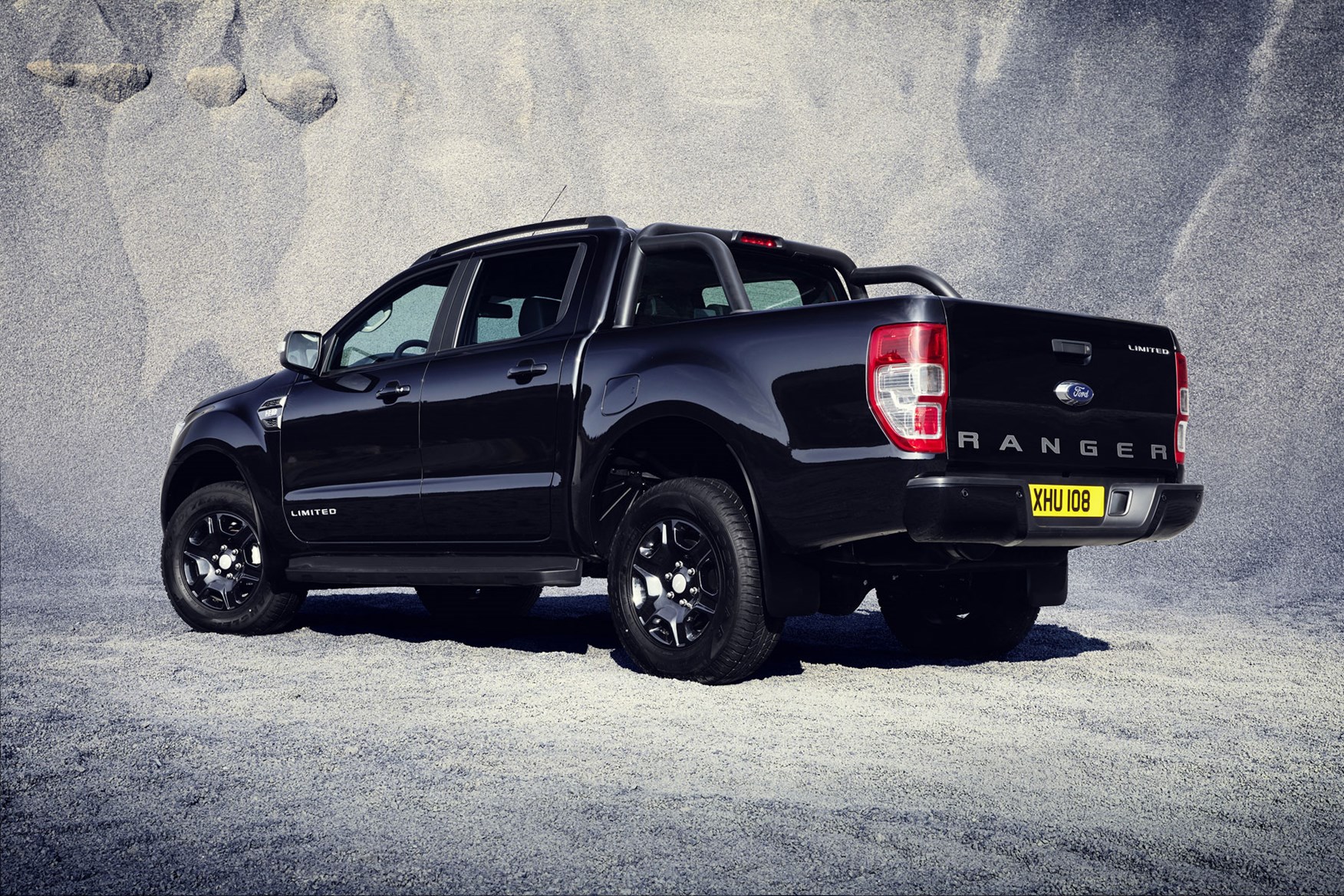
Not content with Shadow Black mica paint of the bodywork (amusingly known as Absolute Black on the Continent), the Ranger Black Edition has all of the following finished in black as well:
- Front grille
- Fog light bezels
- Front and rear bumpers
- Sports bar
- Roof rails
- Door mirrors
- Door handles
- Tailgate handle
- Beltline mouldings
- 17-inch alloy wheels
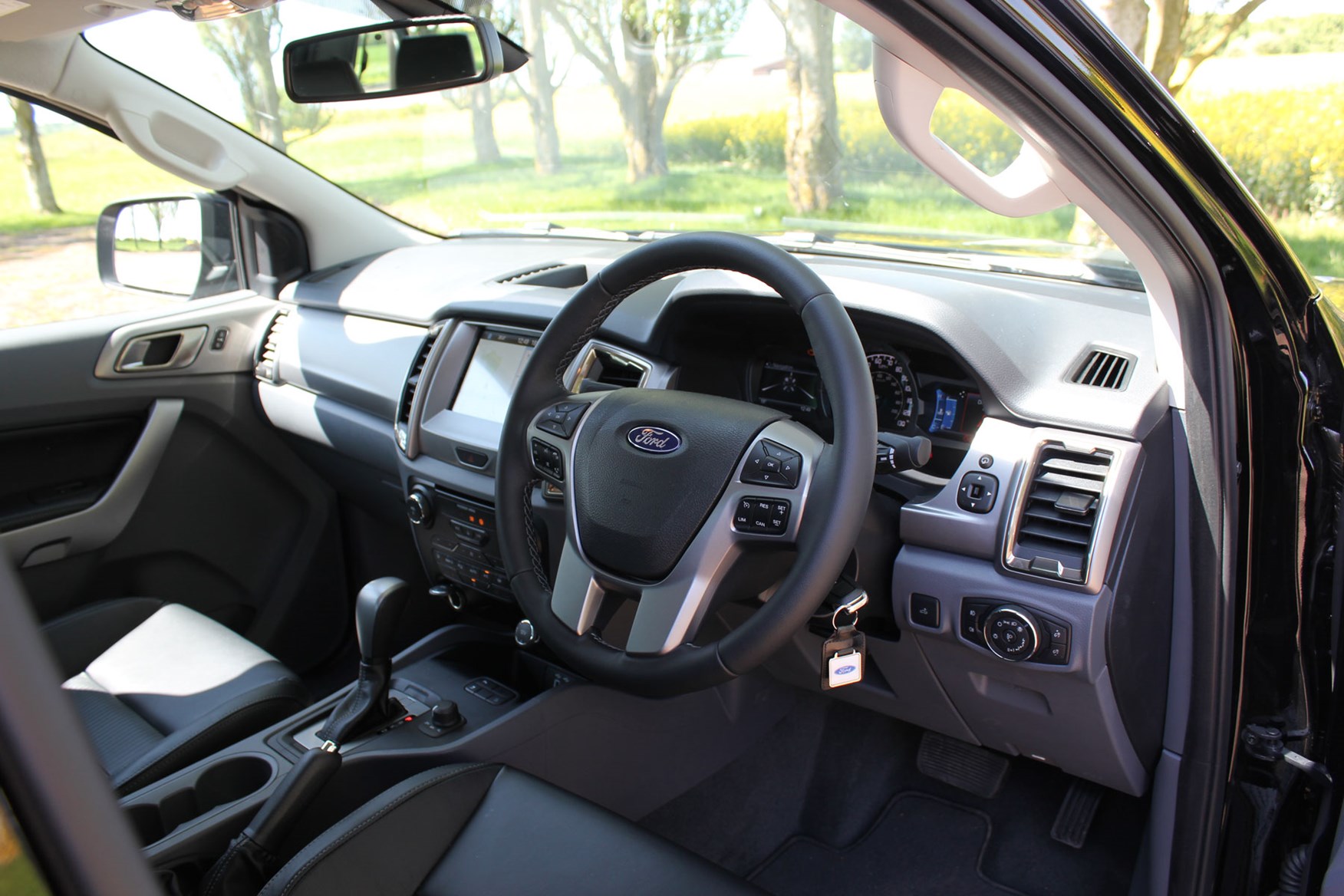
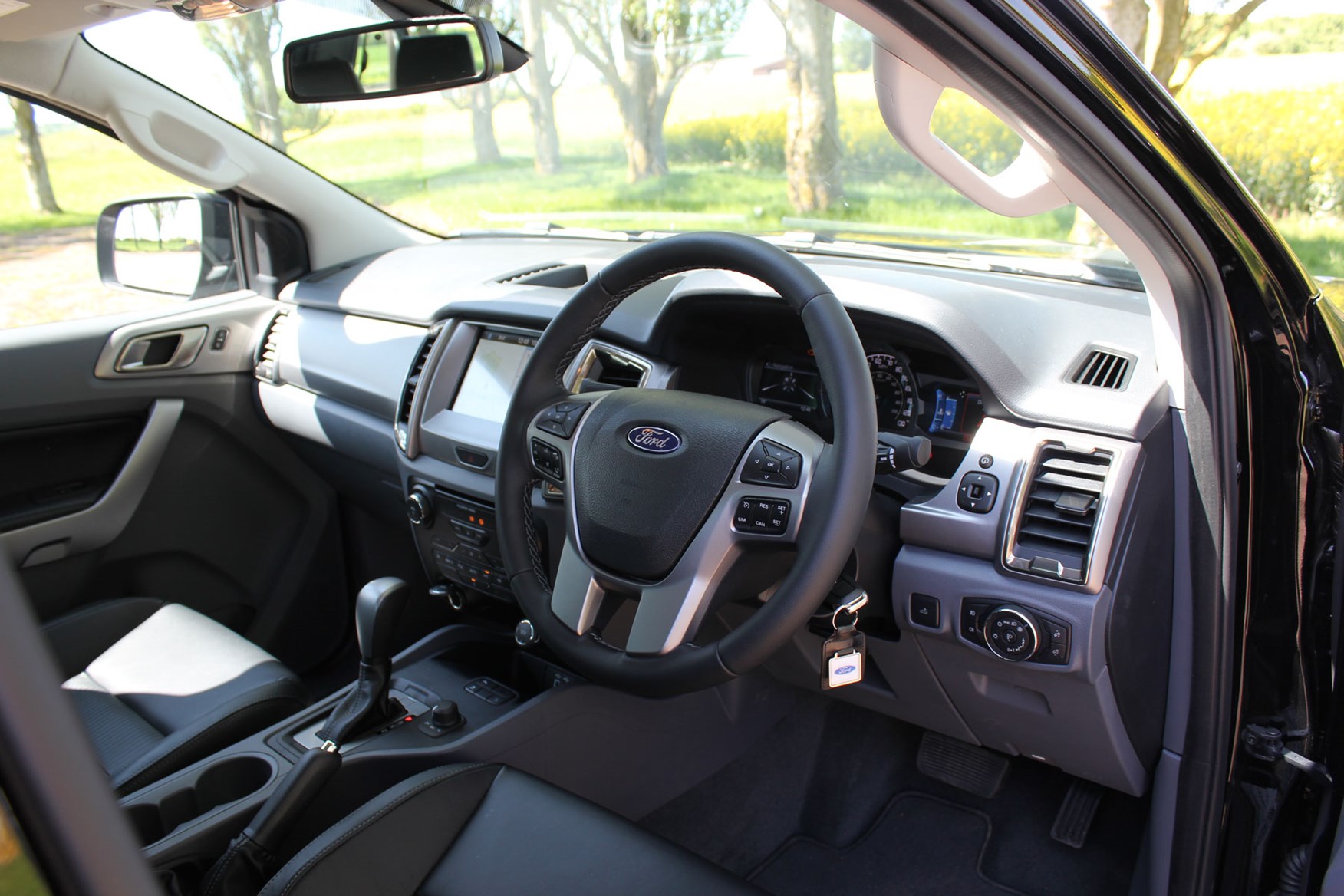
And that’s just on the outside; on the inside you’ll also find black leather seats and ‘premium’ black carpet floor mats.
On top of this you get the following standard equipment (additions to the regular Limited spec in bold):
- Dual-zone climate control
- Ford Sync3 infotainment with 8.0-inch touchscreen
- DAB radio, Bluetooth, voice control
- Android Auto and Apple CarPlay
- Satellite-navigation
- Heated front seats (only driver’s seat is heated on Limited)
- Front and rear parking sensors
- Reversing camera
- Centre console coolbox
The only major extras the Wildtrak model gets that the Black Edition doesn’t are 18-inch alloy wheels, ambient interior lighting, aluminium roof rails, a different sports bar and some titanium trimming (most of which is black on the Black Edition, as you’d expect).
There is one glaring difference between the Black Edition and the Wildtrak, however – and that’s what’s under the bonnet.
Is the Ranger Black Edition available with the 3.2-litre engine?
Nope. The Black Edition is strictly restricted to the 160hp / 385Nm 2.2-litre TDCi turbodiesel engine – which means it’s not only down 40hp and 85Nm compared to the exclusively 200hp / 470Nm 3.2-litre TDCi Wildtrak, but also quite a bit of refinement and smoothness as well.
Driven in isolation, this perhaps won’t be such a big deal, although you’ll likely still notice how clattery it is at idle, especially when cold. But if you’re at all familiar with the Ranger’s bigger engine, you will probably miss the extra hit of performance the 3.2 gives you.
To put that difference into raw figures, when equipped with the optional automatic gearbox, as tested here, the 2.2-litre engine takes 12.8 seconds to go 0-62mph – which is 2.2 seconds slower than the 3.2-litre automatic.
Approximately 60% of UK buyers currently choose the 3.2-litre unit, too – though this may in part be due to the Wildtrak also being particularly popular, the regular Ranger Limited is also available to buy with the 2.2 and the 3.2, a choice Black Edition buyers won’t get to make.
What’s the rest of the Ranger Black Edition’s driving experience like?
Typical Ranger – meaning that while the ride quality is annoyingly jiggly at lower speeds, especially when there isn’t any weight in the back, you do get very tidy road manners in exchange.
It’s right up there with the Mercedes X-Class when it comes to handling corners at speed, for example, with predictable and manageable levels of bodyroll, and steering that actually feels responsive.
The reduced weight of the 2.2-litre engine helps a bit with this compared with the 3.2, enabling the Ranger to change direction a little more quickly and precisely.
Unfortunately, Ford’s six-speed automatic gearbox didn’t win many fans on this occasion, being clearly outclassed for smoothness and decisiveness by the more modern eight-speed auto fitted in the VW Amarok Dark Label we also had in on test at the same time.
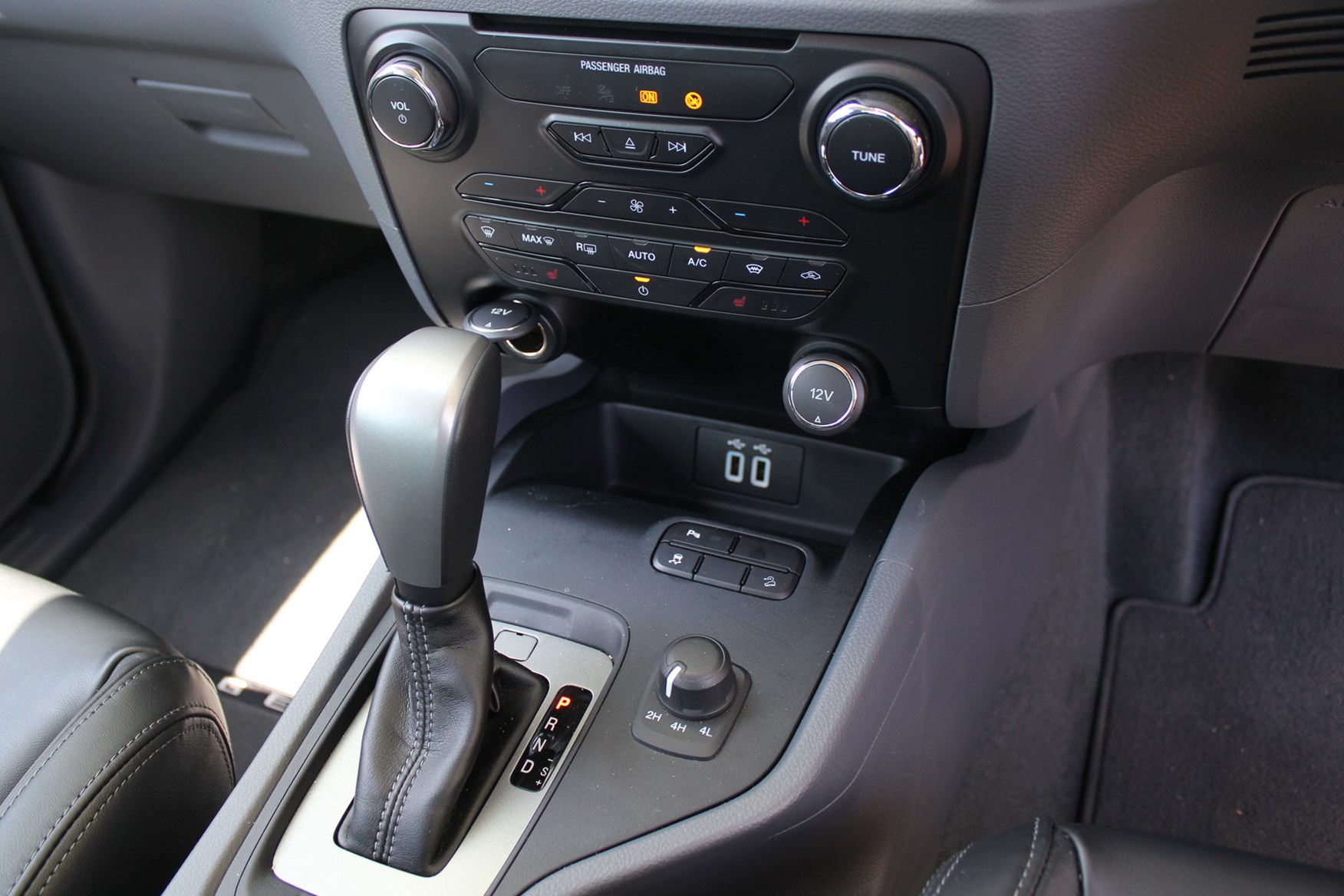
The Ranger uses a switchable four-wheel drive system, meaning you spend most of the time in rear-wheel drive mode on the road, which should be more fuel efficient. The official claim is 36.2mpg, but you’ll be lucky to top 30mpg in our experience.
Is the Ford Ranger Black Edition good value?
At £27,995 basic excluding VAT, the Black Edition auto is priced around £1,050 more than an equivalent Ranger Limited with the same engine and transmission.
Considering the additional specification and the limited edition nature of the vehicle – Ford plans to sell just 2,500 Black Editions worldwide – we don’t think that’s bad value at all.
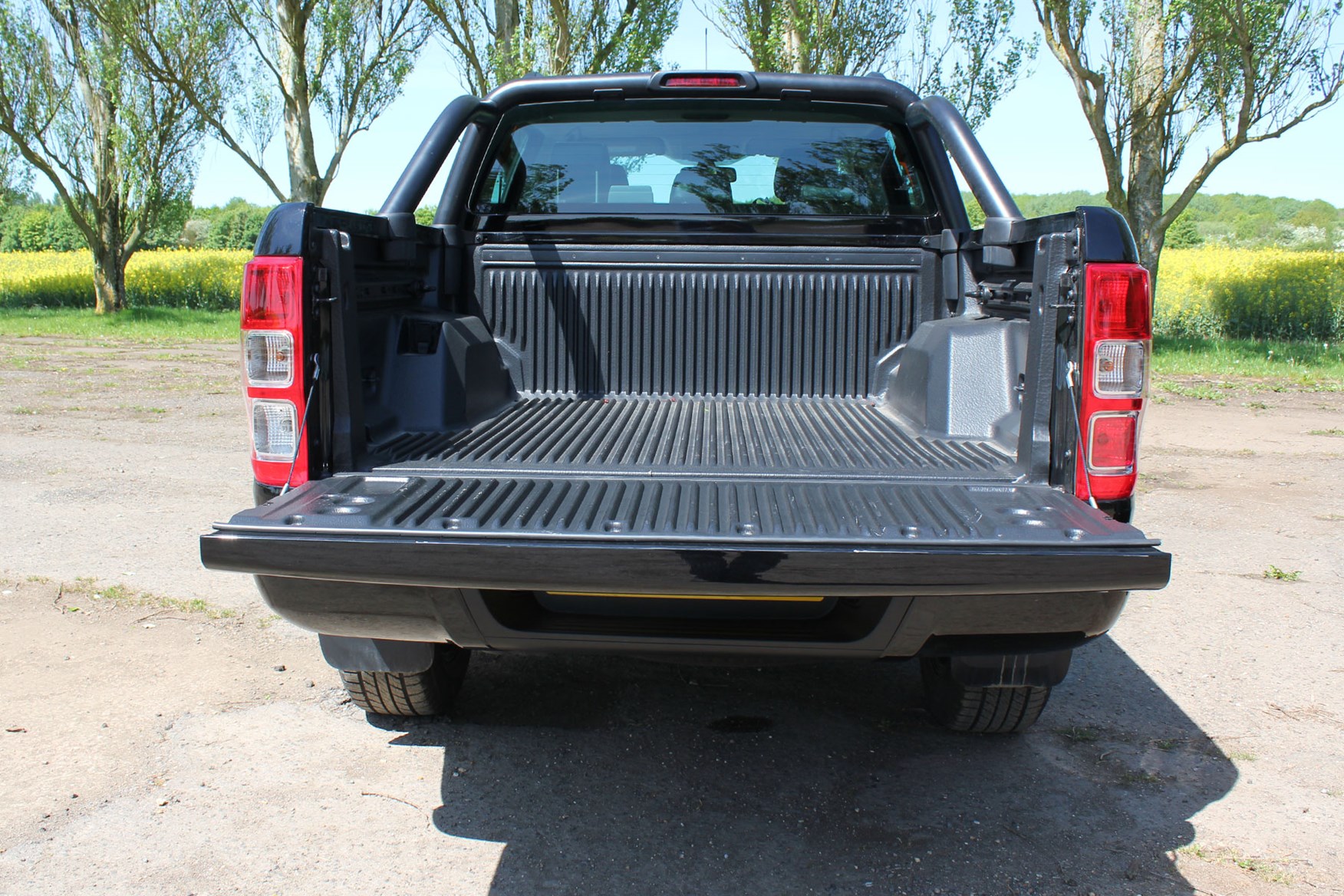
It’s certainly a lot cheaper than the aforementioned Amarok Dark Label (£33,650 basic), but that is also powered by a 204hp V6 turbodiesel, which partly explains the difference.
Things get a little trickier when you compare the Ranger Black Edition to the Ranger Wildtrak; at £28,795 with the automatic gearbox, the Wildtrak is just £800 more, has all the same standard kit and the more powerful 3.2-litre engine.
Just a thought.
If you like the all-black look, you might also consider a used Mitsubishi L200 Barbarian SVP; there is an SVP II model in showrooms at the time of writing with many of the same exterior modifications, but this also has bright orange trimmings, which may not be to all tastes.
Verdict: Should I buy a Ford Ranger Black Edition?
This is an attractive example of the UK’s bestselling pickup truck – it has plenty of hard-working capability beneath those striking looks, too.
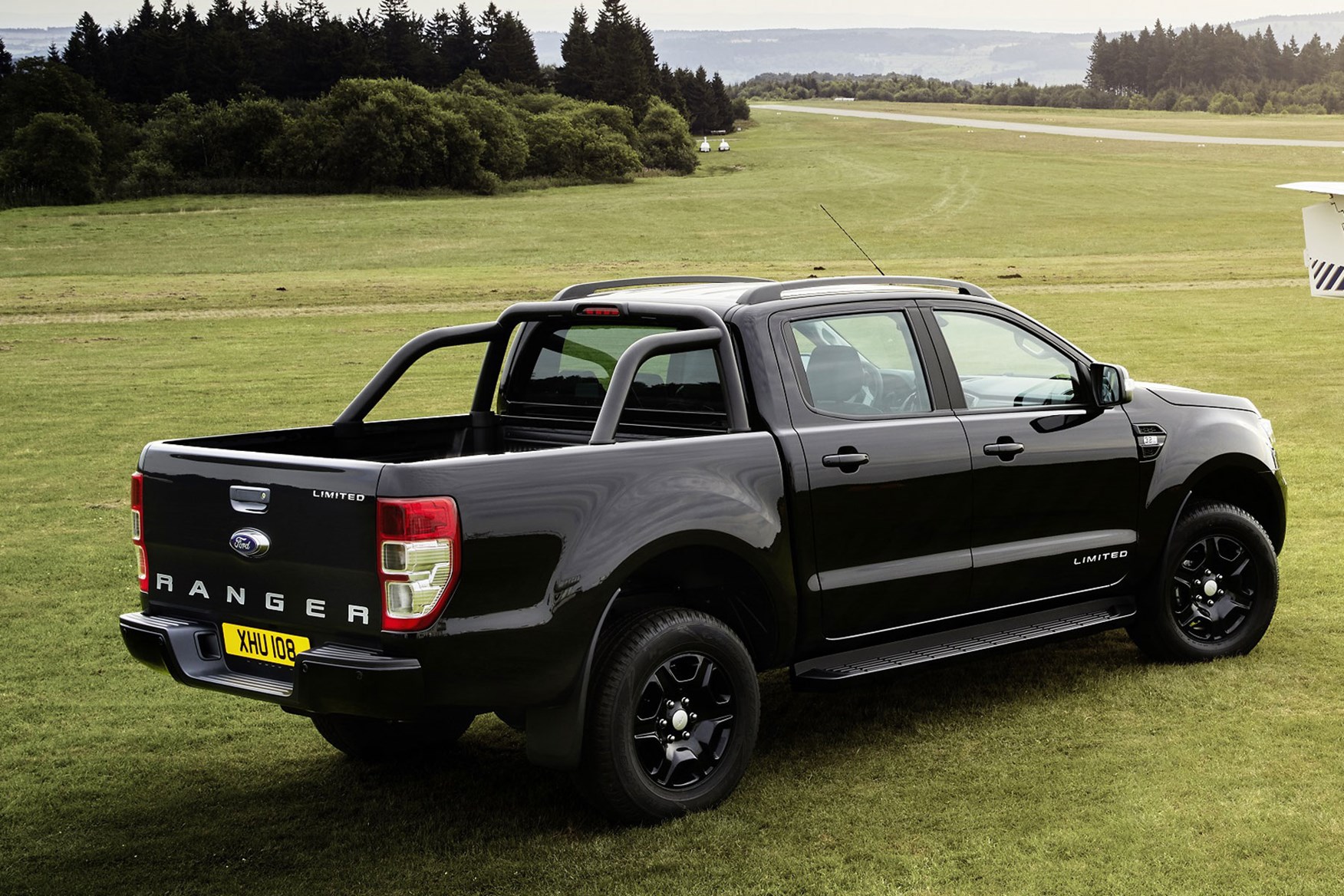
Its rarity and its standard equipment levels mean it should hold its value well, and as ever the Ranger is easy enough to live with if you don’t mind the irritable ride. A strong choice, then, if you can live without the 3.2-litre engine.
Ford Ranger Wildtrack Euro 6 review
Tested June 2017 by CJ Hubbard
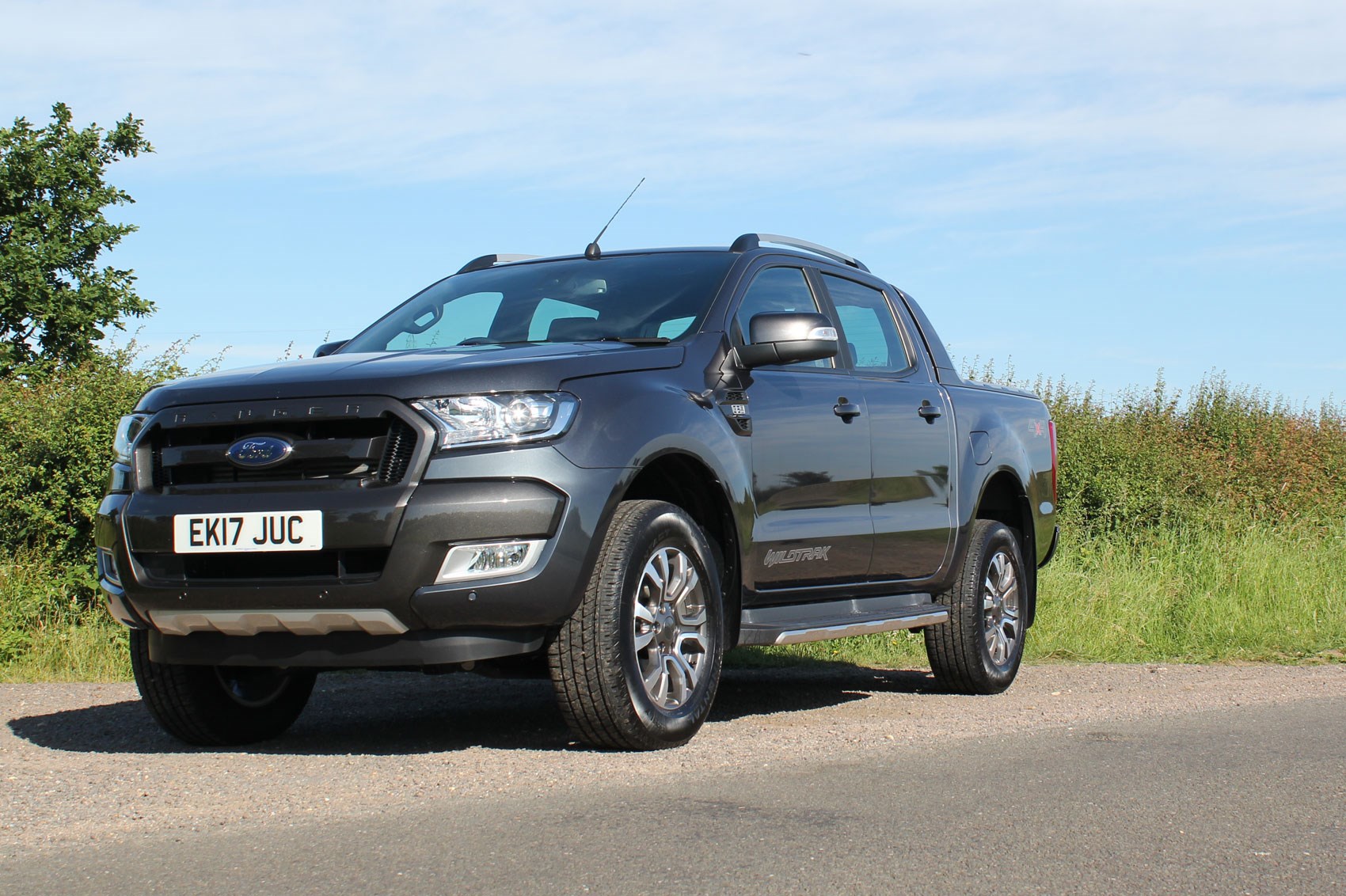
- Range-topping Ranger tested in Euro 6 guise
- Smart looks and lots of toys, including active safety
- Hard work to drive, limited payload, poor mpg
The Ford Ranger is the UK’s favourite pickup truck, outselling every rival. This is our first chance to try the new-for-2017 Euro 6 version, in this instance a Wildtrak Double Cab model with the big 3.2-litre five-cylinder TDCi turbodiesel engine.
Euro 6 – or stage 6, as Ford sometimes calls it – actually came into force back in September 2016, but manufacturers were able to continue selling stocks of Euro 5 vehicles while they lasted. Hence Euro 6 Rangers have only just started to arrive in the UK.
Spot the difference?
To tell the difference between a Euro 5 Ranger – as facelifted in early 2016 – and the new Euro 6 Ranger you’ll have to look under the fuel flap, where you’ll find there’s now a filler neck for an AdBlue tank as well as for diesel.
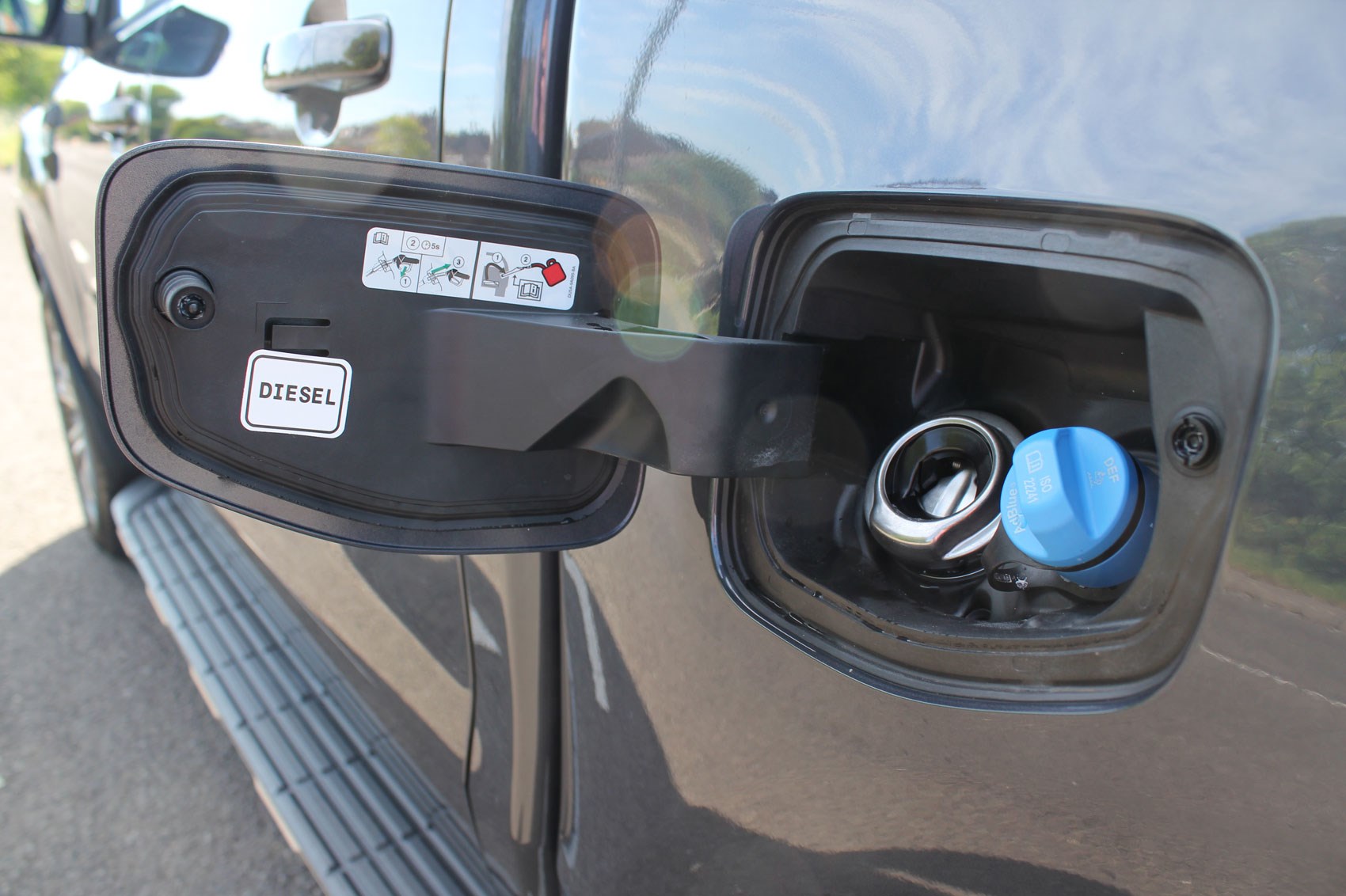
You shouldn’t get the two confused, as the AdBlue filler has a cap while the diesel filler is a Ford Easy-Fuel design, and doesn’t.
AdBlue is used in the Selective Catalytic Reduction (SCR) system to reduce nasty NOx emissions that cause poor air quality. You can’t run the updated Ranger without AdBlue, but its 20-litre tank should last several thousand miles. It is another expense you need to consider, though.
Is the Ranger a premium lifestyle choice?
Still, the Wildtrak is certainly an attractive proposition – at least to look at.
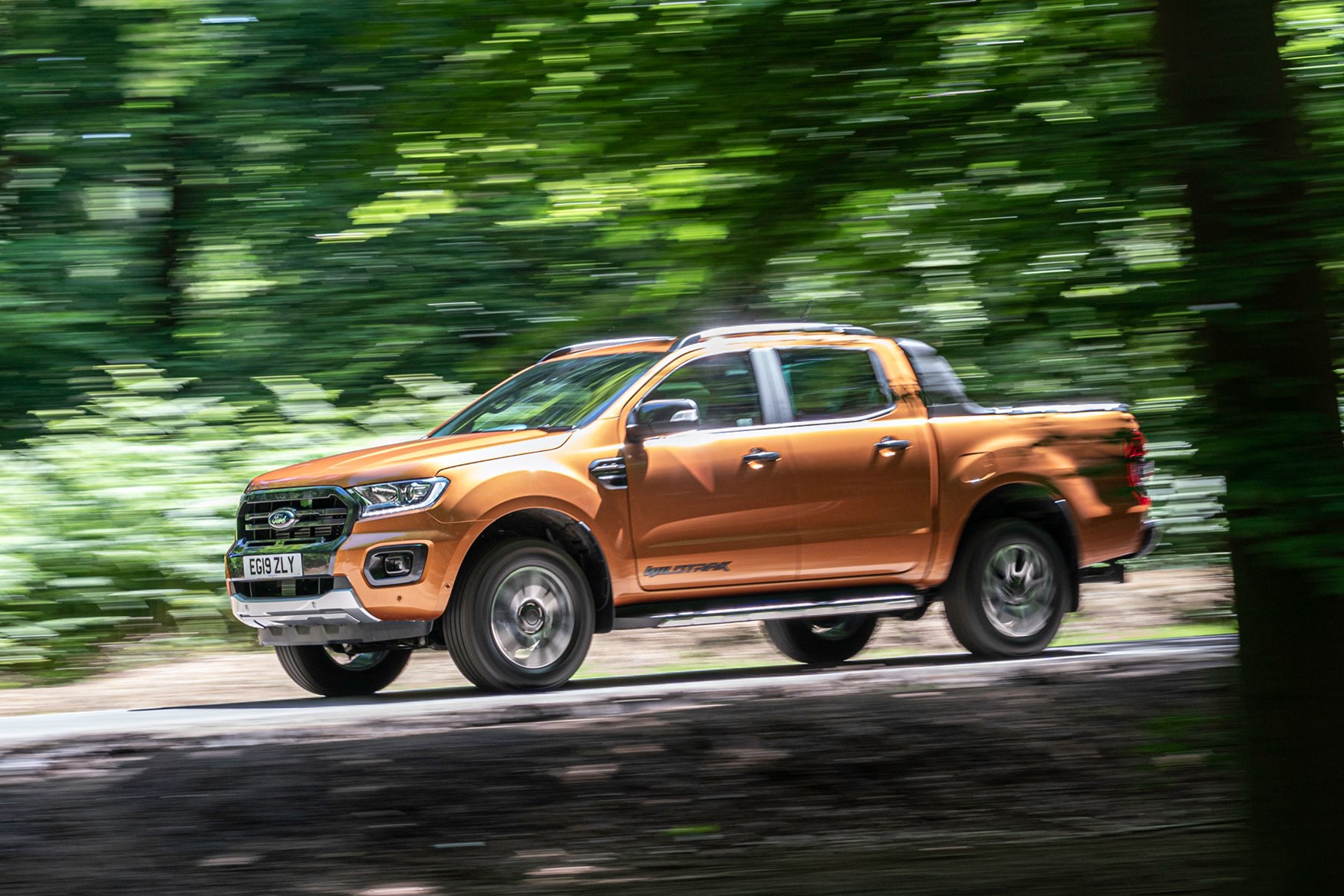
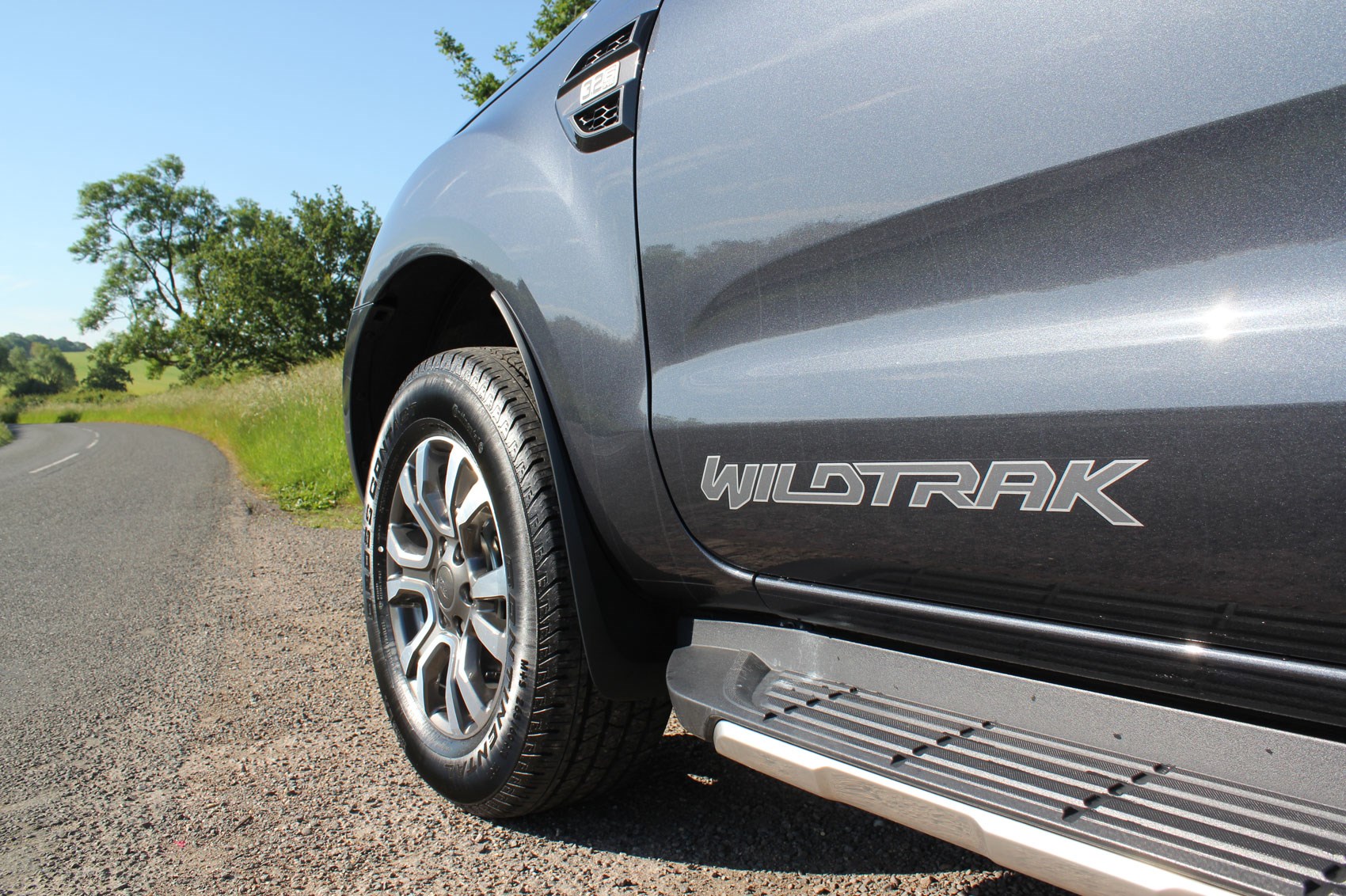
As the range-topping Ranger, it falls firmly into the lifestyle pickup camp, with 18-inch alloy wheels as standard, titanium-effect exterior detailing and a chunky off-road appearance.
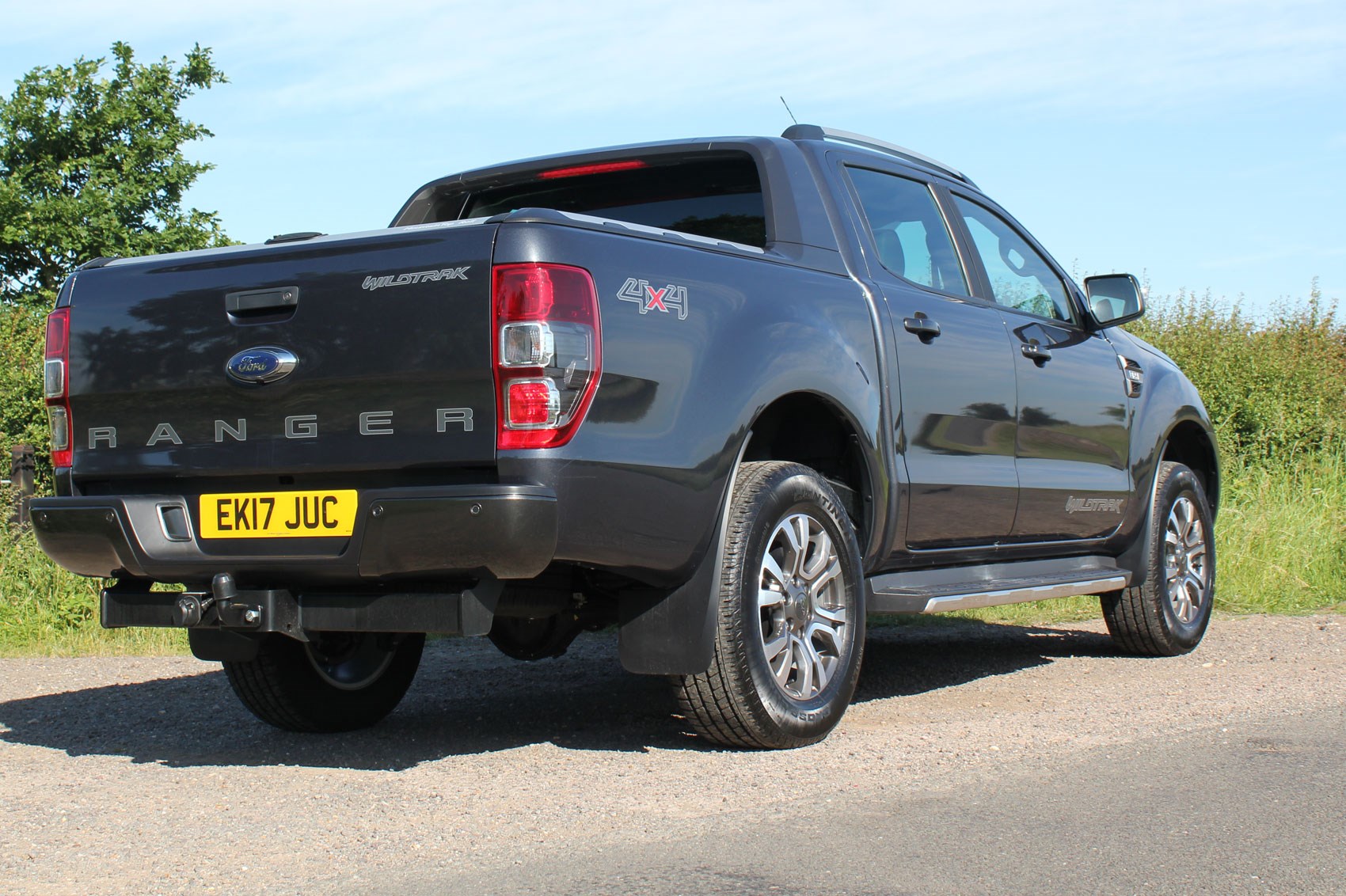
This particular example has an additional off-road pack (£300+VAT at the time of writing), which adds proper underbody protection, plus a locking rear differential for tackling tough terrain. It already has an electronically switchable four-wheel drive system.
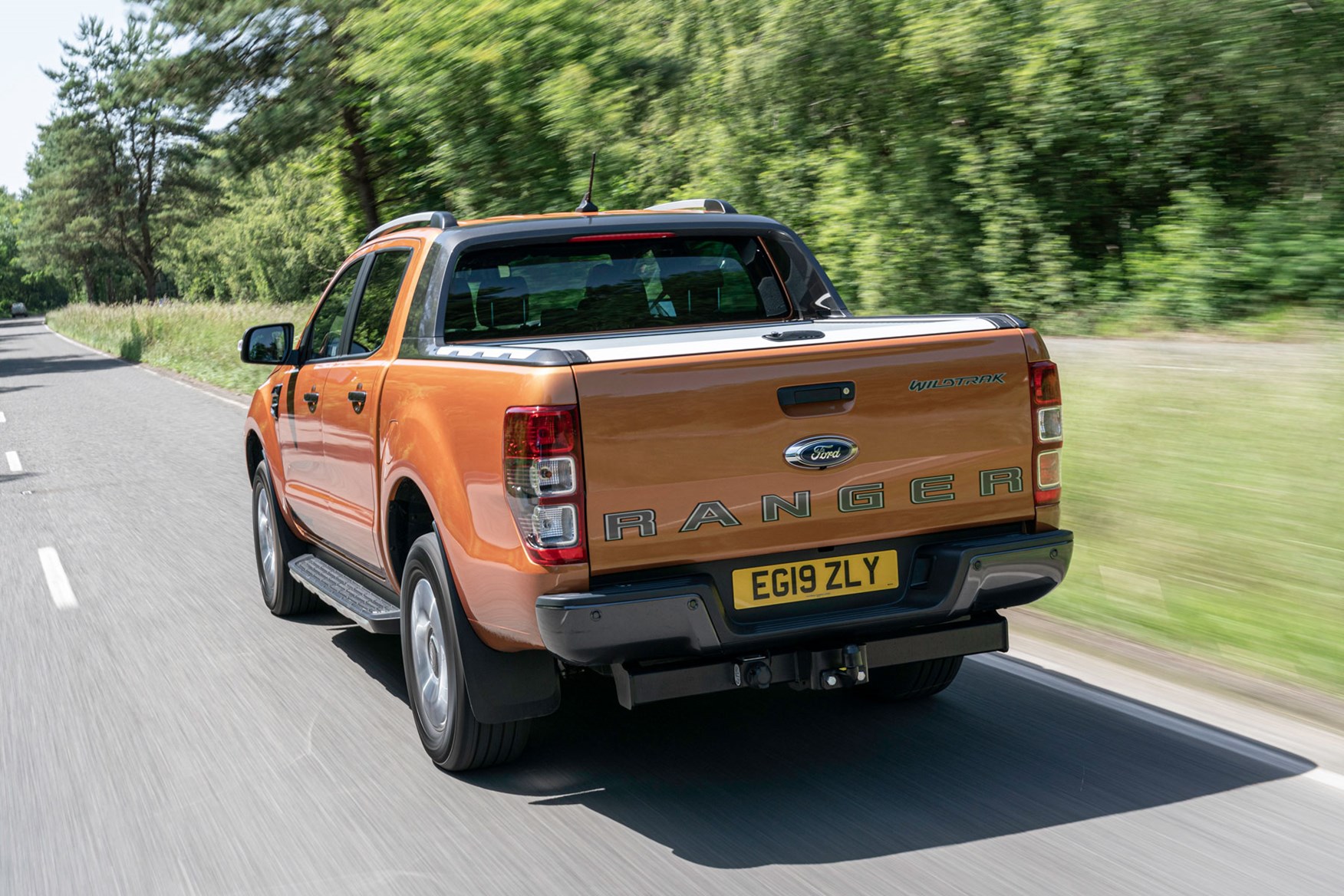
The aerodynamic sports bar – complete with integrated load-bed lighting – is similarly totally standard, as are the eye-catching graphics and rear parking sensors.
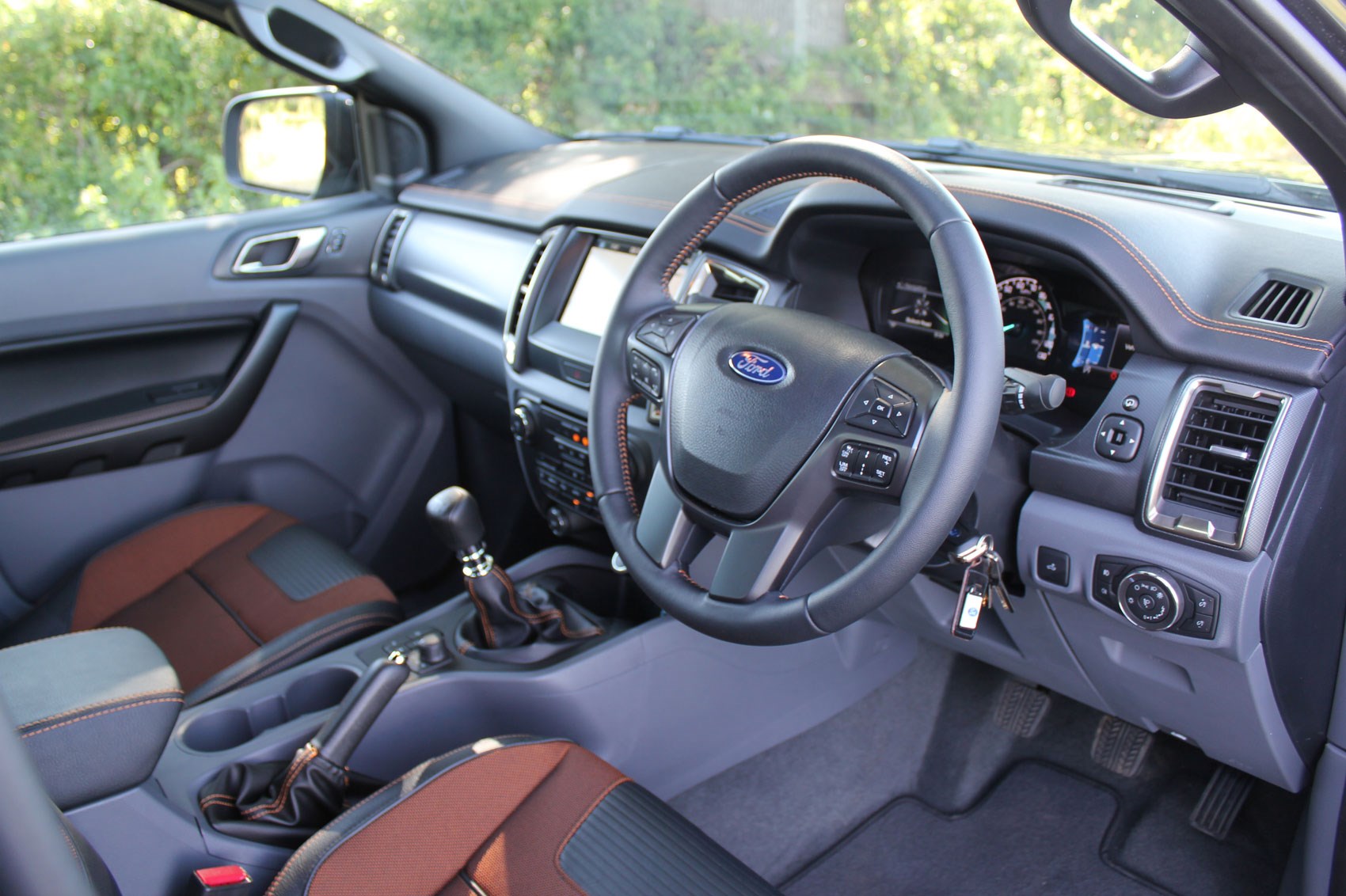
On the inside there’s Ford’s latest 8.0-inch Sync 3 touchscreen infotainment system, complete with sat-nav, DAB, Bluetooth, Apple CarPlay, Android Auto and rear parking camera. Plus a heated windscreen, dual-zone climate control, cruise control and special Wildtrak upholstery, firmly underlining the idea that this is luxury truck, not a working vehicle.
This one even had a whole suite of active safety aids in the form of the (£1,125+VAT) Driver Assistance Pack, which includes an upgrade to adaptive cruise control plus traffic sign recognition, lane departure warning, automatic main beam and collision mitigation.
The last is not, in fact, a particularly big bumper, but an alert to warn you that the Ranger thinks you’re about to drive into the car in front.
For a pickup, it’s pretty fancy.
What’s the Ford Ranger Wildtrak like to drive?
Shame then, that this visual appeal doesn’t really translate to the driving experience.
Given the various fixed-rate taxation costs, you might be interested in a Ranger like this as an alternative to a conventional SUV. If so, you’d be wise to drive one first.
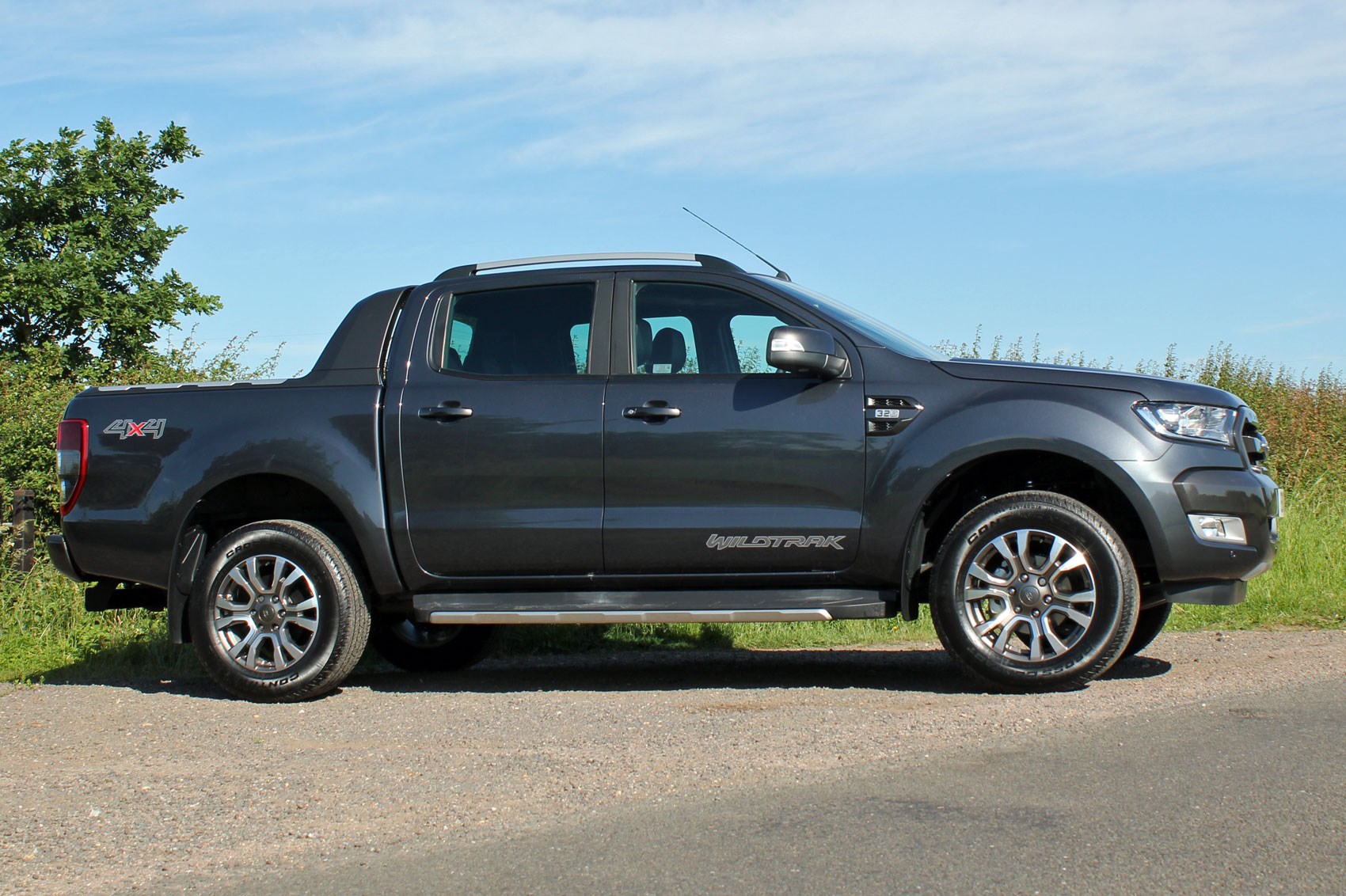
As pickups go, the Ranger Wildtrak is entirely acceptable. It is, after all, designed to carry over a tonne of load in the back. As such, the ride is firm, and somewhat jiggly at low speeds – if not so much as the 2.2-litre Ranger – yet rewards you with limited lean in the corners once you start to go faster.
But there’s no denying that piloting one of these demands more effort than an ordinary car. With gearing intended to deliver off-road control, the Ranger takes quite some time to get up to speed, even with a large, 200hp engine under the bonnet; you’ll need to plan well ahead when using short slip roads.
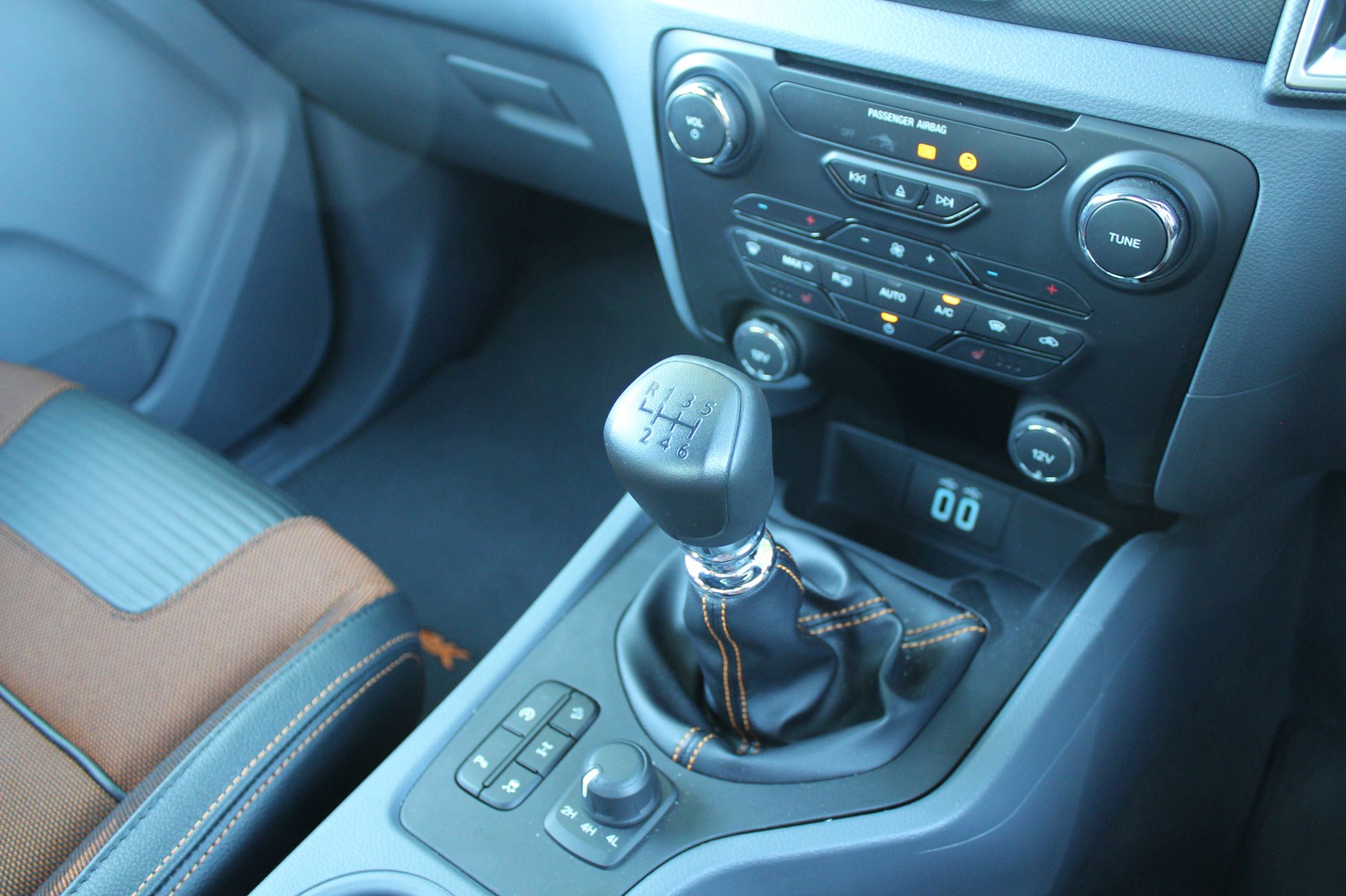
Things aren’t helped by the unpleasantly notchy six-speed manual gearbox, which is especially recalcitrant when cold. Even the steering requires plenty of effort, and although it actually handles pretty well for a pickup, it doesn’t dart down a twisty road with anything like the enthusiasm of a passenger car.
Still, the five-cylinder engine makes a much more agreeable noise than the smaller four-cylinder alternative, and with 470Nm of torque available 1,500-2,750rpm it should make light work of the Ranger’s 3.5-tonne towing maximum.
If driving’s a priority, we’d still consider the Nissan Navara or VW Amarok instead.
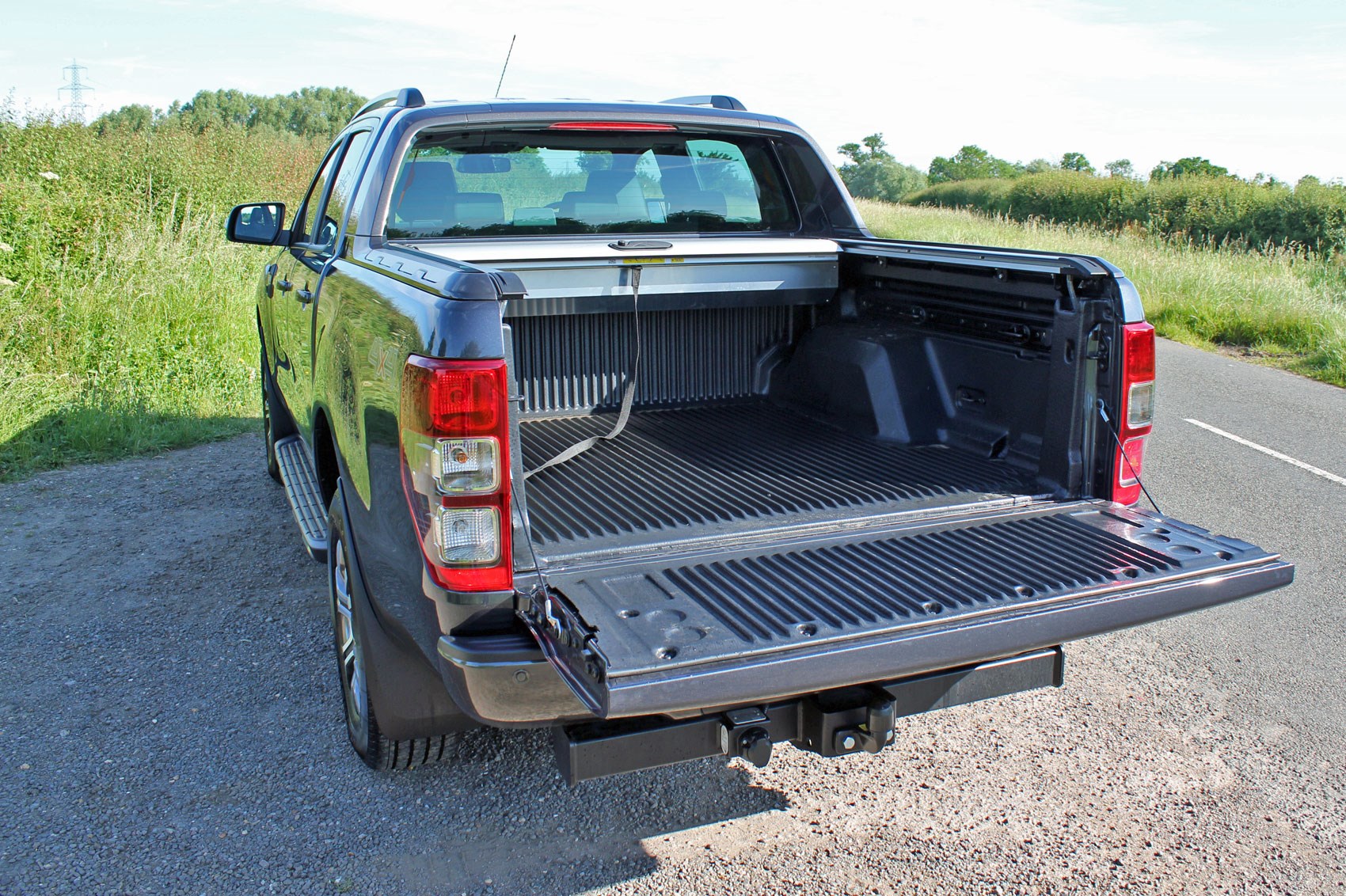
Something that has changed for Euro 6 is payload, the addition of the AdBlue system causing the Wildtrak’s to fall from 1,024kg to 1,011kg.
Running costs
How much does that 13kg payload reduction matter? Depends how often you need to travel fully loaded. In a working truck it could ultimately lead to additional journeys, but in a lifestyle model like this? It’s probably less of an issue.
Likely to be of greater concern is that the move to Euro 6 has also reduced the Ranger’s fuel efficiency.
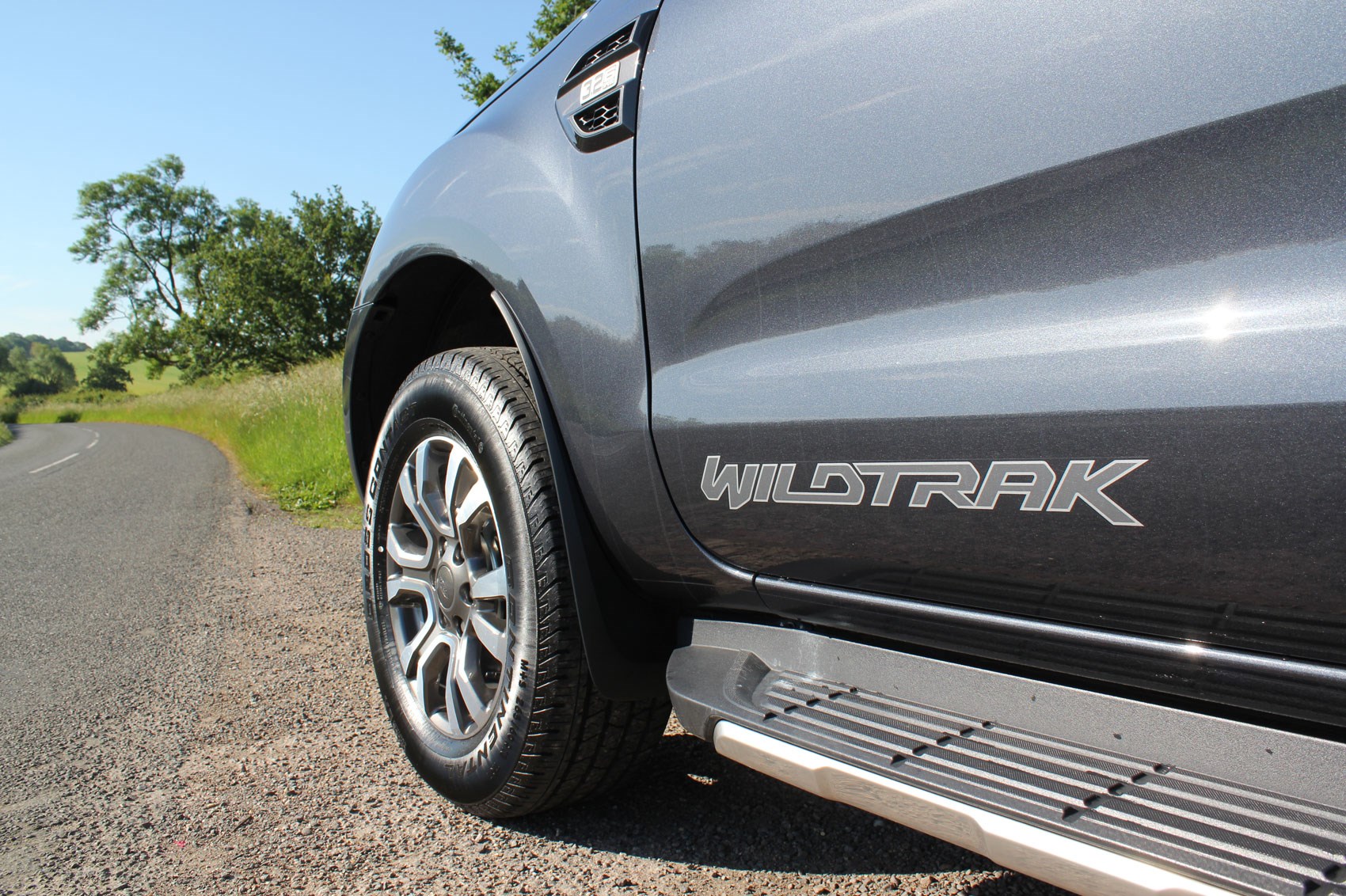
It’s only a slight dip in the official claimed figure – which falls from 34.0mpg to 33.6mpg – but add that to the extra expense of AdBlue, and the costs slowly begin to mount up. It’s not as if 34mpg was particularly impressive in the first place.
Euro 6 isn’t intended to improve fuel economy, though, as it specifically targets NOx emissions. CO2 (which used to be the big bad, remember, and is directly linked to mpg) actually increases here.
Ford Ranger Wildtrak Euro 6 verdict: should I buy one?
The Ranger Wildtrak is a good-looking, well-equipped pickup that’s now compatible with the latest emissions regulations. If you were already very keen to get one, then there’s little reason not to proceed.
But. It is a shame that Euro 6 only brings bad news from a practical perspective – this Ranger now carries less and will cost more to run. The differences are minimal, but they’re still negative. And some rivals – such as the Mitsubishi L200 and Isuzu D-Max – have achieved Euro 6 without experiencing them.
There are indisputably much nicer driving pickups on the market, too.
Ford Ranger Limited 3.2 Euro 5 review
Tested February 2016 by Liam Campbell
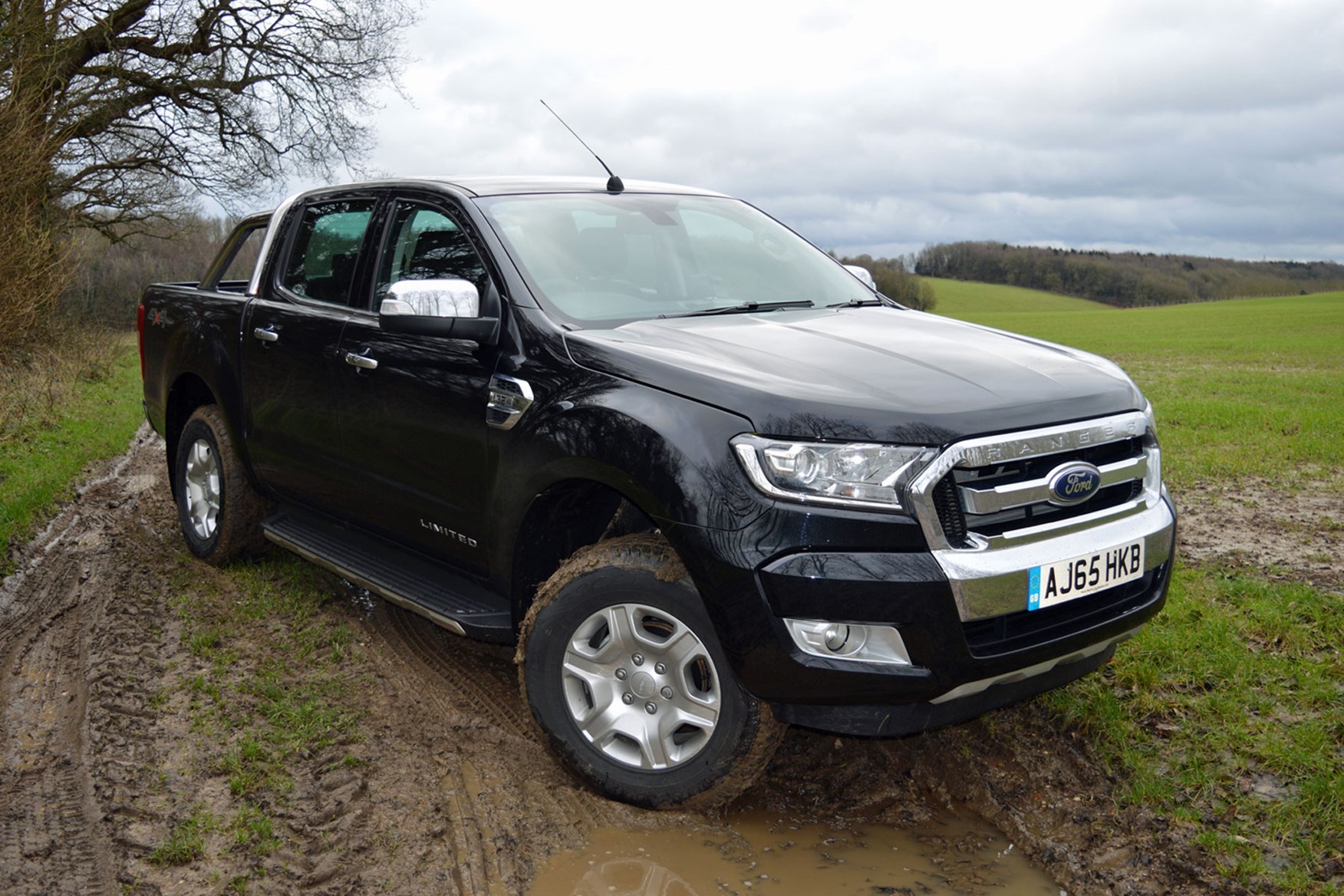
- Minor facelift for the 2016 model year
- Fitted with the mammoth 3.2-litre, five-cylinder engine
- Moderate price increase to £22,995 plus VAT
The Ford Ranger experienced a mid-life makeover inside and out in 2016, and the UK launch gave us a chance to refresh ourselves with the popular pickup. We put one of the bestselling models, the Limited, to the test, fitted here with a monster 3.2-litre five-pot engine.
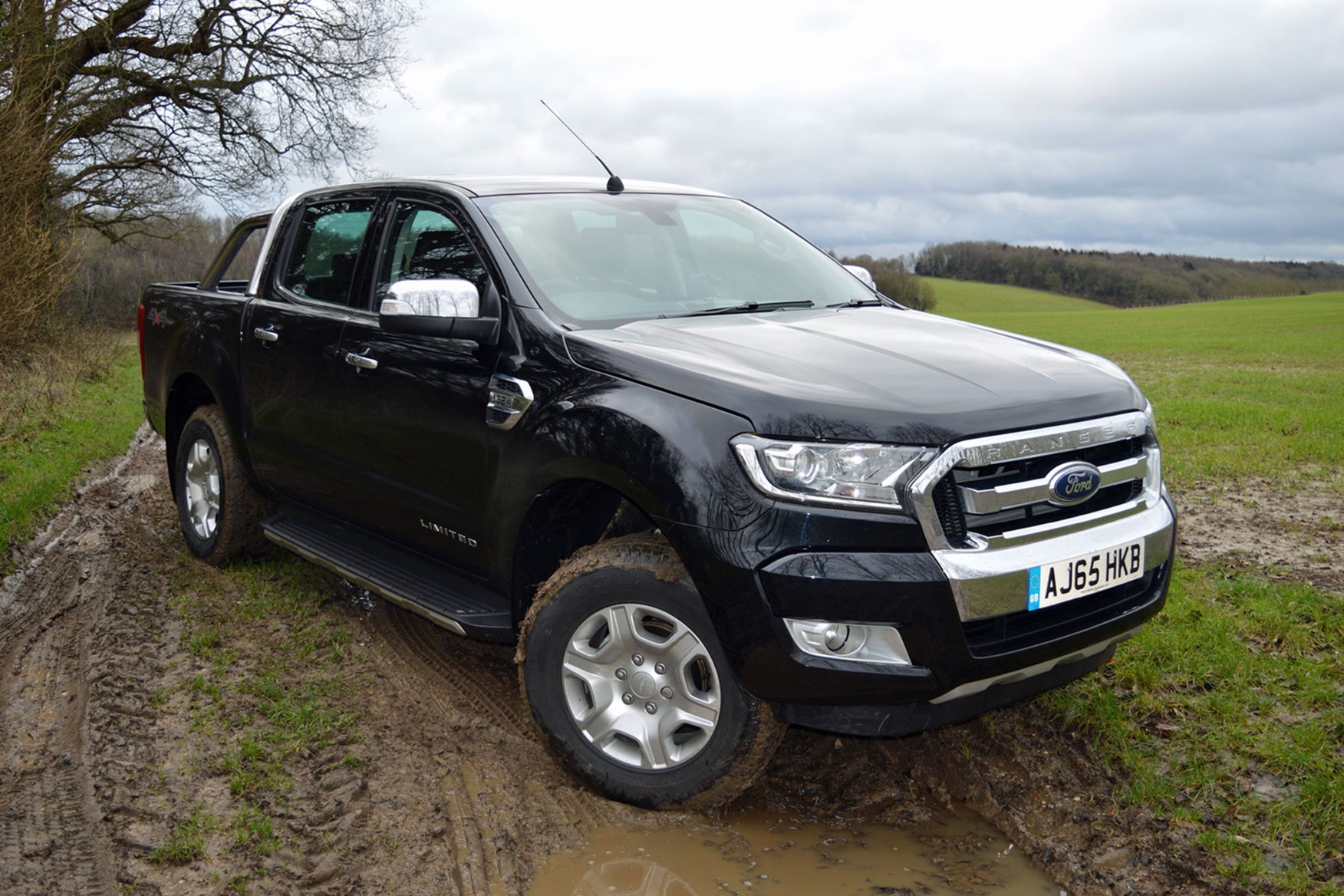
On the outside, the Limited is arguably more attractive than the top-of-the-range Wildtrak because of the chrome detailing (Wildtrak uses black plastic) on the door mirrors, grille, side air vents and roll bar.
In the cab
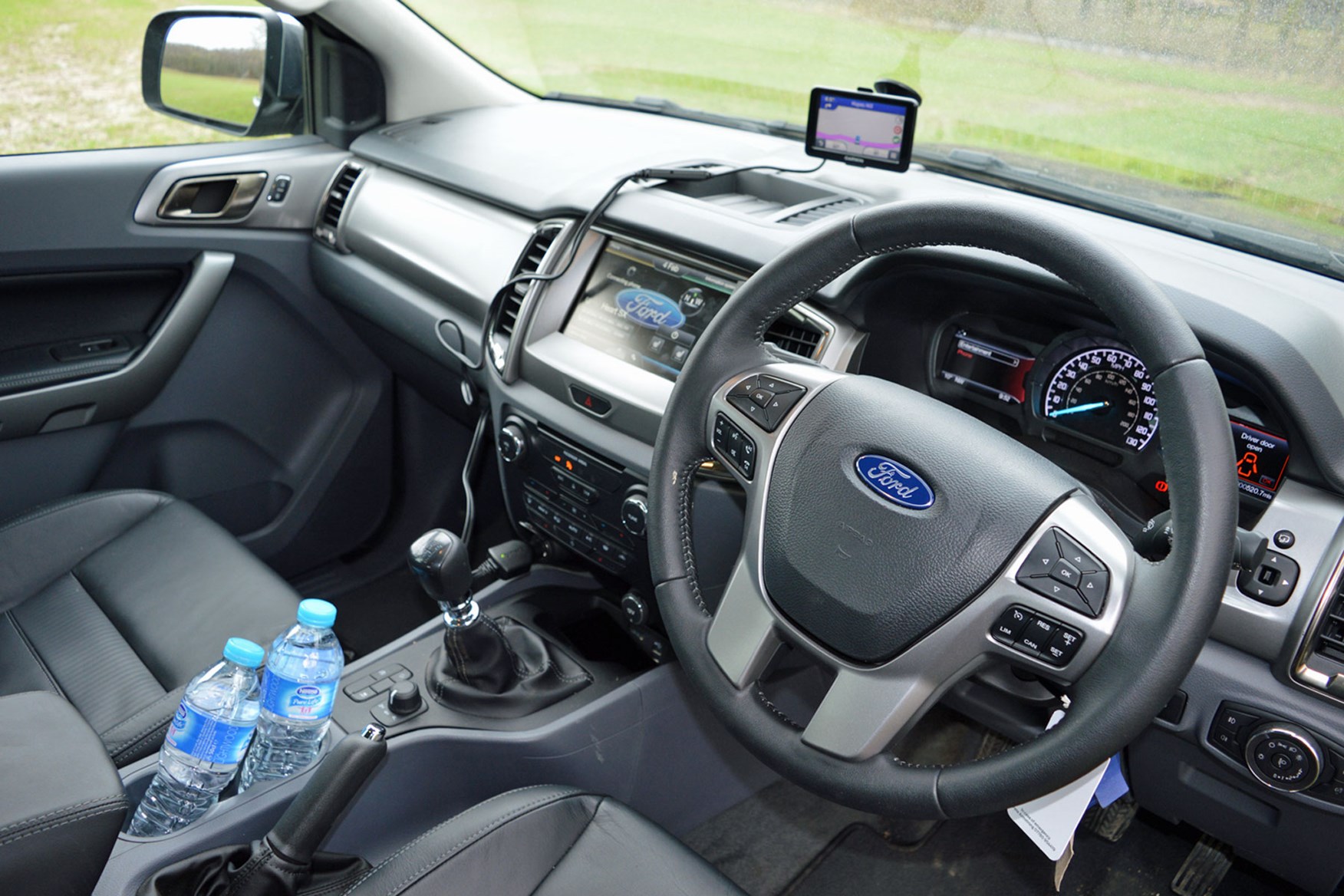
On the inside, the chunky, Casio G-watch inspired design has been replaced by a more modest and functional approach. Infotainment is provided by an intuitive 8.0-inch screen that allows you to view different menus at the same time, and features Ford Sync 2, DAB radio, voice and steering-mounted controls, and Bluetooth connectivity, although sat-nav and reversing cameras are still optional extras.
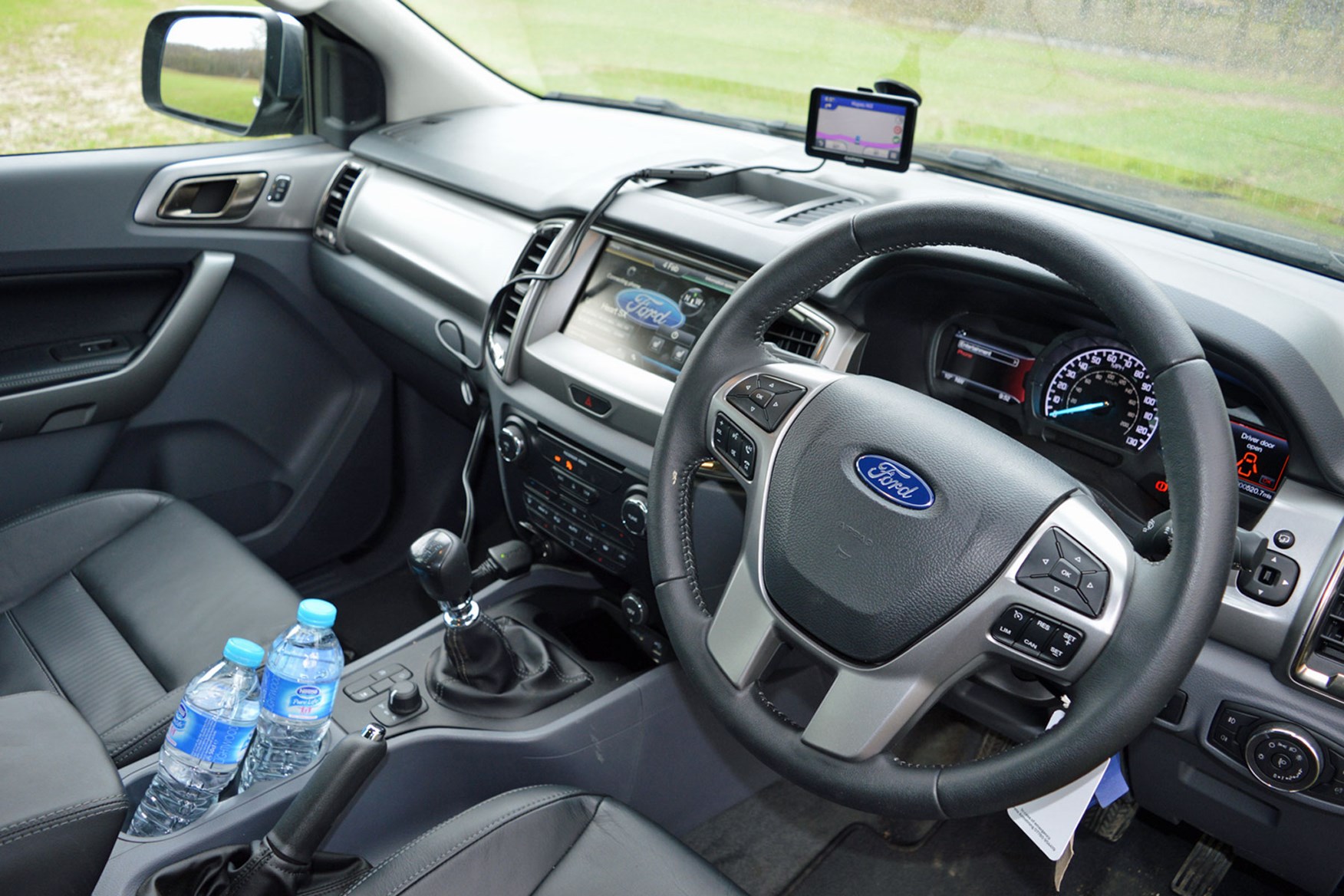
The cab itself is spacious, although visibility out of the back isn’t the best (even by pickup standards) which makes the reversing sensors all the more important. The leather seats are comfortable and accommodating for drivers of most shapes and sizes thanks to the eight-way adjustability (including lumbar support) and reach and rake adjustable steering wheel.
There are a number of handy quick-access storage spaces, including in front of the gear stick, on the dashboard and a large, central cubby that is cooled.
Loading and towing
When it comes to productivity, the Ford Ranger has always performed relatively well. Back when the pre-facelift version was launched in 2011, it was the first vehicle to offer a 3.5t towing capacity but the payload of 1,050kg is below the sector average, largely owing to the extra weight of the larger engine and increased equipment levels.
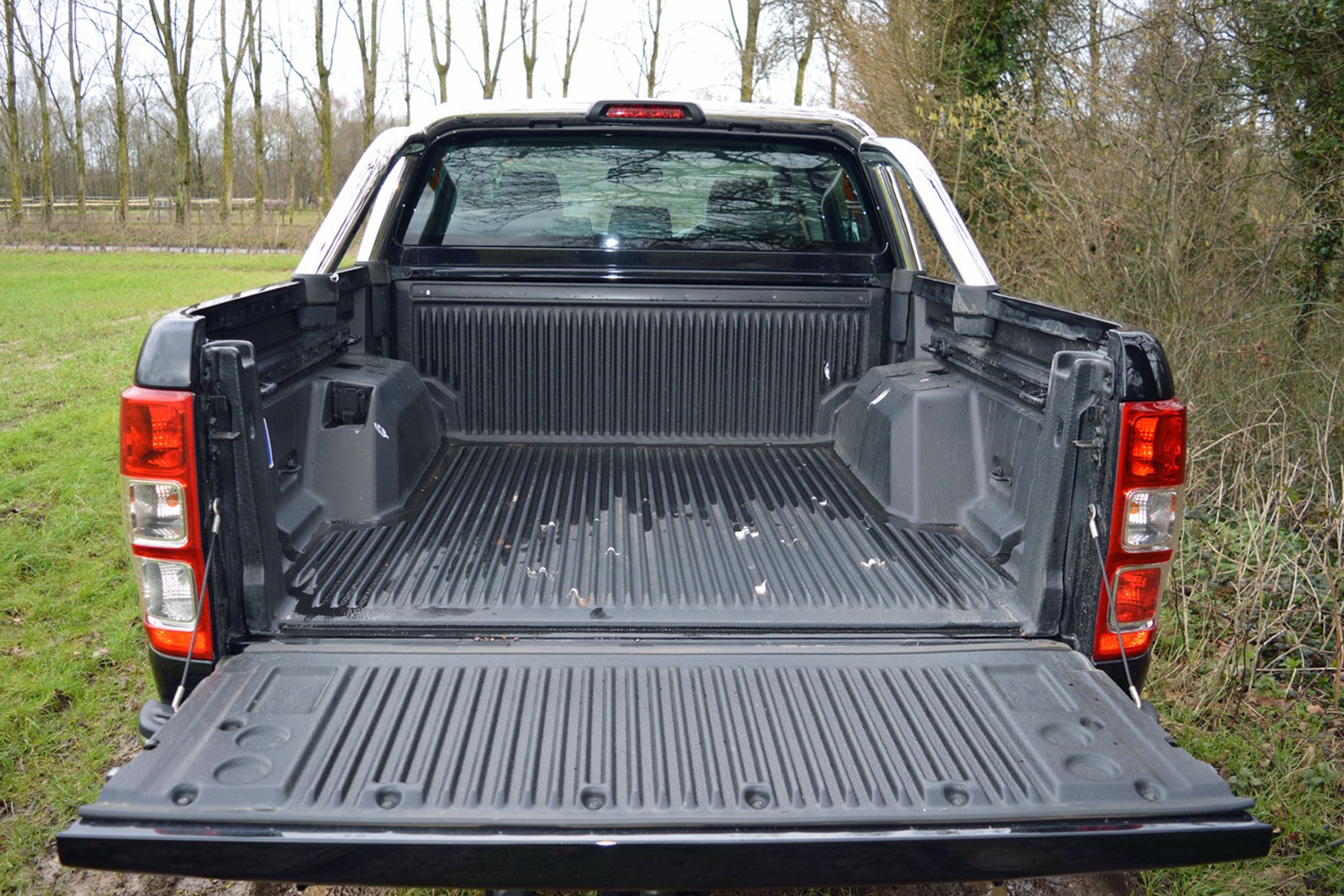
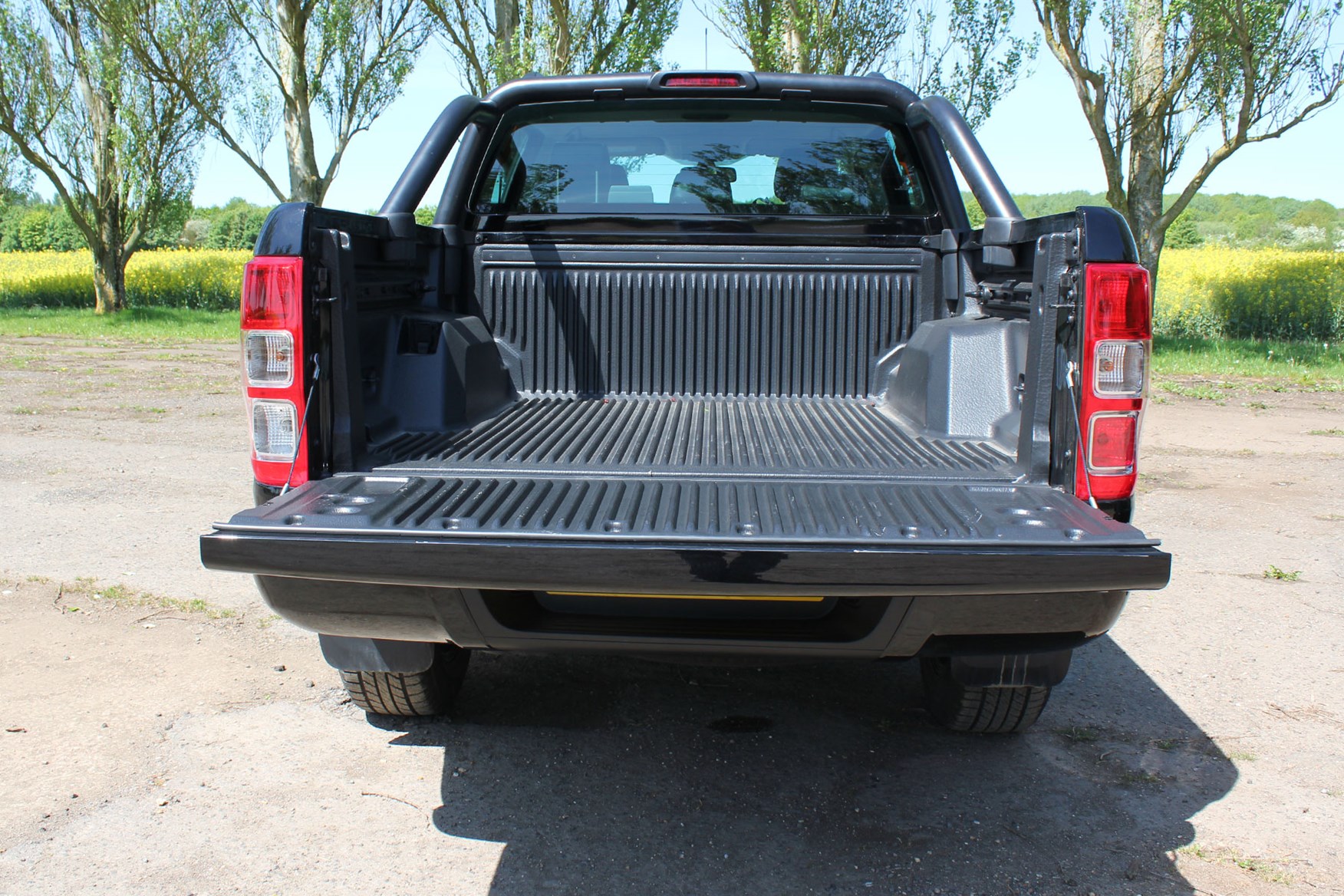
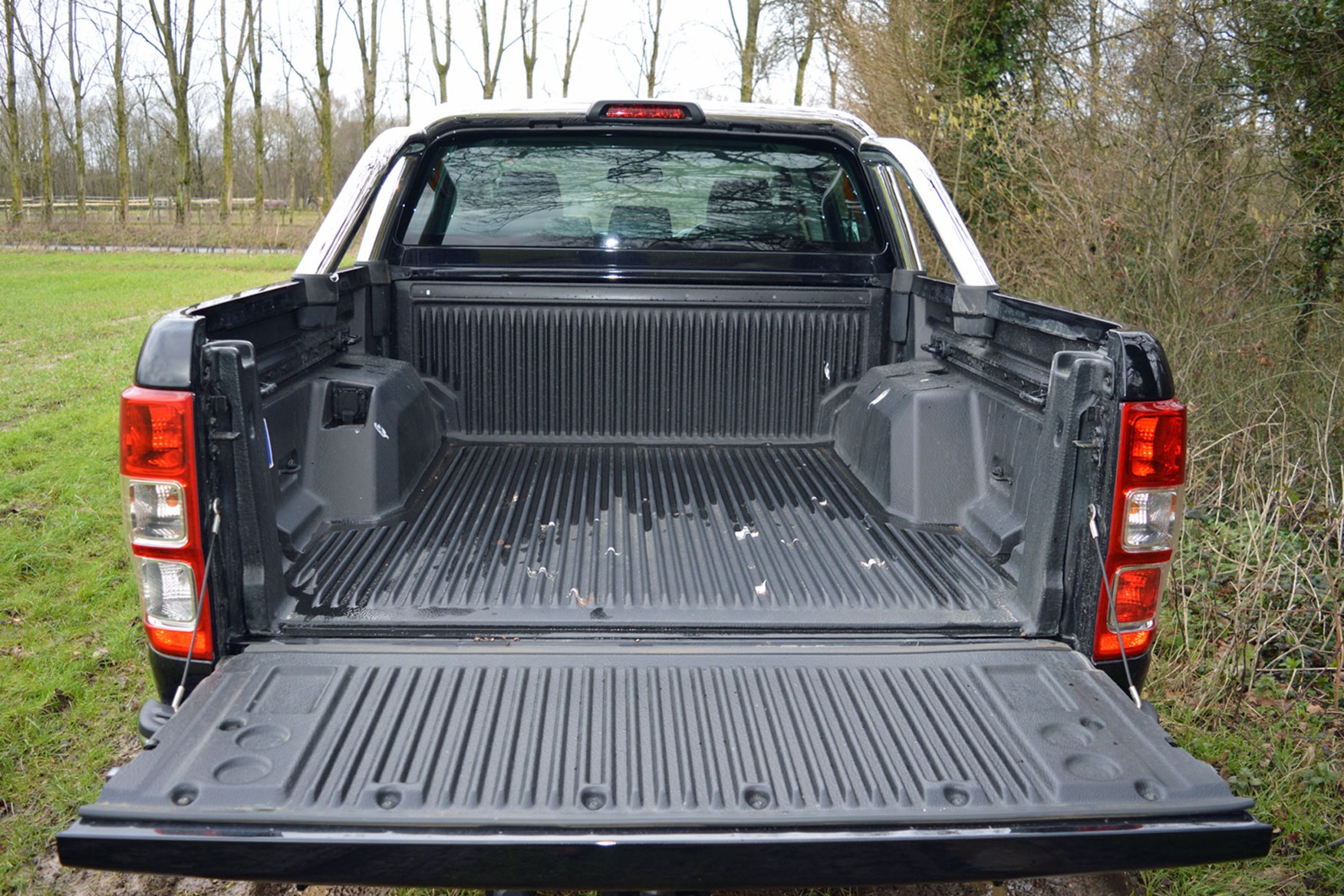
Measuring 1,549mm long, 1,560mm wide and 511mm high, the Ford Ranger offers one of the largest load beds for any double-cab pickup. The load bed is covered by a tough and durable PVC liner, there is a handy 12-volt socket for charging tools and the rear tailgate opens to 90 degrees.
On and off the road
In terms of on- and off-road performance, the Ford Ranger has always been a good all-rounder.
Under the bonnet is Ford’s mammoth 3.2-litre five-cylinder engine, which produces 200hp and 470Nm of torque. Despite this, the 2.2-tonne kerb weight means that it isn’t quite as spritely as the figures suggest, but there are very few jobs that will trouble it.
One of the greatest strengths of the Ranger is its cornering. The steering is accurate and quite light, and the body keeps its composure in the bends. The only real concern was the noise; the 3.2-litre engine is quite loud during acceleration and can cause a bit of disturbance in the cab.
Off the road, and again, the Ranger performs pretty well. The all-wheel drive system has three settings: 2WD-High, 4WD-High and 4WD-Low, and these are backed up by Electronic Stability Control (ESC) with integrated Traction Control, although there is no locking rear differential.
The first gear of the Ford Ranger is one of the slowest in the sector, which means hills can be tackled at a safe speed without the need for braking. The maximum approach and departure angles are set at 28 degrees and there is an impressive wading depth of 800mm.
Pricing and summary
There is very little difference between this and the pre-facelifted version of Ford Ranger. The 3.2-litre engine retains the same power ratings and fuel economy, and there have been no changes to the suspension, chassis and driveline.
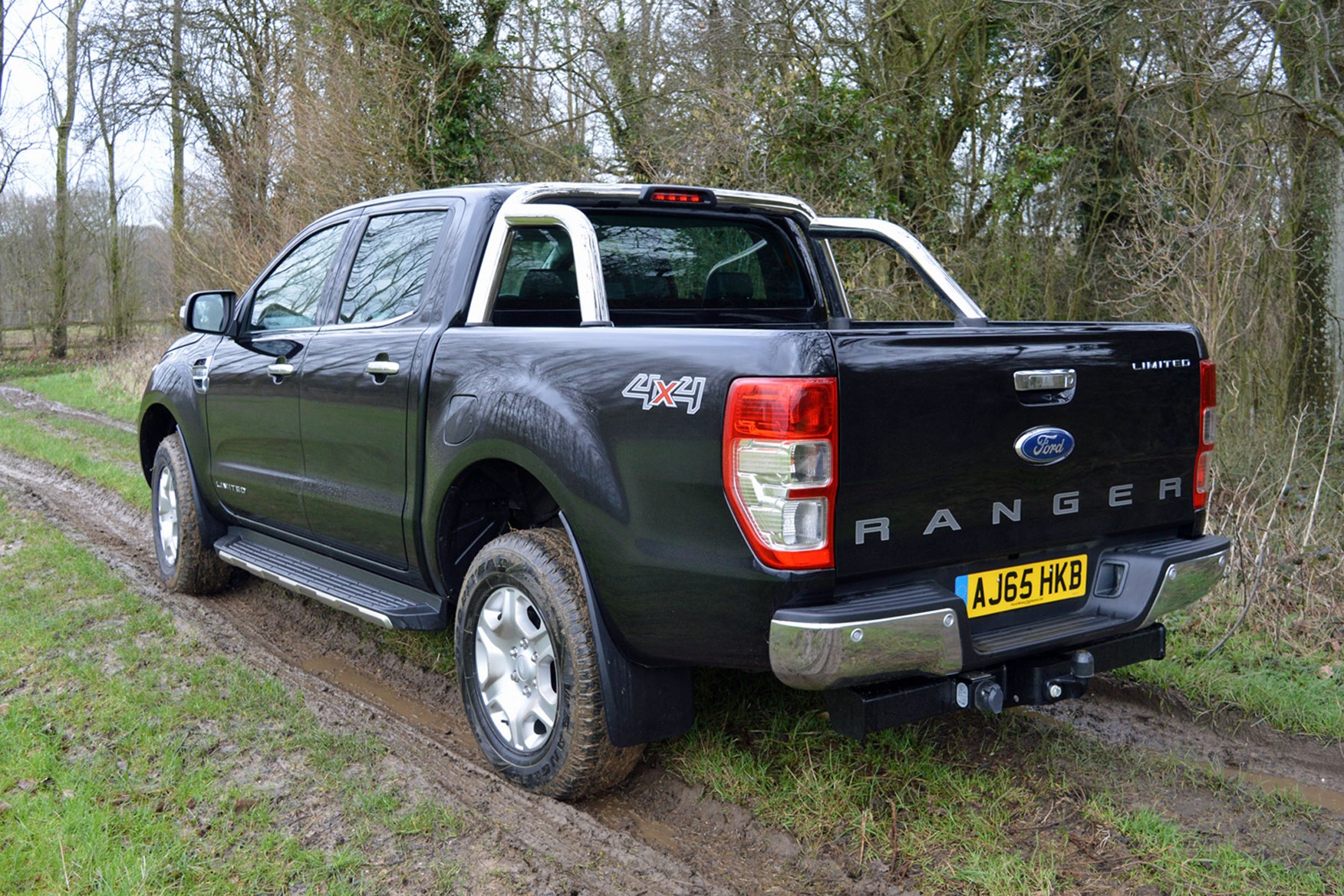
Ford, instead, has only made changes where they needed to be made. The new infotainment system with Sync 2 is one of the most comprehensive on the market, and the new grille and headlights provide a meaner and tougher appearance.
Prices on the Ford Ranger Limited have increased ever-so-slightly from £22,358 to £22,995 plus VAT. Interestingly, certain optional extras have reduced in price, like the satellite-navigation and rear reversing camera, from a combined price of £750 to £600 plus VAT.
 MS-RT Ford Ranger - front three quarter
 MS-RT Ford Ranger - rear three quarter
 MS-RT Ford Ranger - side profile
 MS-RT Ford Ranger - interior
 MS-RT Ford Ranger - interior
 MS-RT Ford Ranger - rear seats
 MS-RT Ford Ranger - load bed
 MS-RT Ford Ranger - front cornering
 MS-RT Ford Ranger - side panning
 MS-RT Ford Ranger - front cornering
 Ford Ranger Parkers Pickup of the Year 2021
 MS-RT Ford Ranger - side panning
 Ford Ranger - winner of the 2020 Parkers Pickup of the Year Award
 Ford Ranger review - 2019 facelift model
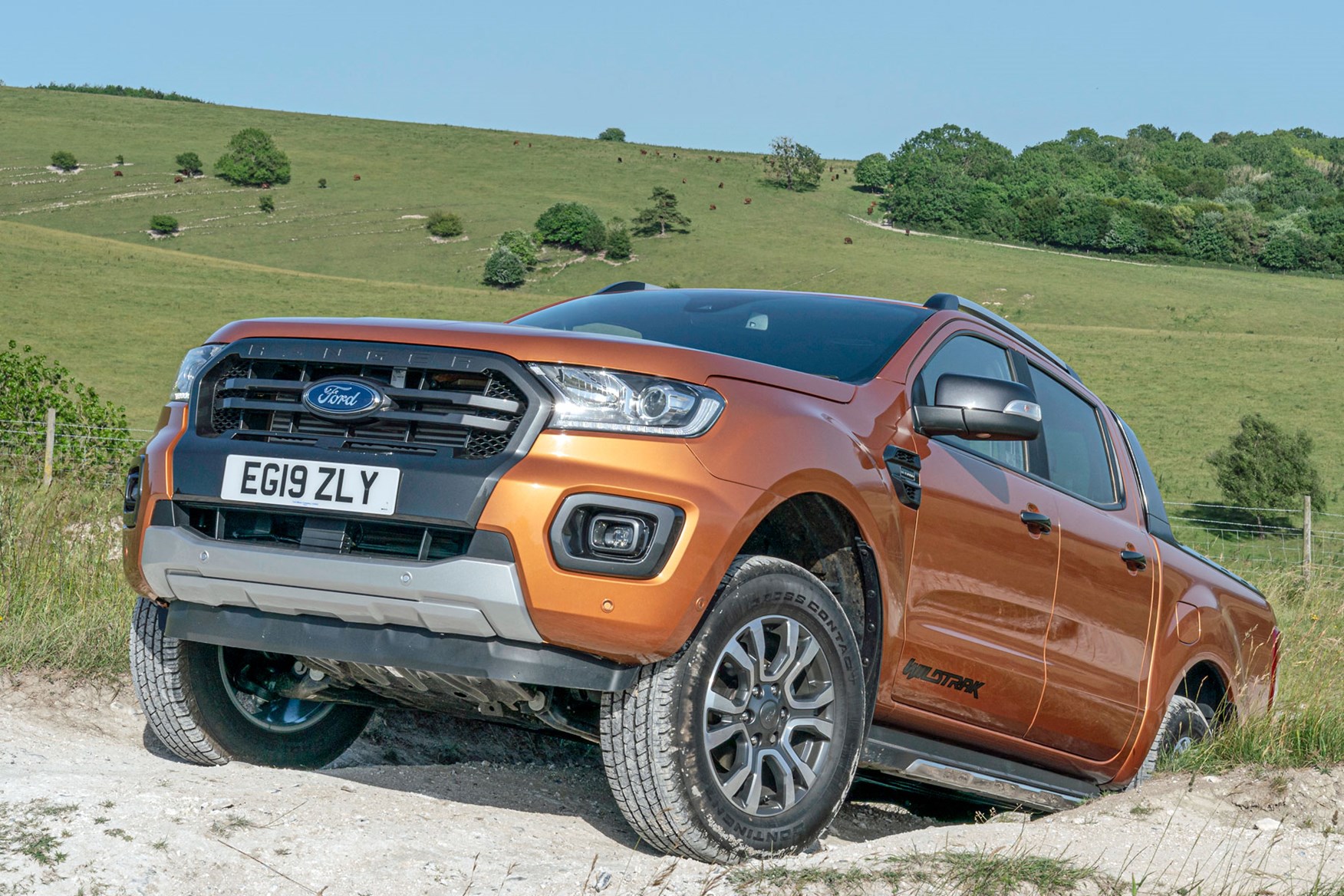 Ford Ranger review - 2019 facelift model, Wildtrak, orange, rear view, driving off-road
 Ford Ranger review - 2019 facelift, dead-on front view, Wildtrak, orange, driving through the woods
 Ford Ranger review - 2019 facelift, rear view, driving on road, Wildtrak, orange
 Ford Ranger review - 2019 facelift, side view, driving through trees, Wildtrak, orange
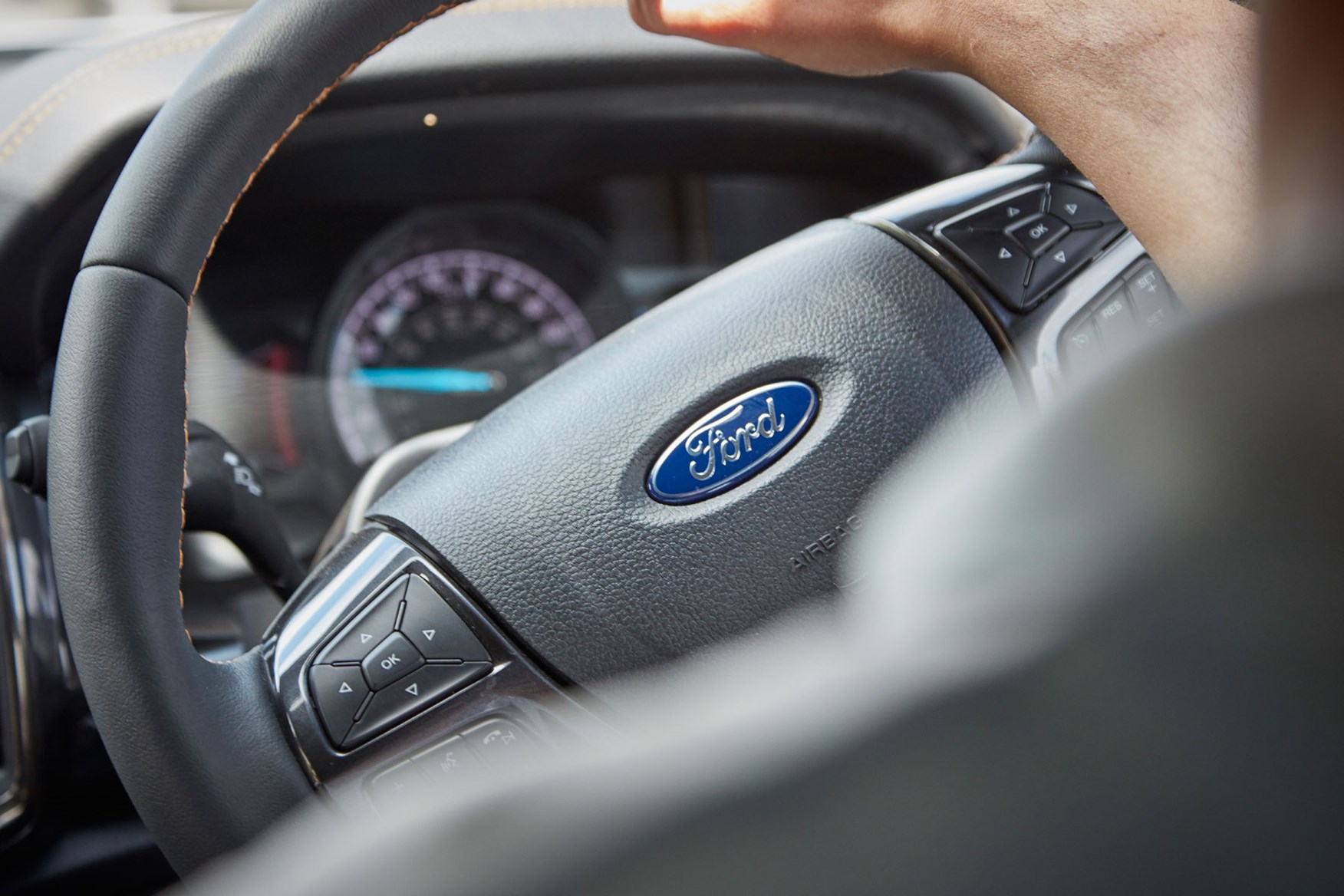
 Ford Ranger review - 2019 facelift, view of steering wheel and dials over driver's shoulder
 Ford Ranger review - 2019 facelift, gear selector for 10-speed automatic gearbox
 Ford Ranger review - 2019 facelift, four-wheel drive selector knob
 Ford Ranger review - 2019 facelift, Wildtrak graphic on open door
 Ford Ranger review - 2019 facelift, side view, wading through water, Wildtrak, orange
 Ford Ranger review - 2019 facelift, side view, wading through water, Wildtrak, orange
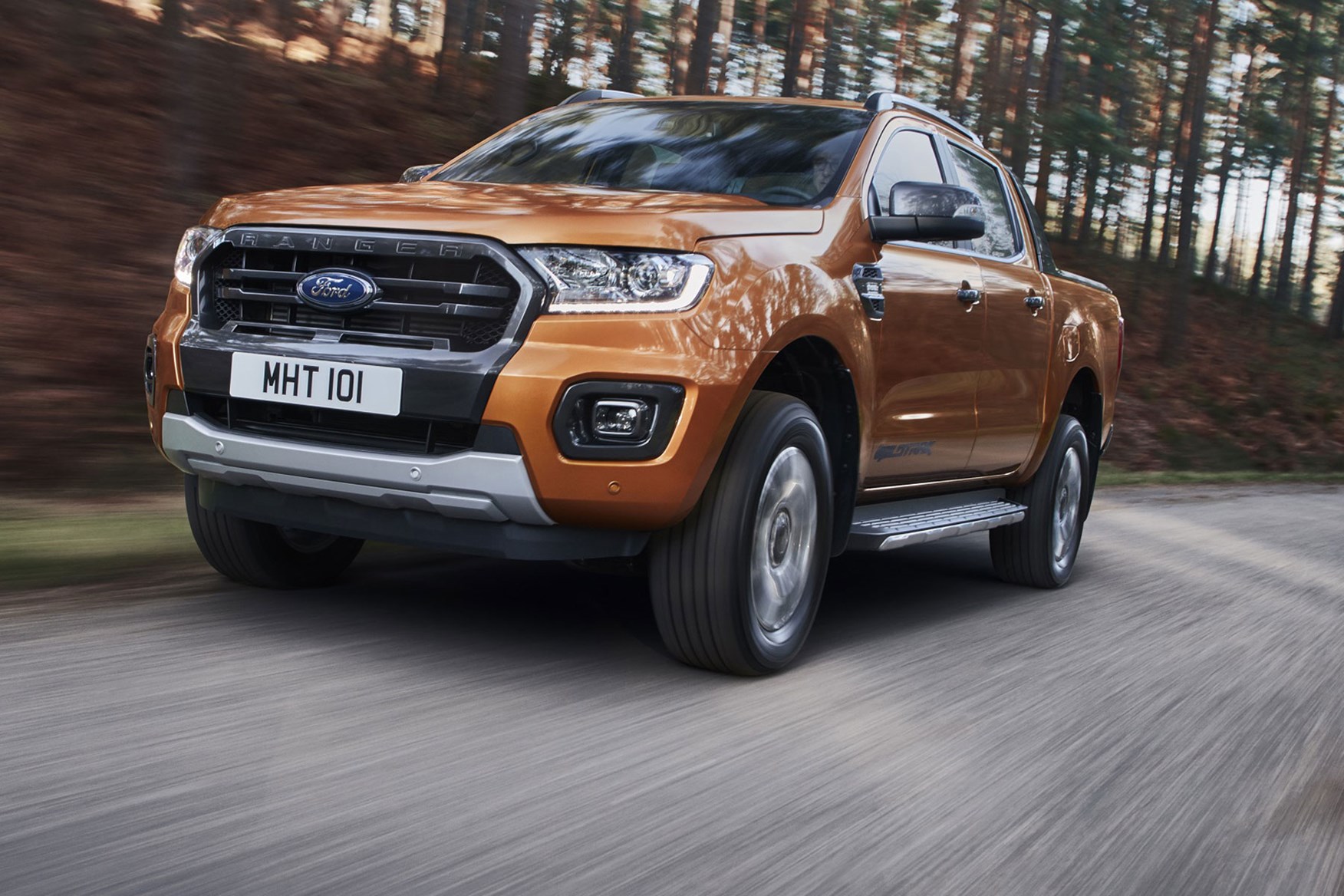
 Ford Ranger review - 2019 model, front view, driving, orange
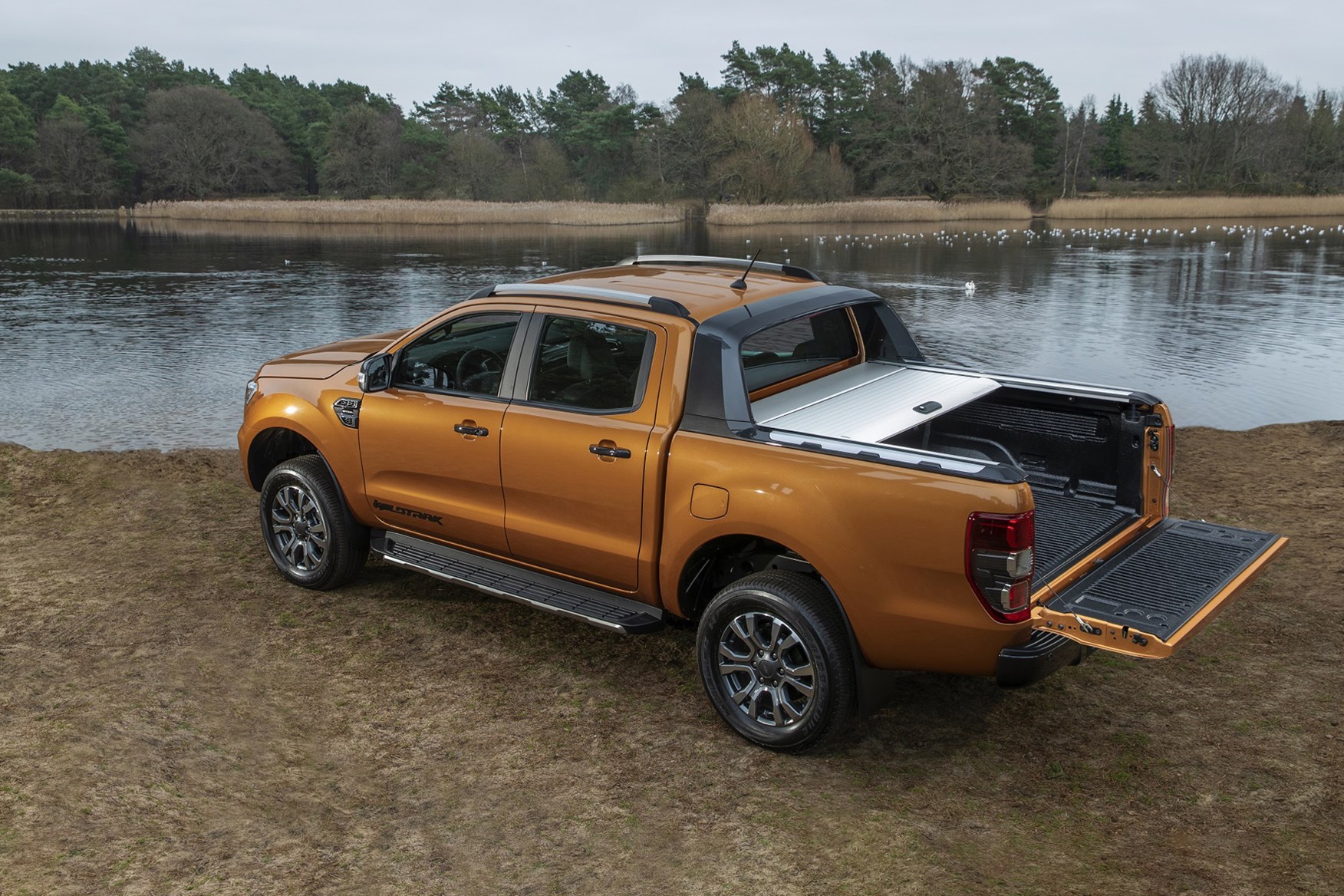
 Ford Ranger review - 2019 facelift, rear view showing loading area with load cover
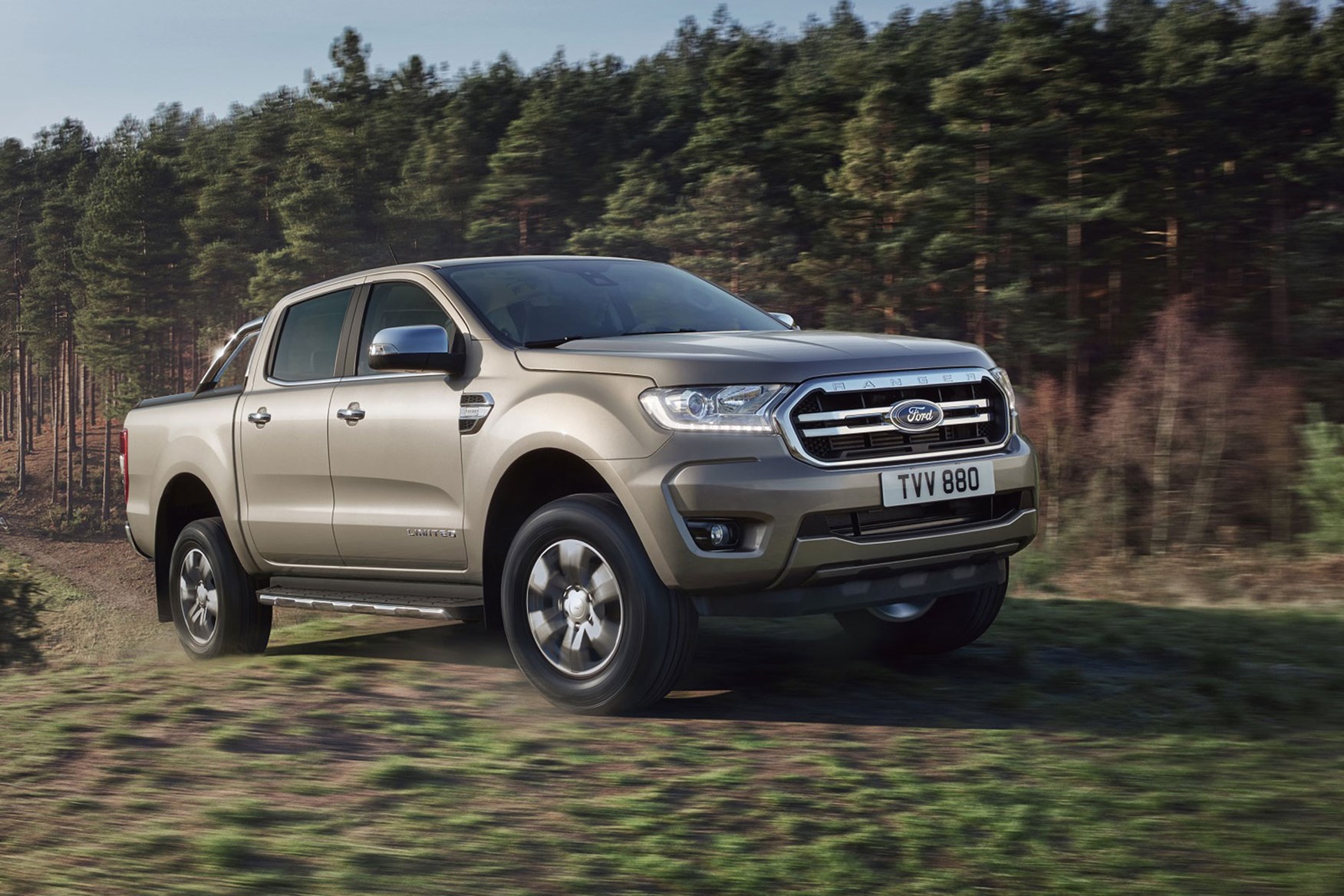
 Ford Ranger review - 2019 facelift, front view, silver-grey
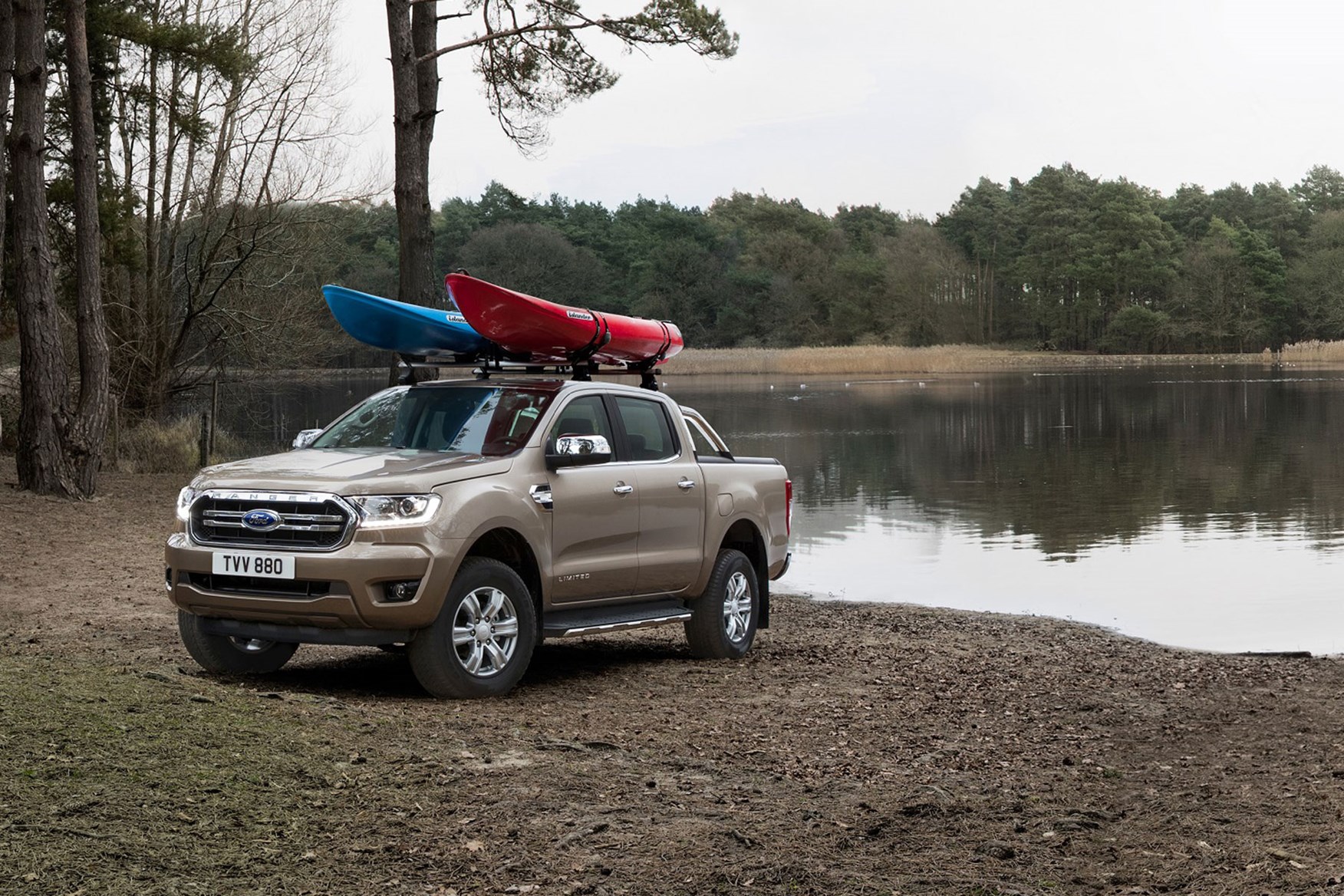
 Ford Ranger review - 2019 facelift, front view, parked by lake with kayaks on roof, silver-grey
 Ford Ranger review - 2019 facelift, side view, orange
 Ford Ranger review - 2019 facelift cab interior, side view
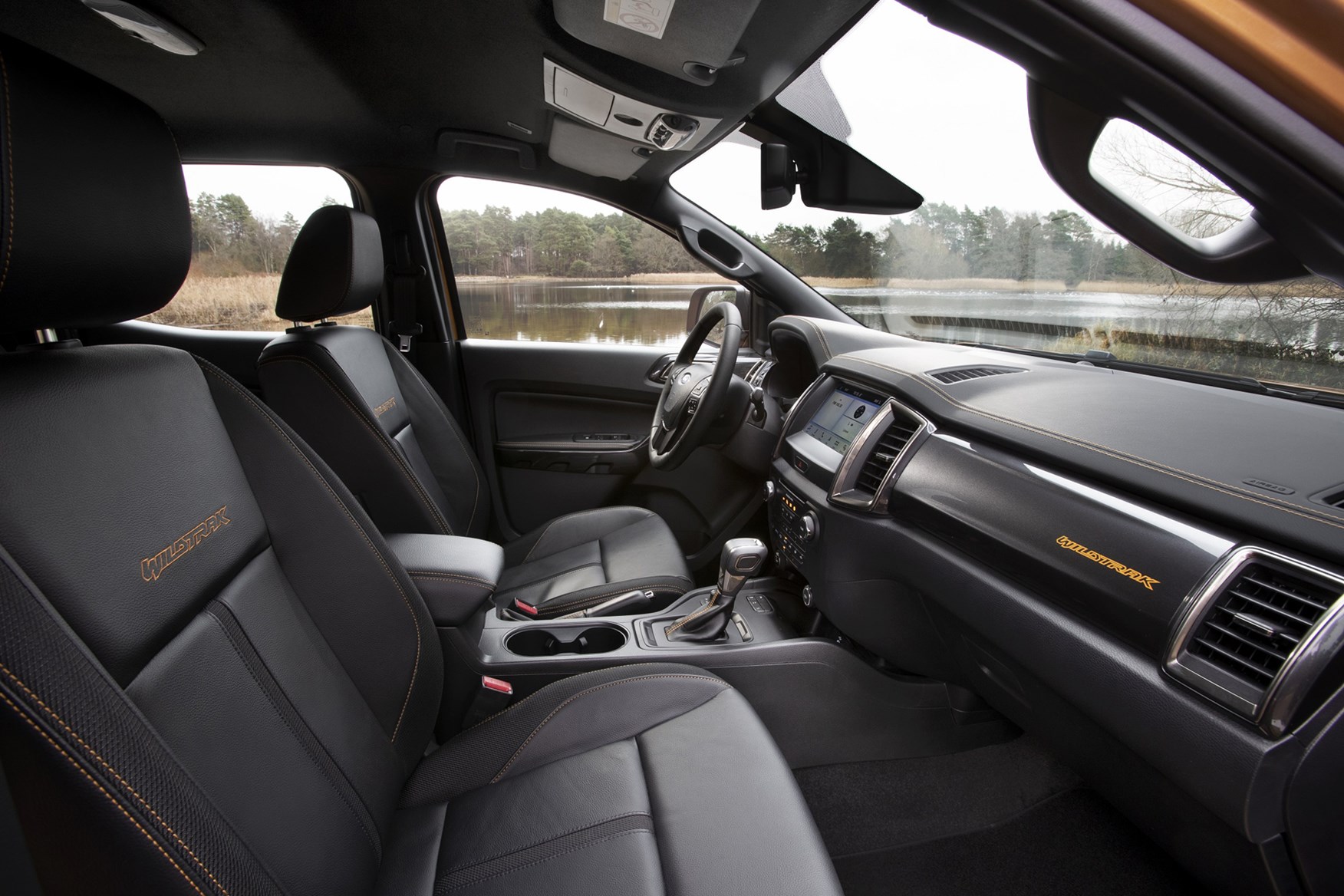 Ford Ranger review - cab interior, driving experience
 Ford Ranger review - 2019 facelift, 2.0-litre EcoBlue with 10-speed automatic gearbox
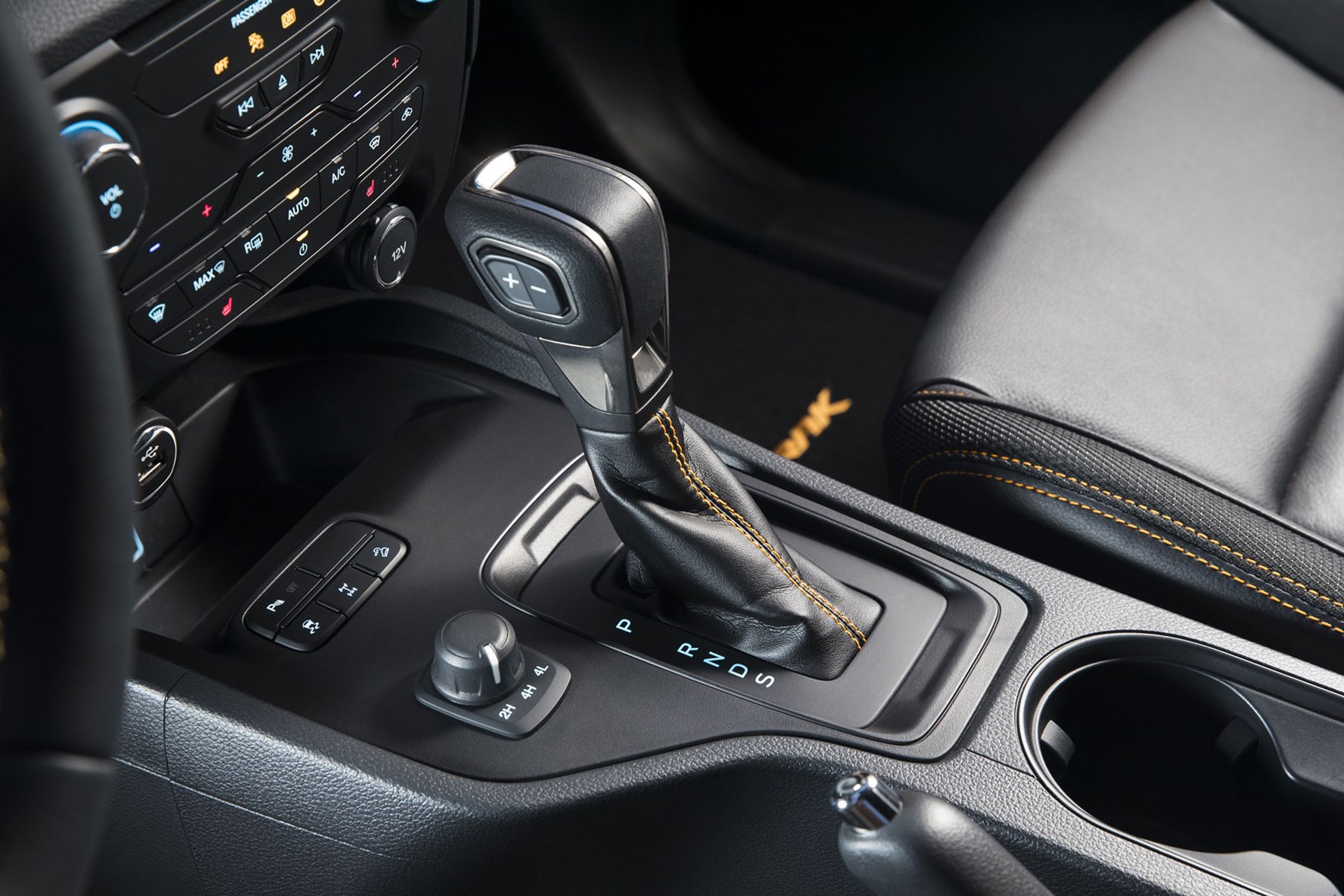 Ford Ranger review - 2019 facelift, close-up of front wheel and wing area, orange
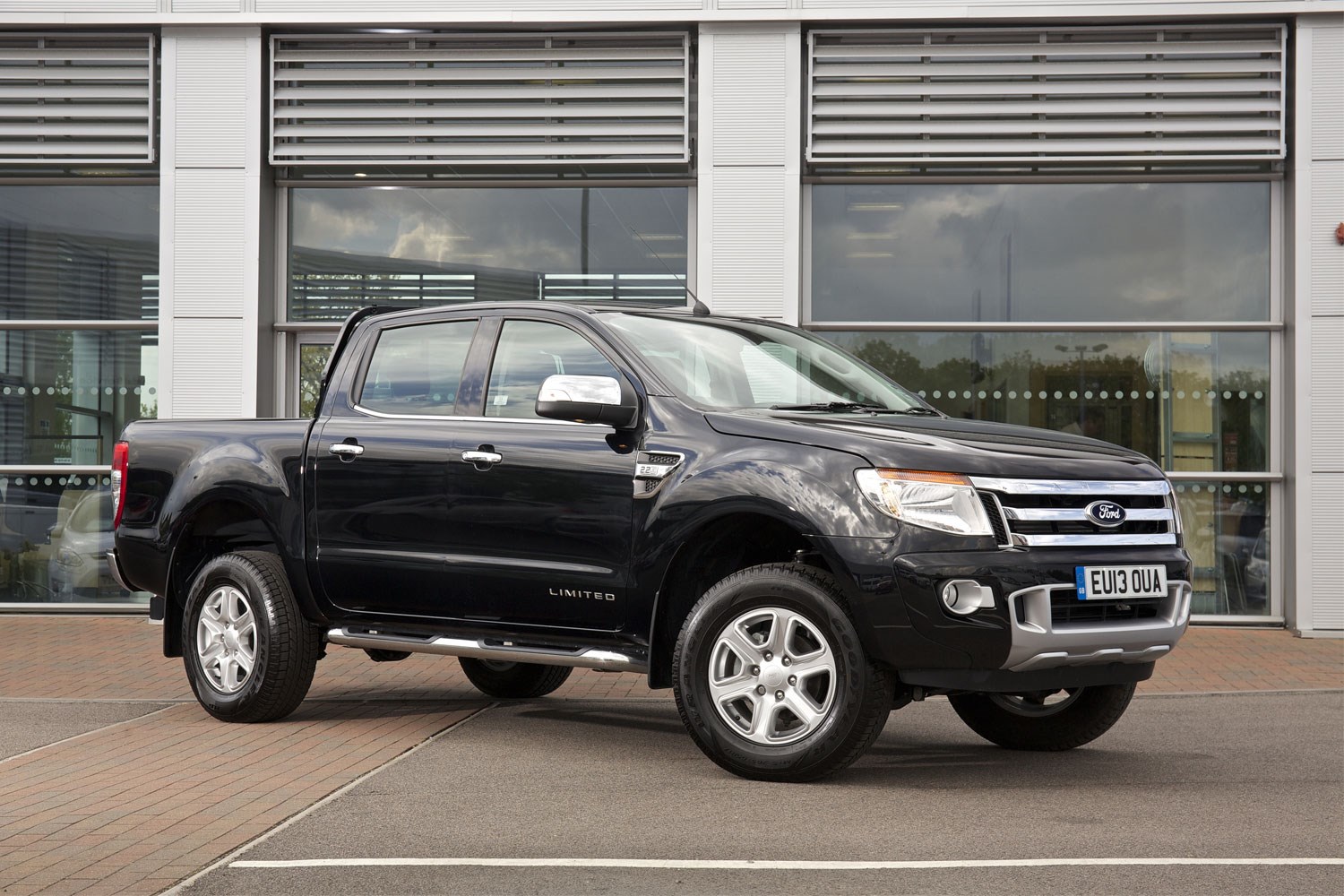
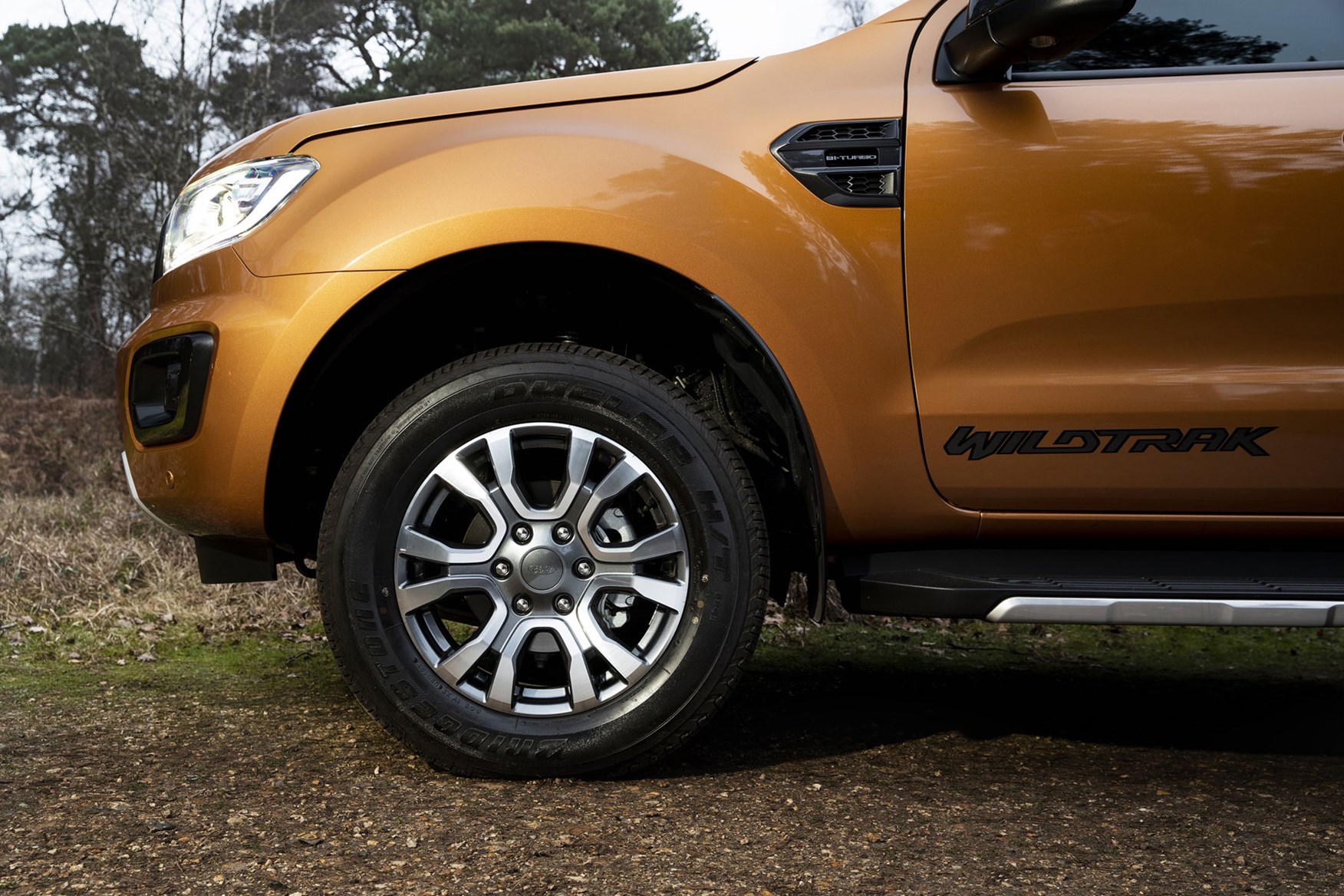 Ford Ranger review - pre-2016 facelift, front view, Limited, black
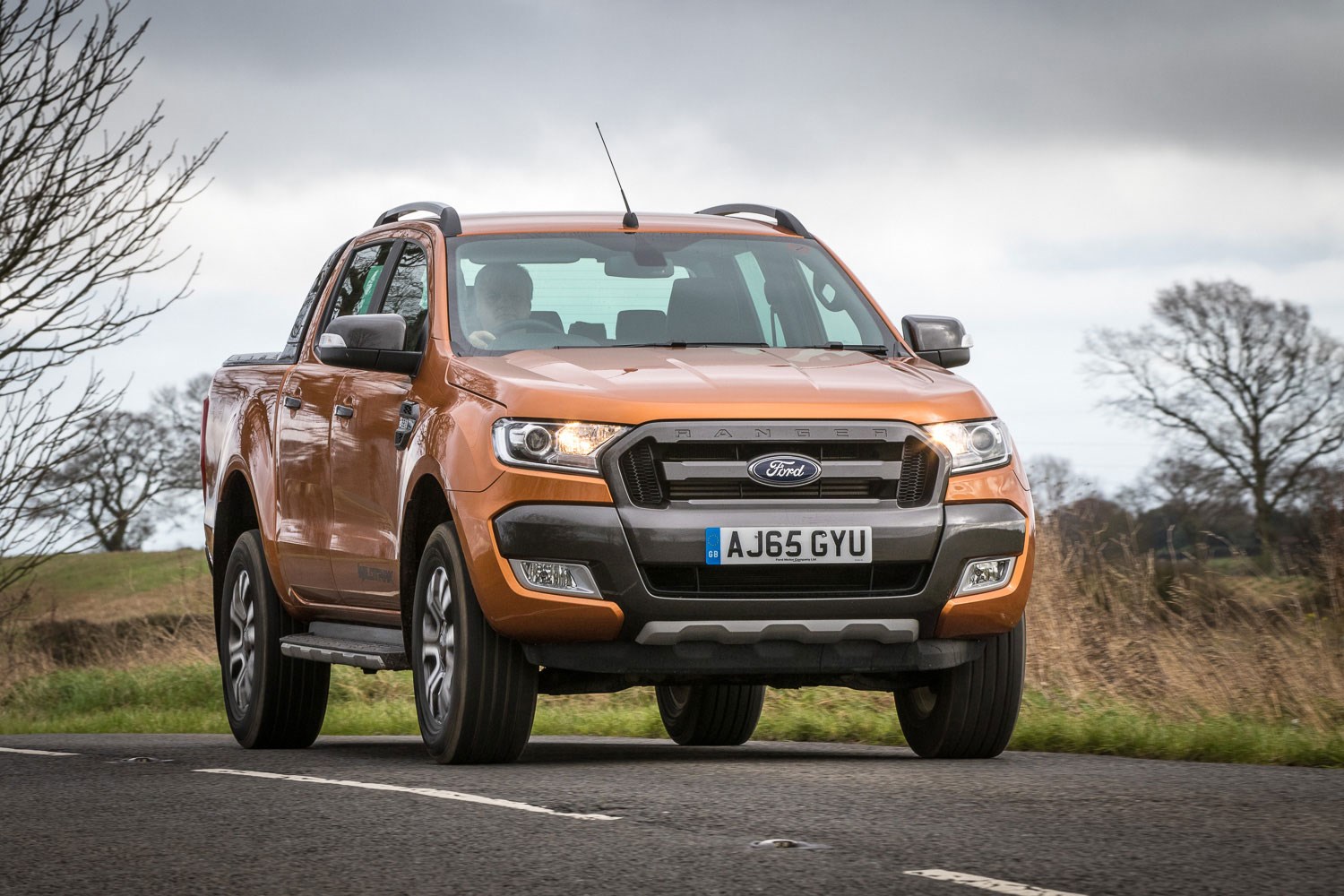
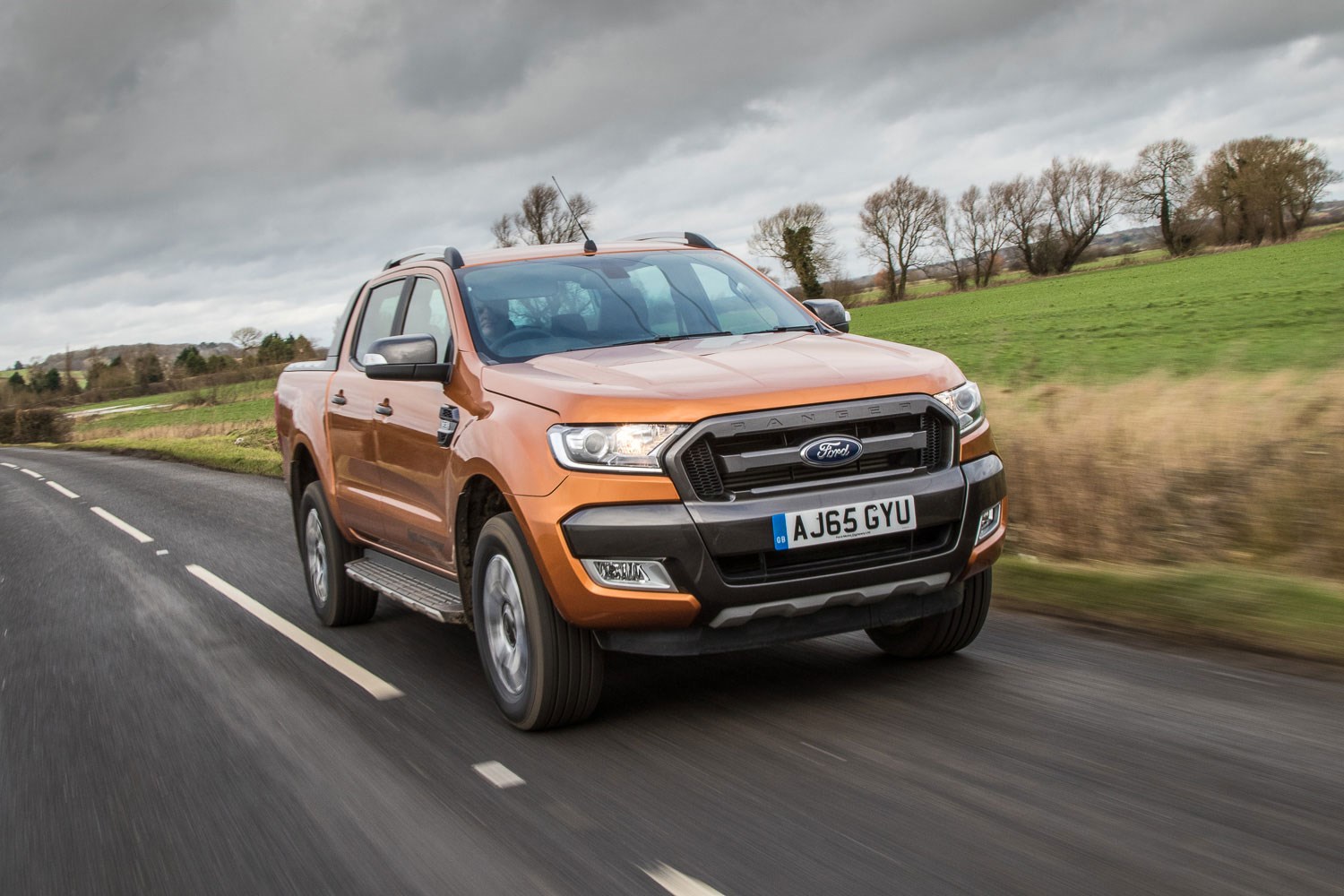
 Ford Ranger review - 2016 facelift, front view, driving, orange, Wildtrak
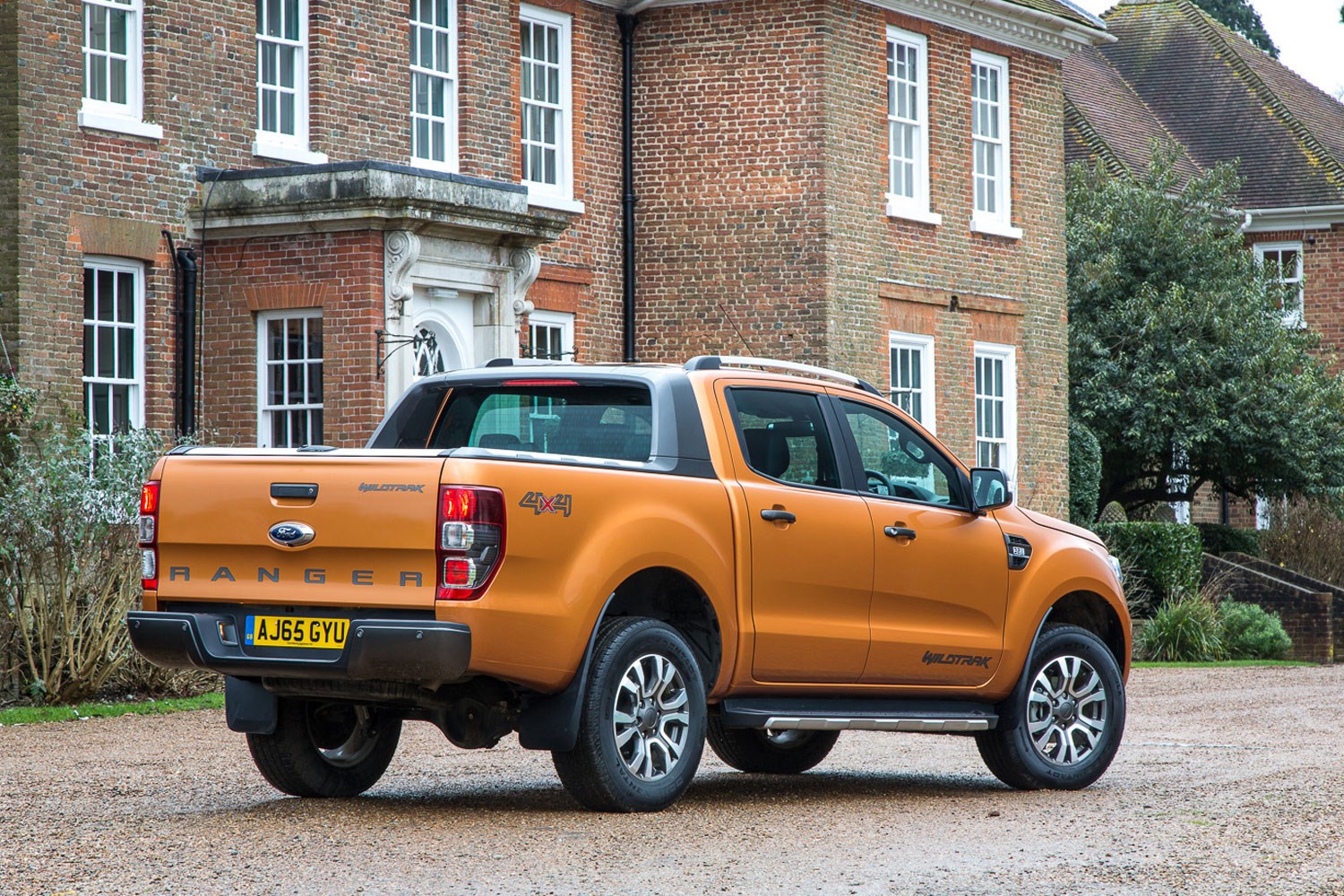
 Ford Ranger review - 2016 facelift, rear view, orange, Wildtrak
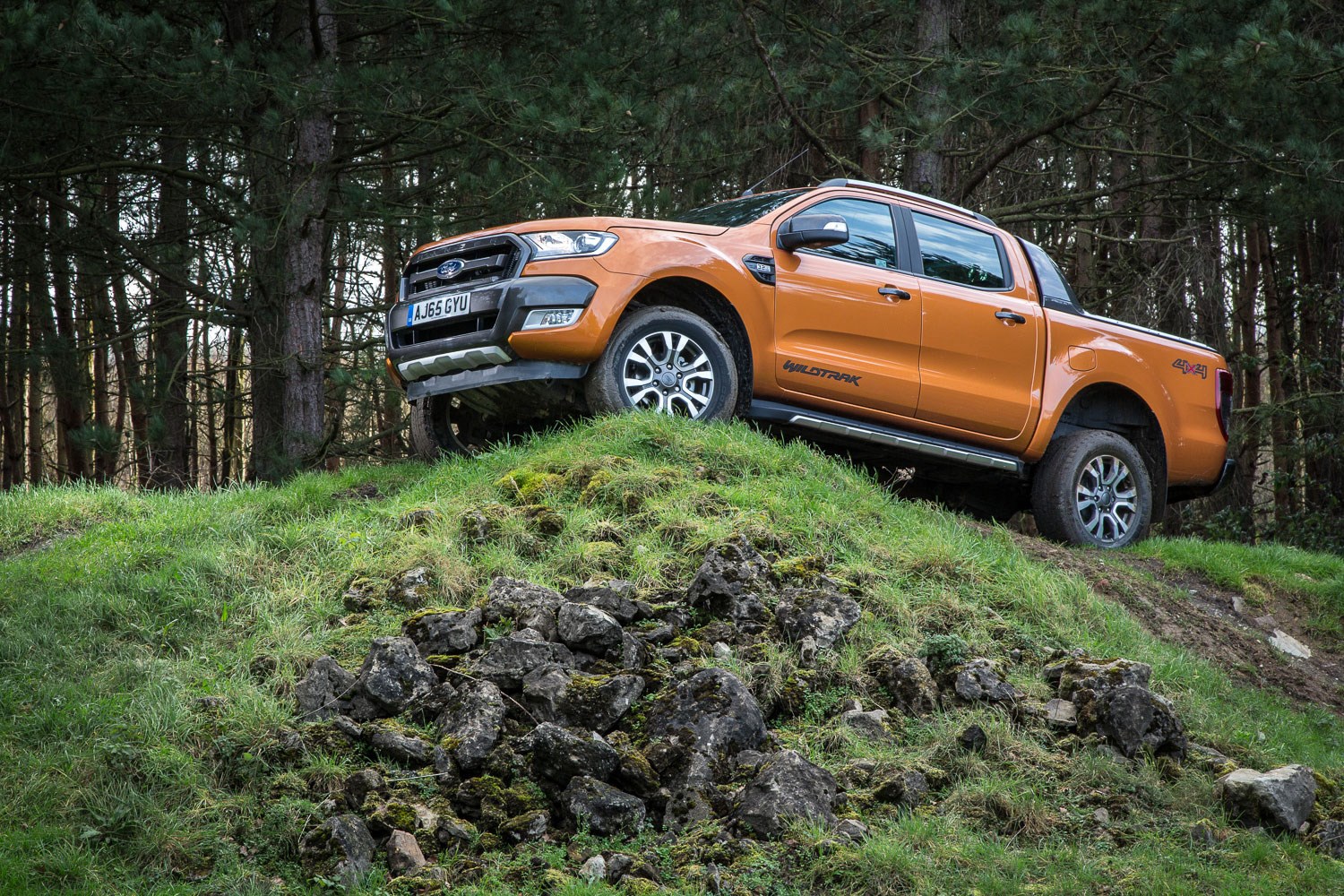
 Ford Ranger review - 2016 facelift, front view, parked on top of hill off-road, orange Wildtrak
 Ford Ranger review - 2016 facelift, front view, driving on road, Wildtrak, orange
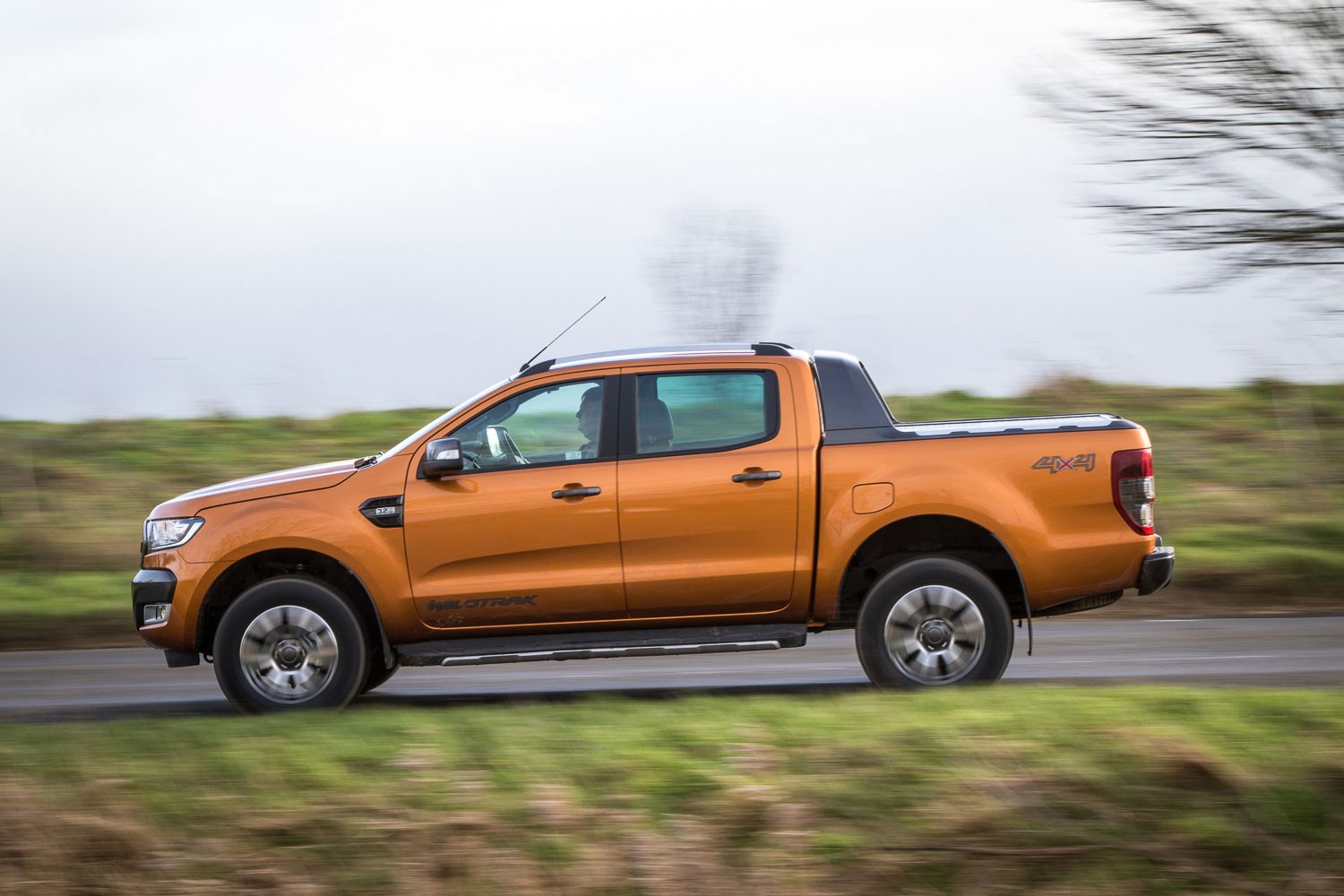
 Ford Ranger review - 2016 facelift, side view, driving, Wildtrak, orange
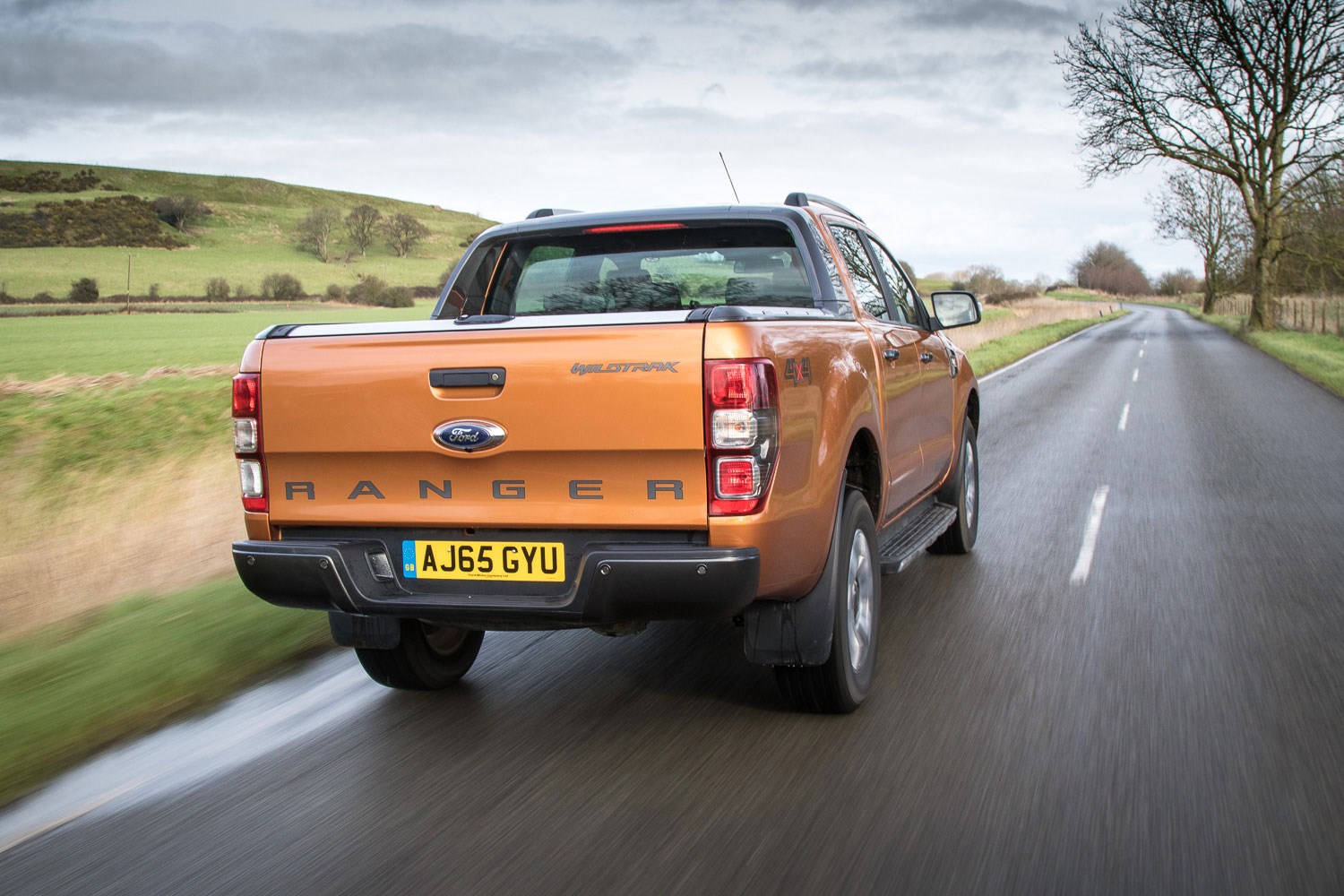
 Ford Ranger review - 2016 facelift, rear view, driving, orange Wildtrak
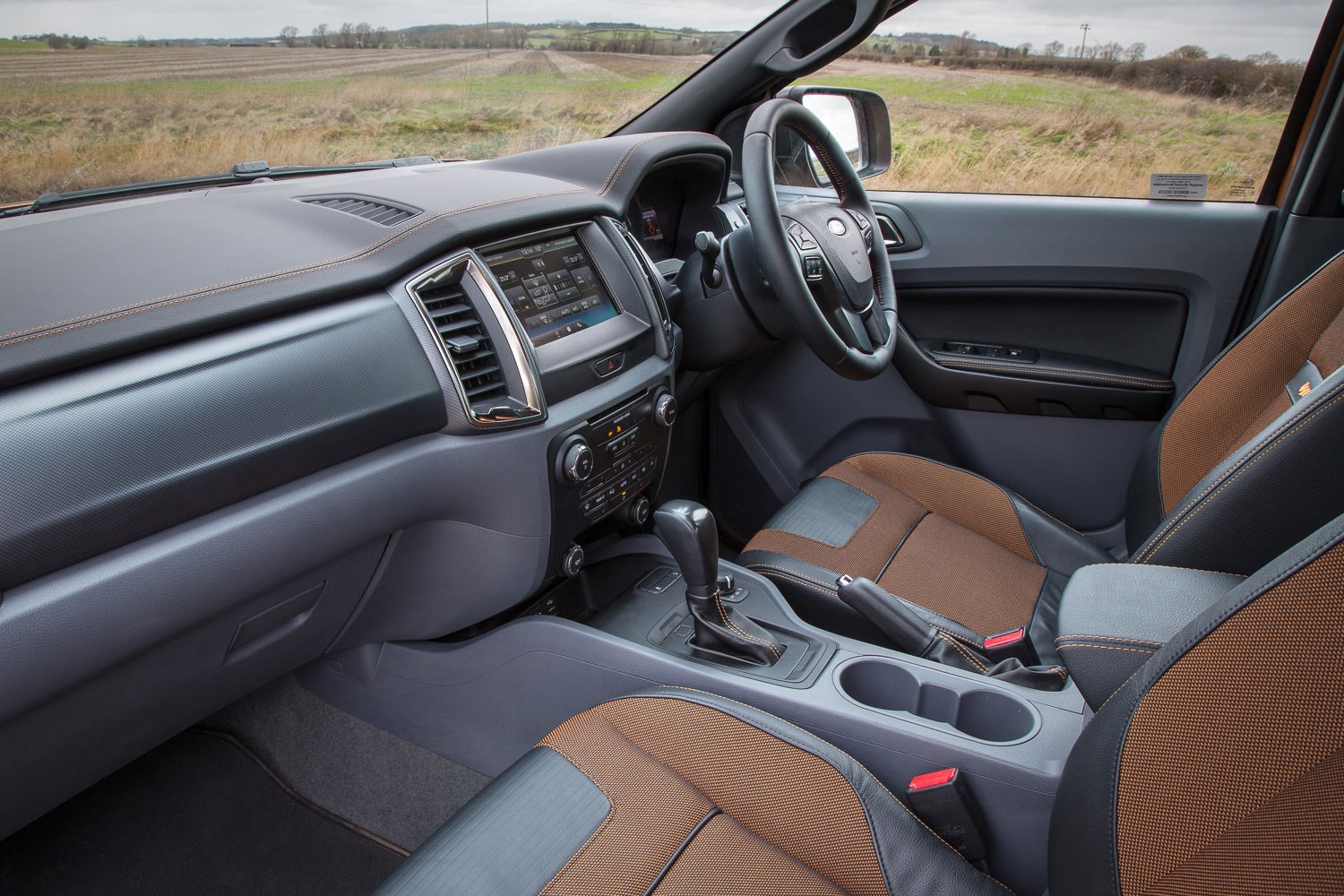
 Ford Ranger review - 2016 facelift cab interior showing seats, steering wheel and dashboard
 Ford Ranger review - 2016 facelift cab interior side view
 Ford Ranger review - 2016 facelift, wading through mud, dark red metallic, Limited
 Ford Ranger review - 2016 facelitt, rear view, parked in field of crops, dark red
 Ford Ranger Raptor high performance pickup truck - Performance Blue, front view, on rocks
 Ford Ranger Raptor - front view, Conquer Grey, parked on rocks showing off axle articulation
 Ford Ranger Thunder special edition 2020
 Ford Ranger Wildtrak Euro 6 review - dark grey, front view
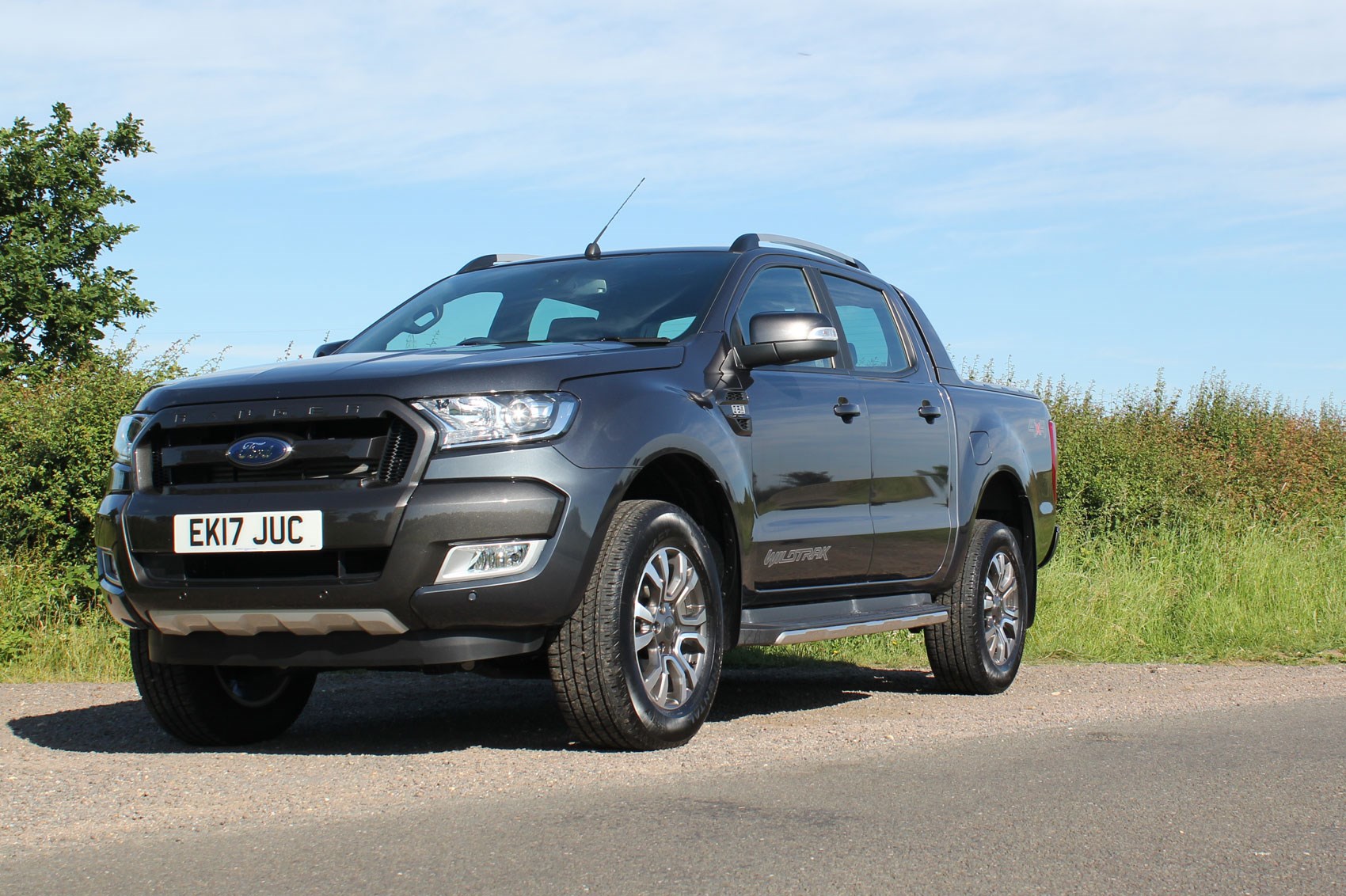 Ford Ranger Wildtrak Euro 6 review - dark grey, rear view
 Ford Ranger Wildtrak Euro 6 review - dark grey, side view
 Ford Ranger Wildtrak Euro 6 review - cab interior
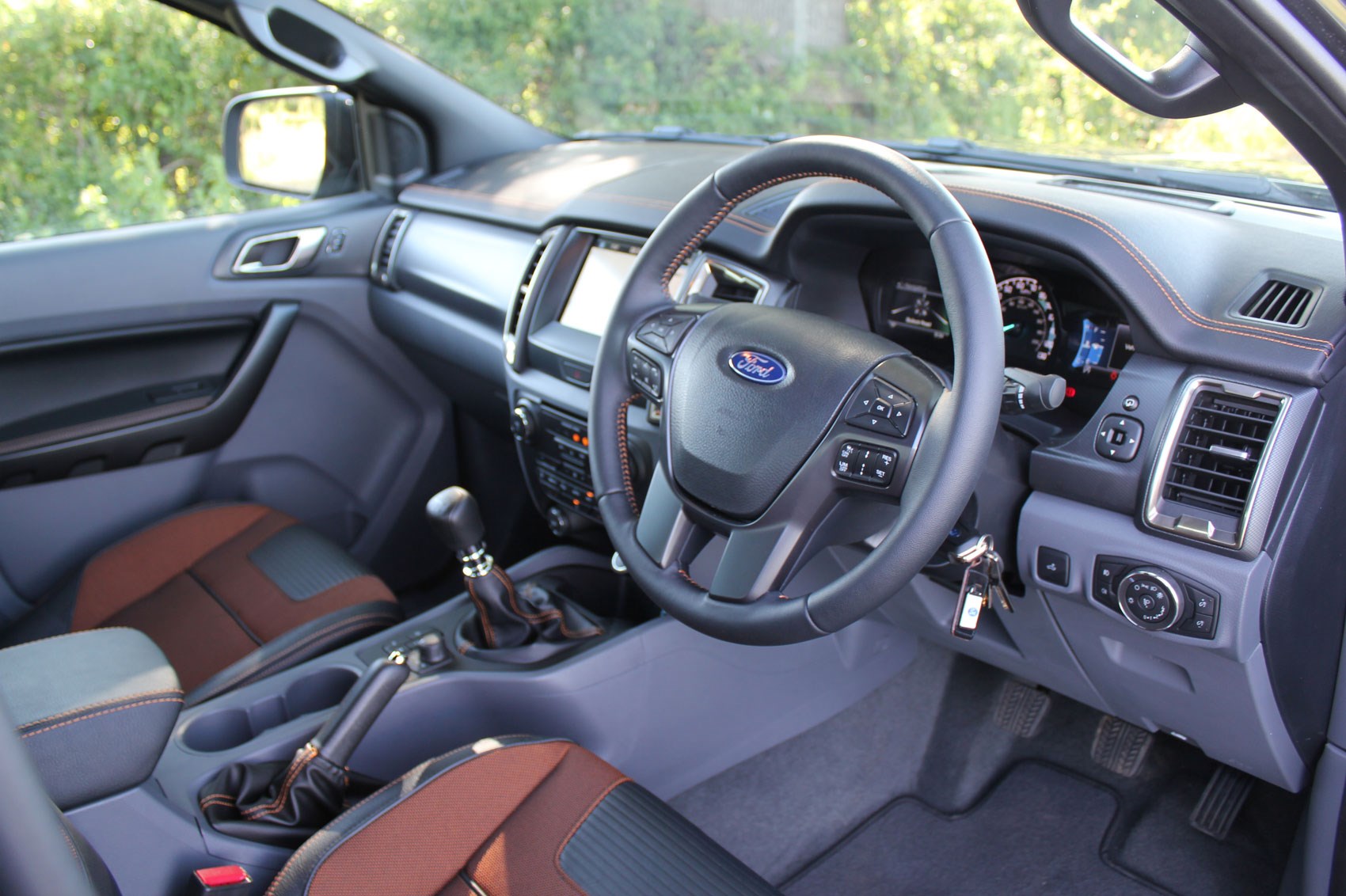 Ford Ranger Wildtrak Euro 6 review - gearlever
 Ford Ranger Wildtrak Euro 6 review - load area
 Ford Ranger Wildtrak Euro 6 review - dark grey, side graphics
 Ford Ranger Wildtrak Euro 6 review - filler flap with AdBlue filler
 Ford Ranger Black Edition review - driving
 Ford Ranger Black Edition review - rear view
 Ford Ranger Black Edition review - front view
 Ford Ranger Black Edition review - verdict
 Ford Ranger Black Edition review - cab interior
 Ford Ranger Black Edition review - automatic gearbox
 Ford Ranger Black Edition review - load bed area
 Ford Ranger chassis cab
 Ford Ranger Limited 3.2 Euro 5 review - front view, black, on mud
 Ford Ranger Limited 3.2 Euro 5 review - cab interior
 Ford Ranger Limited 3.2 Euro 5 review - load bed
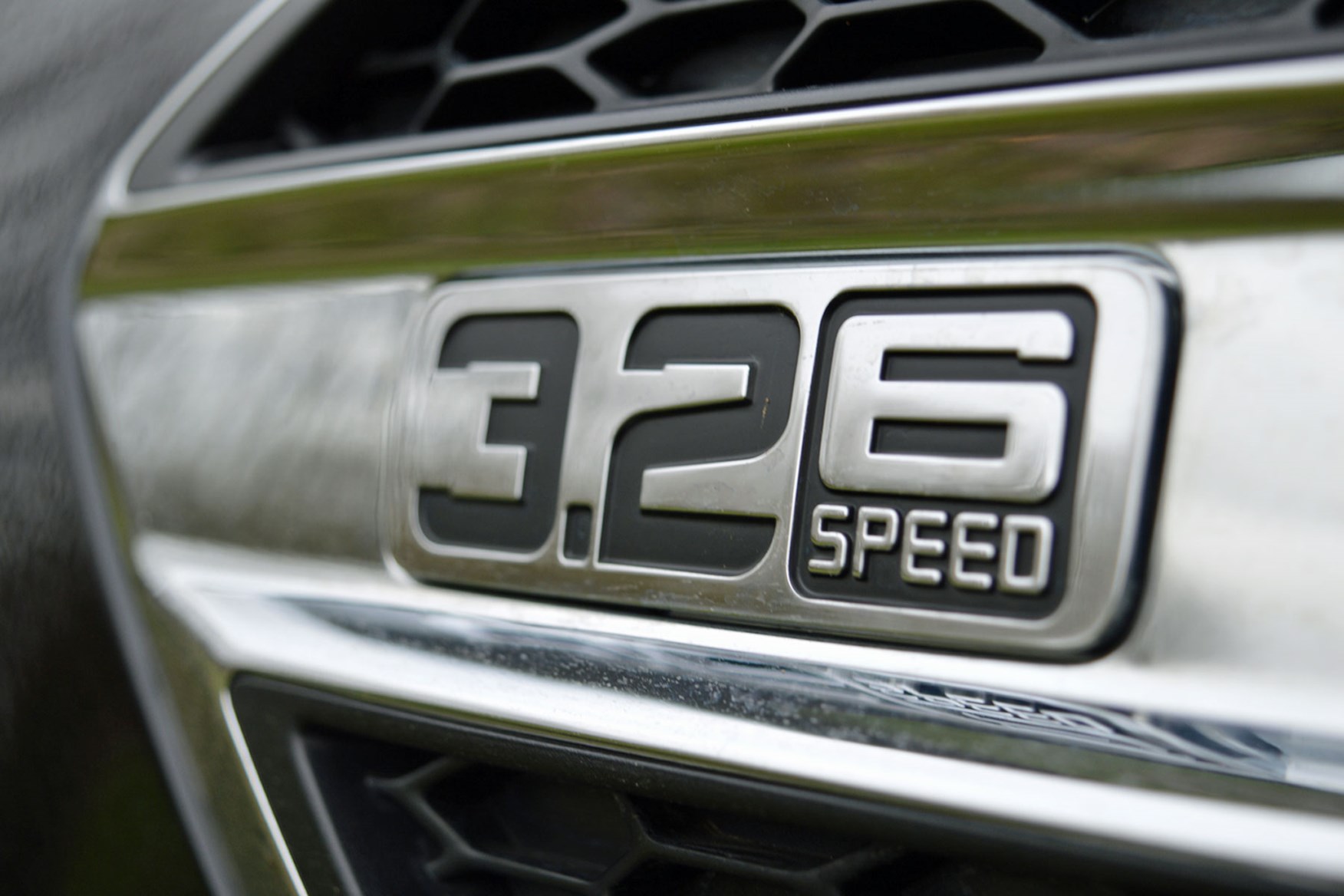
 Ford Ranger Limited 3.2 Euro 5 review - side badge
 Ford Ranger Limited 3.2 Euro 5 review - rear view, black, on mud
